All Posts page

Ernest Adolphus O’Bryen 1865 -1919


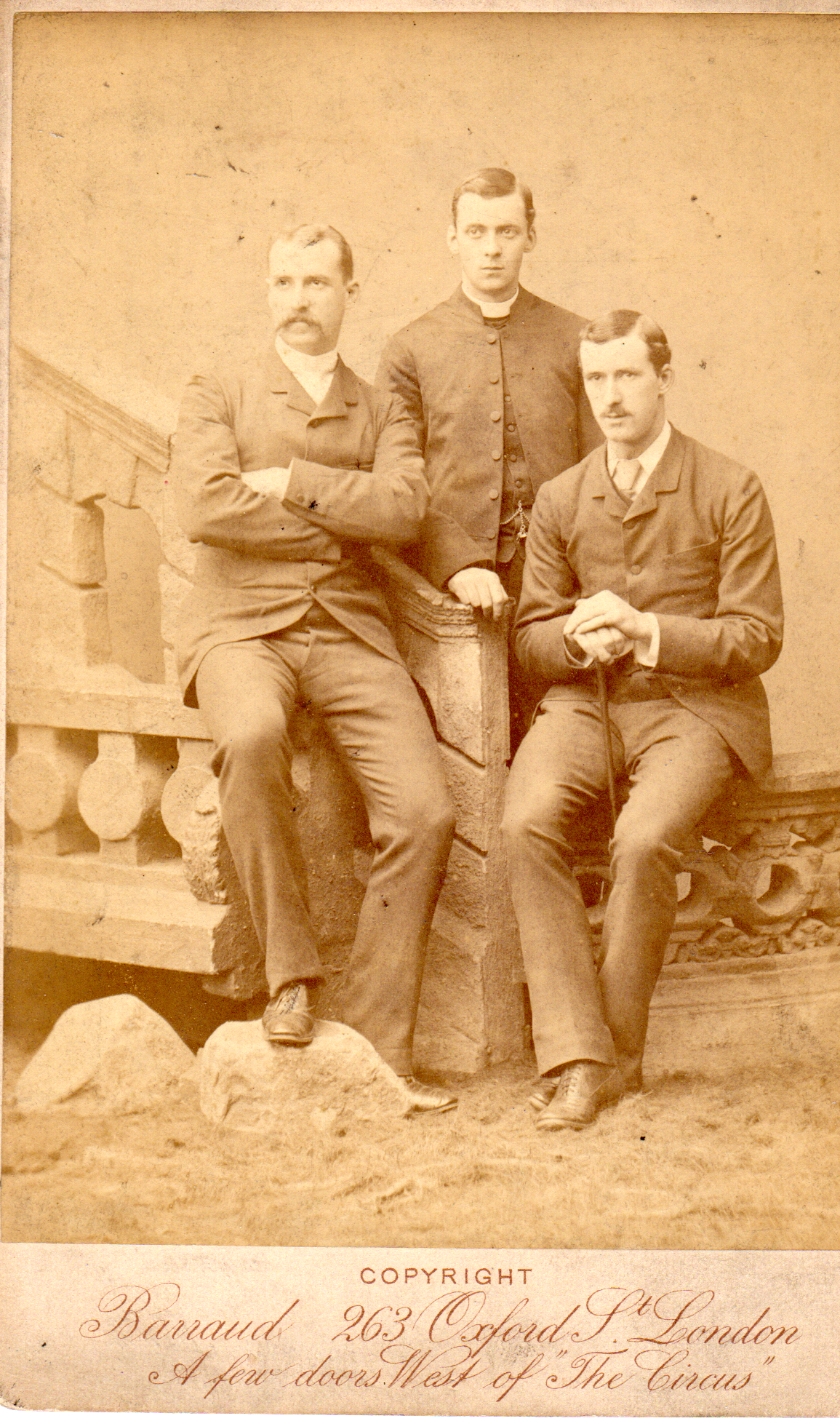
This was almost the first thing I searched on. We sort of knew that he had been Mayor of Hampstead, but not that it had been throughout the First War. In fact, from 1913 until his death in 1919 (six terms in total). He is easily identified in the garden party photo sitting next to the Cardinal. The decoration he’s wearing is a bit odd, and I suspect it’s possibly a papal decoration. He was granted a knighthood, but died before being done; but Lady OB was given the title anyway.

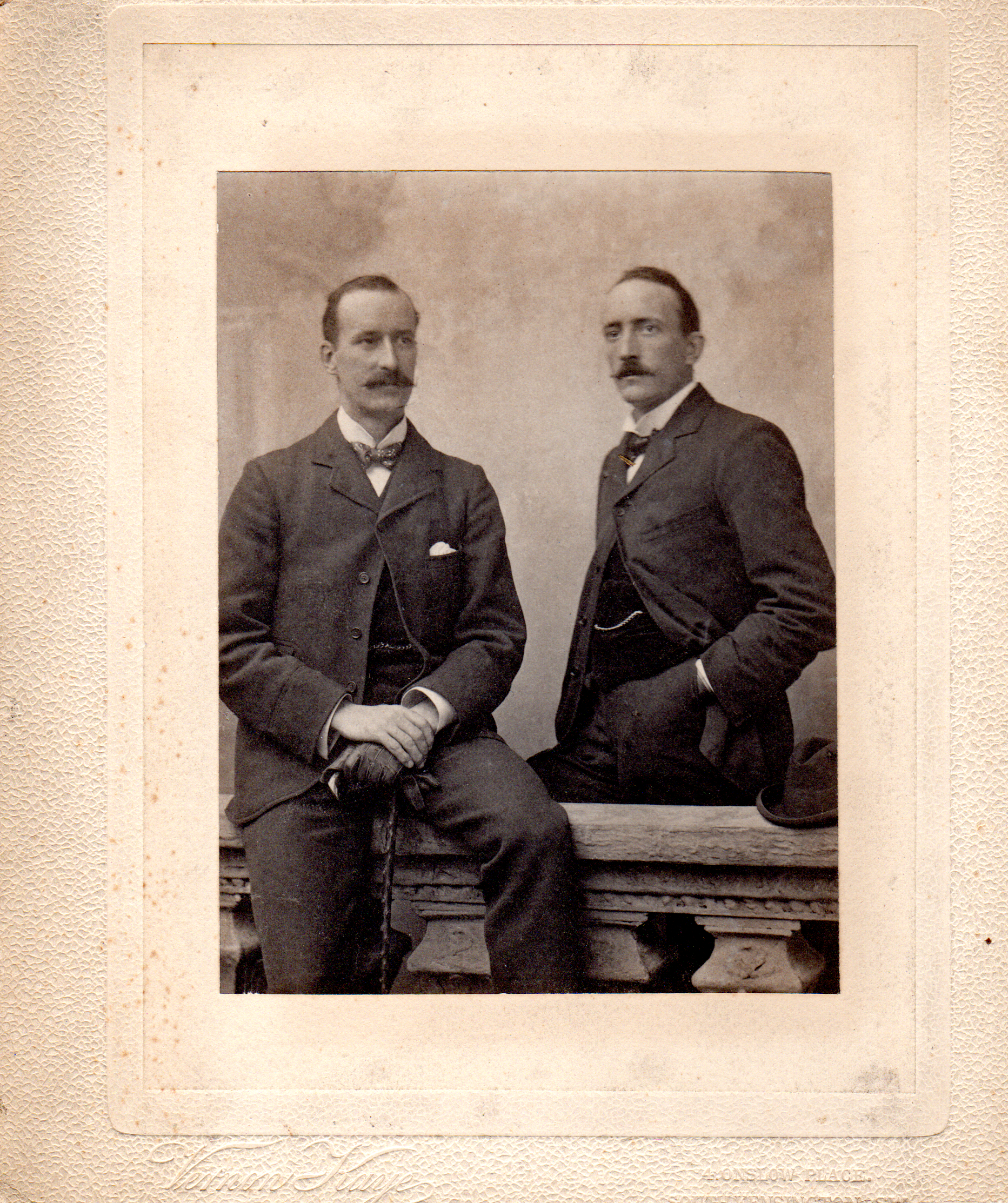
We also had pictures of him being the Mayor in the photo collection

The next thing I found was this obituary.

The Tablet, Page 28, 3rd May 1919

ALDERMAN ERNEST A. O’BRYEN.

We regret to record the death of Alderman Ernest A. O’Bryen, Mayor of Hampstead, which took place on Saturday night, at the age of fifty-three years, following on an operation from which he at first seemed to be progressing favourably. Educated at Stonyhurst and Cooper’s Hill, he spent some ten years in the Indian Forest Service in Upper Burmah, shortly after its annexation. He retired from the service in 1897 and married in the following year, Gertrude, daughter of the late Alfred Pursell. In 1913 he was elected Mayor of Hampstead, first Catholic to hold that position, and held it till his death. In 1916 he was President of the Stonyhurst Association and the same year was elected a Vice-President of the London Circle of the Catenian Association. During the war he took a leading part in making arrangements for the feeding and accommodation of Belgian refugees, and he also organised and equipped hospitals for the British Red Cross and St. John Ambulance. In 1915, Alderman O’Bryen was instrumental in raising the 183rd Howitzer Brigade and the 138th and 139th Heavy Batteries of Royal Garrison Artillery.

The funeral took place on Wednesday. The Requiem Mass was celebrated at St. Dominic’s Priory, Haverstock Hill, by Father Bodkin, S. J. Among those present were Mrs. O’Bryen and her five children, Mr. and Mrs. A. J. Winstanley, Captain and Mrs. Parker, Mr. Alfred Pursell, Mrs. Edwardes, Mr. and Mrs. E. J. Bellord, Mr. Frank Pursell, Mr. Alfred O’Bryen, Mrs. Rex O’Bryen, Mrs. Basil O’Bryen.

This helped a lot. Working on an obvious hunch that everyone named is a close relation, and a bit of digging, we have the soon-to-be Lady OB with her four sisters and two brothers, two brother-in-laws, and it appears the wife of a brother-in-law.  All eminently Googleable.

And not a difficult step to get to Dr John Roche O’Bryen, his father………..

Alan and Marie O’Bryen’s wedding 1924 with pictures

Front page

The Tablet, 3rd May 1924

A.R.O’BRYEN AND MISS BIDWELL.

At St. James’s, Spanish Place, W., on Friday of last week, the marriage took place of Mr. Alan O’Bryen, eldest son of the late Mr. E. A. O’Bryen and Lady O’Bryen, of 44, Harley House, to Marie Louise, eldest daughter of the late Mr. Leonard A. Bidwell and Mrs. Bidwell, of 10, James Street, Westbourne Terrace, W.2.

The Bishop of Miletopolis, the Right Rev. Mgr. Bidwell, Bishop Manuel Bidwell (3)cousin of the bride, performed the ceremony ; Father W. Bodkin, Provincial, S.J., celebrated the nuptial Mass, and Mr. Kenneth O’Bryen, brother of the bridegroom, was best man.


The bride, who was given away by her brother, Mr. T. L. Bidwell, was dressed in white crepe de Chine with a train of Limerick lace, lent by her grandmother, Lady Roper Parkington, Lady RPwhich was borne by Miss Dorothy Bidwell, sister of the bride. In attendance upon her were also Miss Cicely O’Bryen and Miss Valencia Lancaster, wearing frocks of hyacinth-blue crêpe de Chine embroidered in silver, and oxydized silver lace caps.

Following the ceremony a reception was held at 44, Harley House.

More O’Mores

From geneology.com

There is a two volume set of books titled, History of the Queens County, written by V. Rev. John Canon O’Hanlon and Rev. Edward O’Leary, Volume one was published in 1907 and Volume two in 1914 in Dublin, Ireland by Sealy, Bryers & Walker.

Appendix I to Volume two was copied from Notes on the O’Mores as they were published in the Journal of the County Kildare Archaeological Society, Volume VI and were written by Lord Walter Fitzgerald.This appendix includes a listing of the Chiefs of Leix from 1016 to 1600 A.D., The Submission of Rory Caoch O’More in 1542, The O’Mores of Ballina, County Kildare and The Rock of Dunamase, as well as other articles on the O’Mores of Raheenda, Queens County, Ireland.

The listing of the Chiefs of Leix is: Note:mac = son of

Year:       Chief:
1016       Gahan O’More, (?) lord of Leix, slain.
1017       Cearnach O’More, lord of Leix, slain.
1026       Aimergin mac Kenny mac Cearnach O’More, lord of Leix, slain.
1041       Faelan mac Aimergin O’More, lord of Leix, blinded; died in 1069.
1042       Cucogry O’More, lord of Leix, living.
1063       Lisagh mac Faelan O’More, lord of Leix, slain
1069       Macraith O’More, (?) lord of Leix, slain.
1091       Kenny O’More, lord of Leix, slain.
1097       Aimergin O’More, lord of Leix died.
1098       The son of Gahan O’More, lord of Leix, slain.
1149       Lisagh mac Aimergin mac Faelan O’More, lord of Leix, died.
1153       Neill O’More, lord of Leix, blinded.
1158       Macraith O’More, lord of Leix, living.
1183       Cucogry mac Lisagh O’More, lord of Leix, living.
1196       Donnell O’More, lord of Leix, slain.
[It is a remarkable fact the “The Irish Annals” make no mention of an
O’More, Chief of his name, during the thirteenth century]

1319       Shane mac Donough O’More, (?) lord of Leix, slain.
1342       Lisagh O’More, lord of Leix, slain.
1348       Connell O’More, lord of Leix, slain.
1354       Rory mac Connell O’More, lord of Leix, slain.
1368       Lisagh mac David O’More, (?) lord of Leix, died.
1370       Murtough O’More, (?) lord of Leix, slain.
1394       Donnell O’More, lord of Leix, living.
1398       Melaghlin O’More, lord of Leix, died.
1404       Gillpatrick O’More, lord of Leix, living.
1464       Kedagh O’More, lord of Leix, died.
1467       Donnell O’More, lord of Leix, died.
1477       The son of Owny O’More, (?) lord of Leix, slain.
1493       Connell mac David O’More, lord of Leix, slain.
1493       Neill mac Donnell O’More inaugurated lord of Leix.
1502       Melaghlin mac Owny mac Gillpatrick O’More, lord of Leix, died.
1523       Kedagh mac Lisagh O’More, lord of Leix, died.
1537       Connell mac Melaghlin mac Owny O’More, lord of Leix, died.
1538       Peirce mac Melaghlin mac Owny O’More, lord of Leix, (?) died.
1542       Kedagh roe mac Connell mac Melaghlin O’More, lord of Leix, died.
1545       Rory coach mac Connel mac Melaghlin O’More, lord of Leix, slain.
1548       Gillpatrick mac Connell mac Melaghlin O’More, lord of Leix, died.
1557       Connell og mac Connell mac Melaghlin O’More, lord of Leix, hanged.
1578       Rory og mac Rory coach mac Connell O’More, lord of Leix, slain.
1584       (circa).James mac Kedagh O’More, alias Meaghe, lord of Leix, died.
1600       Owny mac Rory og mac Rory coach O’More, lord of Leix, slain.
1600       Owny mac Shane O’More, appointed lord of Leix.”

The submission of Rory Caoch O’More reads:

“Indenture, Dated 13th May, 34 Henry VIII.[“Carew Mauscripts,” 1515-74]

Rory O’More of Lex, brother as he asserts to Kedagh (Roo) O’More, lately deceased, now admitted to the Captainship of the same country by the consent and election of all the noblemen and inhabitants of the country, appeared before us the Deputy Council, and submitted himself to the King.He promises that: –
(1.) He will be faithful and liege subject; and he and the other gentlemen of his country will receive their lands from his Highness.(2.) He will reject the Roman Pontiff’s usurped primacy.(3.) He will deliver Kedagh mac Piers mac Melaghlin O’More as his hostage to the Deputy into the hands of Thomas Eustace, Viscount of Baltinglass, for the observance of his agreements and promises, and for the restitution of all damages done to the subjects of the King, during the time of Kedagh O’More’s government.(4.) He will have 72 kerne, horseboys being computed in that number, for the rule of the said country of Leix; and will maintain no other kerne there.(5.) He will rise up with the Lord Deputy in every great journey, called “Hostings.”For any sudden journey of two days and nights he will find 24 horsemen and all his aforesaid kerne; and in every great hosting 8 horsemen and 20 kerne.(6.) Donnamase with the demesne lands, Tymooge and othe lands of the late Earl of Kildare in Leix, shall be restored to the King.The demesnes of Donnamase shall be surveyed and their extent declared by indifferent men (as jurors on the Inquisition), and the lands and rents of the said Earl of Kildare by Thomas Wolf senior; and both those lands, and the possessions of (the Nunnery of) Grayne (Graney, Co. Kildare), of the Monasteries of Saint Mary of Dublin, of Connall (Co. Kildare), and of other religious Houses, with the lands of Kyllberry (Co. Kildare), are at the disposition of the tenants and farmers of the King.(7.) When the Lord Deputy requires any Scots (Galloglasses), to be imposed the Counties of Kildare, Kilkenny or Tipperary, the Leix shall support 60 Scots, and shall be exempt from all subsidies for that year.(8.) The King shall have 20 marks yearly as a subsidy.(9.) The Lord Deputy and Council shall have 100 Cows for his (Rory’s) nomination and admission to the Captaincy of the aforesaid Country.(10.) He shall have the goods of his brother Kedagh, by paying Kedagh’s debts, and the profit and produce of all his possessions, saving Kedagh’s wife’s portion, until he be recompensed for the debts which he sahall ratify the same; otherwise not.”

This was Rory Caoch O’More son of Connel O’More son of Melaghlin O’More.Doonamasse is the Castle Dunamase.

The Rock of Dunamase partially reads:

“Dunamase from prehistoric times was the stronghold and chief residence of the rulers of Leix.About the time of the Christian era there flourished in Ulster a leader of the Red BranchKnights, called Conall Cearnach.the Knights under him waged war against the men of Leinster to enforce the payment of the Burumean tribute.They defeated the Leinstermen at the battle of Ros-naRigh (Rosnaree), and settled Leix, which they divided into seven tribe lands.This Celtic heptarchy was subject to the jurisdiction of an arch-king, claiming descent from Canall Cearnach, and called the O’More, with his chief residence at Dunamase.”Dunamase changed hands several times and “In 1342 Lysaght O’more, of Dunamase was killed by his servant. . . . Two years after his death the O’mores were dipossessed of Dunamase by De Mortimer.”. . . The O’mores controlled it around 1538 and 1542 . . .“In 1642 the Confederate Catholics were in Possession of Dunamase; . . .”

The Genealogies contained in the Appendix are titled “The O’Mores of Ballina, County Kildare and The O’Mores of Cremorgan and Raheenduff, Queens County.Most references claim that Rory O’More (1641) was from Ballyna or Ballina, Kildare County.I have reproduced that genealogy as follows:

“The O’Mores of Ballina are descended from Callough, the youngest son of Rory caoch O’More, Chief of Leix, who was slain in 1545.

Callough O’more was granted Ballina in 1574.He died on the 27th March, 1618.By his wife Margaret daughter of Walter Scurlough, of Frayne, in the County Meath, he had two sons and two daughters, viz.:-

I.Col. Rory (oe Roger) O’More of Ballina, the famous Confederate leader of 1641.He died on the 16th February, 1655, leaving issue by his wife Jane, daughter of Sir Patrick Barnewall, Kt. of Turvey, two sons and four daughters, viz.:-

1. Col. Charles O’more, of Ballina killed at the Battle of Aughrim, Co. Galway, 12th July, 1691.He had no issue by his wife Margaret, daughter of Thomas FitzMaurice, 18th Lord Kerry and Lixnaw.He was succeeded at Ballina by his first cousin Anthony, son of his uncle, Col. Lewis O’More.

2. Connell O’more, died without issue, 20th November, 1653.

3. Anne, married Partrick Sarsfield, of Tullly, Co. Kildare, and was the mother of the famous Patrick Sarsfield, Earl of Lucan.

4. Elenor, married first Brian O’Kelly, of Cadamstown, County Kildare; and secondly Donnell mac Murrough Kavanaugh.

5. Mary, married Col. Trilough mac Henry O’Neill.

6. Elizabeth, married Christopher Beeling, of Killashee, County Kildare.

II.Col. Lewis (or Lisagh) O’More, of whom presently.

I.Margaret, married Thomas Plunkett, of Clonbreny, Co. Meath.

II.A daughter who married a FitzGerald of Ballagh, Co. Westmeath.

Col. Lewis O’more, of the Confederate Catholic Army, second son of Callough O’More, married Mary, daughter of Philip mac Hugh O’Reilly, by whom he had a son:-

Anthony O’More, of Ballina, first cousin and heir to Col. Rory O’More.By his wife Anne, daughter of Alexander Hope, of Mullingar, he had two sons and two dauhgters, viz:-
A. Lewis O’More of Ballina, of whom presently.

B. Roger O’More, who died in 1747; he married Elinor, daughter of William Wright, and had issue

a. General Anthony O’More, of the Spanish Army.

b. Anne, married to Robert Daly, of Caulfield.

c. Mary, married Pacington Edgeworth, of Longwood.

C.. Mary, married Captain Conor O’Reilly.

D.. Catherine, the mother of General Manus O’Donnell, in the Austrian Service in 1772.

Lewis O’More, of Ballina, eldest son of Anthony O’More, died on the 13th February, 1737, aged 63.By his wife Alicia, daughter of Con O’Neill, he had issue, a son and a daughter, viz:-

1. James O’More, of Ballina, of whom presently.

James O’More, of Ballina, son and heir of Lewis O’More, died on the 19th November, 1779 aged 77.By his wife Mary, daughter of Ambrose O’Madden, of Derryhoran, county Galway, he had an only daughter:-

Letitia, of Ballina, who married Rochard O’Ferrall.Her death took place in 1778, and her husband’s in 1790.From this couple are descended the More-O’Ferralls, now in Balina, who thus claim a direct descent from the anciet Chiefs of Leix.”

Upon finding this genealogy I had hoped it would answer the question of James Moore’s parentage.James Moore, Governor of the Carolina’s is said to be descended from Rory O’More of 1641.This genealogy does not answer that question.It is not certain that all the children of Callough O’More are listed or only those of Ballina?This is however the most complete genealogy I have seen to date on his family.It does however establish the line of descent as Melaghlin O’More and then his son Connel O’More and then his son Rory caoch O’Moore and then his son Collaugh O’More and then his son Col. Rory O’More (1641).Melaghlin O’More died in year 1398.

From another work the line goes back to a Gaeithini Mordha “First King of Leix”.Actually First Chief would be more accurate.This chart goes from Gaeithini to his son Cenneth to his son Faolan to his son Amergin to his son Lioseach to his son Donall to his son Conor Cucoigcriche to his son Lioseach to his son Donall O’More to his son Daniel Oge O’More to his son Lioseach O’More, “Last King of Leix”.After Lioseach who’s son was Niall O’More and his son was Lioseach O’More and his son was Owney O’More 1400 A.D and then to his son Melaghiln O’More and then his son Connel O’More and then his son Rory caoch O’Moore and then his son Collaugh O’More and then his son Col. Rory O’More (1641).

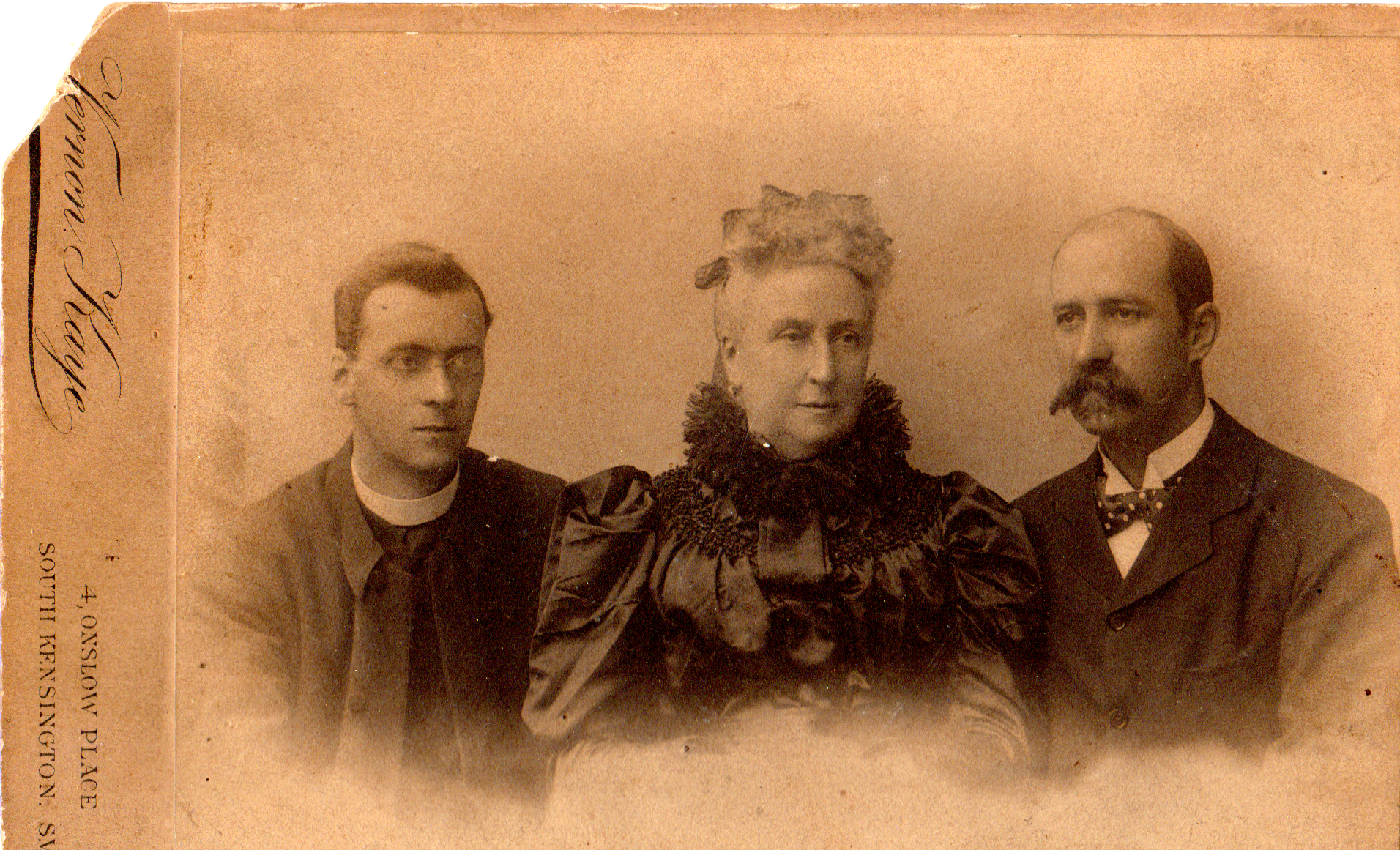
James Whiteside Leeming and Therese Pfyffer d’Altishofen marriage June 1911

Page 31, 24th June 1911

The marriage arranged between James Whiteside Leeming, J.P., co. Lane., fourth son of the late Richard Leeming, J.P., of Greaves House, Lancaster, and Therese, eldest daughter of the late Baron Frederic Pfyffer d’Altishofen, of Lucerne, Switzerland, will take place very quietly in London on July 3, owing to the recent death of a sister of the bridegroom. [Helena Leeming, who died probably earl

Page 52, 2nd December 1933

The engagement is announced between Gerard, eldest son of Mr. and Mrs. J. W. Leeming, of Skirsgill Park, Penrith, and Joan, daughter of the late Mr. Edmund Neville Trappes-Lomax, and granddaughter of the late Mrs. Trappes-Lomax, of Clayton Hall.

Providence Row Annual report 1931

The Tablet Page 22, 2nd May 1931

The valuable link between the Home and the Corporation of the City of London may be noted from an examination of the charity’s list of officers in the annual report. Sir John Knill, treasurer and a trustee, was Lord Mayor of London, 1909-10; Sir Henry T. McAuliffe, a trustee, has served for many years upon the Common Council and is Deputy-Alderman for Bishopsgate; Sir Harold Downer, a member of Committee, was Sheriff in 1924 before his election last year as Alderman for Coleman Street Ward. Similarly, an extensive “second generation” of workers for Monsignor Gilbert’s institution will be recognized. Sir John Knill’s offices were formerly held by his father, the late Sir Stuart Knill, London’s first post-Reformation Catholic Lord Mayor; as mentioned above, Captain W. W. Parker, son of the late Sir Henry Watson Parker, a well-known City lawyer, fills the chair of the Committee, as did his father-in-law, the late Mr. Alfred Purssell, a former member of the Corporation and the great personal friend of the Founder ; Mr. George Bellord has succeeded his father, the late Mr. Edmund Bellord, thirty four years a member of Committee and twenty-six years its chairman ; Mr. Joseph Towsey joined the Committee upon the death of his father, the late Mr. William Towsey, an original member with a record service extending from 1860 to 1926; Mr. J. Arthur Walton is the son of the late Hon. Mr. Justice Walton, a trustee for many years. Finally, Sir John Gilbert, a nephew of the Founder, will this year complete thirty-five years’ work as Secretary.

William Henry Burke d 1870

The London Gazette, December 9, 1870

WILLIAM HENRY BURKE Esq Deceased

Pursuant to the Act of Parliament of the 22nd and 23rd Vic cap 35 intituled An Act to further amend the Law of Property and to relieve Trustees

NOTICE is hereby given that all persons having any  claim, debt, or demand against or upon the estate of William Henry Burke late of No 32 Thistle grove South Kensington in the county of Middlesex Esq (who died on the 17th day of July 1870 and whose will with a codicil thereto was proved in the Principal Registry of Her Majesty’s Court of Probate on the 3rd day of December 1870 by Harriet Matilda Burke of No 32 Thistle grove South Kensington aforesaid Spinster George William Wood of No 4 Sambrook court Basinghall street in the city of London Accountant and Basil William O Bryen of No 28 Thistle grove South Kensington aforesaid Accountant )are hereby required to send in the particulars of their claims debts or demands to the said George William Wood one of the said executors at his office No 4 Sambrook court Basinghall street in the city of London on or before the 1st day of February 1871 after which day the said executors will proceed to the assets of the deceased among the parties entitled thereto having regard only to the claims debts or demands of which they shall then have had notice and the said executors will not be liable for any part of such assets to any person or persons of whose claim debt or demand they shall not then have had notice Dated this 7th day of December 1870.

WILLIAM GILLS Solicitor, No. 26, Old Broad –street, E.C.

http://tinyurl.com/nnxl7of

The London and China Telegraph  [Feb 6,1871]

O’Bryen- Burke

On the 1st Feb at the Pro Cathedra,l Kensington, by His Grace Archbishop Manning, assisted by the Rev Fathers Foley and Conolly,  Basil,second surviving son of the late John Roche O Bryen Esq MD to Harriet Matilda,youngest daughter of the late William Henry Burke. Both of Thistle Grove South Kensington. No cards

http://tinyurl.com/nh6vnve

The Medical Press and Circular Advertiser  Feb 8 1871

O’Bryen- Burke

On the 1st Feb at the Pro Cathedra,l Kensington, by His Grace Archbishop Manning, assisted by the Rev Fathers Foley and Conolly,  Basil,second surviving son of the late John Roche O Bryen Esq MD to Harriet Matilda,youngest daughter of the late William Henry Burke. Both of Thistle Grove South Kensington. No cards

http://tinyurl.com/nvxhpnq

The Illustrated London News, Volume 58 Jan 14 1871

The will of William Henry Burke Esq of Thistle grove South Kensington was proved in London on the 3rd ult under £ 18,000 personalty by Miss Harriett Matilda Burke his daughter George William Wood and Basil William O Bryen the joint acting executors To Mr Wood he leaves £100 and to Mr O Bryen £50. The will is dated May 6 1870, and a codicil June 16 following, and the testator died July 17 last at Queenstown, Cork in Ireland.  He bequeaths to his son William Henry Burke, his six Spanish Bonds nominal value stated at £ 3060 and his Italian Coupons £ 3010; these bequests are beyond any other provision made for him. The testator confirms the provision and settlement for his two daughters and daughter in law, the wife of his son William H Burke. He leaves to his daughter Harriett,  the sum of £ 500 which she is to give to such charitable objects as she might think proper, and appoints her residuary legatee of both his real and personal estate.

http://tinyurl.com/q5luc7c

The will of William Henry Burke – 1871

The Illustrated London News Jan 14 1871

The will of William Henry Burke Esq, of Thistle grove, South Kensington, was proved in London on the 3rd ult under £18,000 personalty by Miss Harriett Matilda Burke, his daughter, George William Wood, and Basil William O’Bryen, the joint acting executors.

To Mr Wood, he leaves £100, and to Mr O Bryen, £50. The will is dated May 6 1870, and a codicil June 16 following ,and the testator died July 17 last, at Queenstown, Cork in Ireland.  He bequeaths to his son William Henry Burke, his six Spanish Bonds nominal value stated at £3060, and his Italian Coupons £3010, these bequests are beyond any other provision made for him. The testator confirms the provision and settlement for his two daughters, and daughter in law, the wife of his son William H Burke. He leaves to his daughter Harriett, the sum of £500, which she is to give to such charitable objects as she might think proper, and appoints her residuary legatee of both his real and personal estate.

William B. Smith b.1874


SMITH, William Bernard Stanislaus, J.P., Barrister-at-Law,
Member, Local Tribunal.
Newsham House, Broughton, near Preston. Born : 1874, at Lancaster ;
only son of William Smith, of Newsham House (M.P., North Lonsdale, 1892-
1895), and his wife, Ellen, daughter of Henry Verity. Educated : Ampleforth
College, near York, and Lincoln College, Oxford. Married : 1902, to Florence
Clara Ruby Jay, daughter of William Jay, and has issue one son and four
daughters. Profession: Barrister-at-Law, Inner Temple. Appointments:
J.P. for the County of Lancaster, 1915 ; Hon. Secretary, Broughton and Dis-
trict Rifle Club, and Boy Scouts’ Association ; Member of No. 5 Local Area
Education Committee ; Commandant of Local Special Constables; Member
of Local Tribunal for Preston Rural District Area. Publications : Editor,
The Week’s Survey, 1902-1903 ; Editor, Canadian Lije and Resources (Montreal),
1905-1907. Clubs: County, Lancaster; Preston and County Catholic,
Preston.

http://www.mocavo.co.uk/Lancashire-Biographies-Rolls-of-Honour/534170/438#437

Sir George Sherston Baker b. 1846

BAKER, [His Honour Judge] Sir George
Sherston, Bart. — Cr. 1793.


Eldest son of Henry Sherston Baker, Esq., who d. 1875, by Maria Martha, who d.1897, dau. of the late John Burke, Esq. (The Mac-Walter);

b. 1846 ; s. his cousin the Rev. Sir Henry Williams Baker 3rd Bart., 1877; m. 1st 1873 Jane Mary, who d. 1909, younger dau. of the late Frederick James Fegen, Esq.. R.N., CB., of Ballinlonty, Co. Tipperary; 2ndly 1912 Mary Josephine, younger dau. of the late Henry Bacchus, Esq., of Lillington Manor, Warwickshire, and Cote House, Staffordshire.

Sir George Baker, who was called to the Bar at Lincoln’s Inn 1871, and ad eundem at th Middle Temple 1874, is a Magistrate for Lincolnshire, Barnstaple, Bideford, Great Grimsby, Boston, and City of Lincoln ; was Recorder of Helston 1886-9, and
Editor of the ‘Law Magazine and Review’ 1895-8 elected Associate of the Institut du Droit International 1879, and appointed Recorder of Barnstaple and of Bideford 1889, and County Court Judge of Circuit No. 17, 1901. — Castle Moat House, Lincoln ; Devonshire Club, s.w.

Heir, his son Dodington George Richard Sherston, M.E.O.S. L.R.C.P. : Major Indian Medical Service ; b. 1877 ; m. 1901 Irene Mary Roper, youngest dau. of Sir John Roper Parkington, and has, with other issue, a son, Humphrey Codington Benedict Sherston, b. 1907.

Roche estates

  • Roche (Trabolgan) – The Roches were established at Trabolgan, Whitegate, county Cork, from the mid 17th century. In 1703 Edmund Roche of Trabolgan purchased over 2,500 acres in the barony of Barrymore, forfeited by Walter Coppinger and his son James. In 1672 Edward Roche married Catherine Lavallin of Walterstown, county Cork, and they had four sons. The eldest, Francis, died unmarried in 1755 and all the Roche estate was eventually inherited by his grandnephew, Edward Roche of Kildinan. In 1805 Edward Roche married Margaret Honoria Curtin, a relative of Edmund Burke. Their son, Edmund Burke Roche, was created Baron Fermoy in 1856. The main part of the Roche estate was in the parish of Rathcormack, barony of Barrymore, but some of it was located in the parishes of Kilshannig, barony of Duhallow, Ardnageehy, Gortroe, Ballycurrany, Dunbulloge, Lisgoold and Templebodan, barony of Barrymore, Aghada, Garryvoe and Trabolgan, barony of Imokilly and Whitechurch, barony of Cork. Edmund B. Roche was among the principal lessors in the parish of Ringagonagh, barony of Decies-within-Drum, county Waterford in 1851. In 1877 the 2nd Baron Fermoy married the Honourable Cecilia O’Grady of Rockbarton, daughter of the 3rd Viscount Guillamore. In the mid 1870s she is recorded as the owner of 4,977 acres in county Limerick. At the same time Lord Fermoy of Trabolgan is recorded as owning 15,543 acres in county Cork and 744 acres in county Waterford. In November 1880 the Kildinan estate in the barony of Barrymore, the lands of Glashybeg, barony of Duhallow and Balinvarrig, barony of Cork, were advertised for sale with the lands of Gurtnadidhy and Ballincourty, barony of Decies within Drum, county Waterford. The total acreage amounted to 8,178 acres.
  • O’Grady (Cahir Guillamore) – Descended from a younger son of the O’Gradys of Kilballyowen, county Limerick, Standish O’Grady, son of Darby O’Grady of Mount Prospect, was created Viscount Guillamore in 1831. The O’Gradys acquired Cahir by the marriage of the 1st Viscount’s grandfather, Standish O’Grady, to Honora, daughter and co heir of Jeremiah Hayes of Cahir. The Guillamore estate was in the parishes of Fedamore and Glenogra, barony of Smallcounty, Tullabracky, barony of Coshma and Abbeyfeale, Clonelty, Grange and Mahoonagh, barony of Glenquin, county Limerick and Drumtarriff, barony of Duhallow, county Cork, at the time of Griffith’s Valuation. Lady Guillamore held land in the parish of Askeaton, barony of Connello Lower. In the 1870s the 4th Viscount owned 3,750 acres in county Limerick and 1096 acres in county Cork, while his niece, Honourable Cecilia O’Grady of Rockbarton, only surviving child of the 3rd Viscount, owned 4,977 acres. She married Lord Fermoy in 1877.
  • Roche (Rochemount) – This branch of the Roche family of county Cork was descended from Edmond, second son of Edward Roche of Trabolgan and his wife, Catherine Lavallin. Edmond, by his wife Barbara Hennessy, had two sons, the eldest, Edmond of Kildinan was grandfather of the 1st Baron Fermoy. In 1796 Edmond’s second son, Francis of Rochemount, married Esther Webb and they had two sons, Francis James and John Webb of Rochemount. At the time of Griffith’s Valuation John W. Roche held land in the parishes Monanimy, barony of Fermoy, Templeusque, barony of Barrymore, Cloyne, Titeskin and Corkbeg, barony of Imokilly. In July 1853 the estate of John Webb Roche at Ballindinisk and Pouladown, over 800 acres in the barony of Barrymore, was advertised for sale. In April 1856 his estate in the baronies of Fermoy and Imokilly was advertised for sale. This estate amounted to 3265 acres in total. The original lease of Cloughbolly or Nagle’s Mountain in the barony of Fermoy was from Hugh Millerd to Francis Roche in 1775. The lands in the barony of Imokilly were held on a lease from Edward Roche to Francis Roche dated 1770. The Freeman’s Journal reported that two lots were purchased by Mr. Smith and a third, in trust, by Mr. Kilt. Rochemount itself was again advertised for sale in July 1857.
  • Clarke (Farran) – William Clarke, a tobacco merchant of Cork, bought Farran House, parish of Aglish, barony of East Muskerry and a large estate in 1868. His company, William Clarke and Sons, became one of the largest tobacco producing companies in the British Isles. In the 1870s William Clarke of Farran owned 5,679 acres in county Cork. Thomas Clarke held 1,058 acres of untenanted land at Farran in 1906. Aghamarta Castle and Nadrid House belonged to members of this family in the 20th century. see http://www.farranhouse.com/history.htm
  • Roche (Aghada) – The estate of James Joseph Roche at Aghada, barony of Barrymore, county Cork, came into the possession of John Roche, who left it to his nephew William Roche. Part of the lands of Aghada were advertised for sale in July 1853, the estate of James and William Roche, continued in the names of Mary and Eleanor Roche. This estate later came into the possession of the Thackwell family who were related to the Roche family of Trabolgan. In the 1870s Major Joseph Edward Lucas Thackwell of Aghada House, Whitegate, owned 873 acres in county Cork and 280 acres in county Waterford. See also “The Irish Jurist”, Vol I Miscellaneous (1849), page 157, re the will of John Roche.
  • Thackwell – The former Roche estate at Aghada came into the possession of the Thackwell family in the second half of the 19th century. The Thackwells were related to the Roche family of Trabolgan. In the 1870s Major Joseph Edward Lucas Thackwell of Aghada House, Whitegate, owned 873 acres in county Cork and 280 acres in county Waterford. Lady Thackwell is recorded as the owner of over 450 acres in Waterford at the same time.
  • Barry (Dunbulloge) – The fee simple estate of Mary Theresa Barry amounting to 4,993 acres mainly in the parish of Dunbulloge, barony of Barrymore, county Cork, was advertised for sale in July 1870. Most of the tenants of the estate held on leases from Lord Fermoy dated 1857-1862 although the estate appears to have been in the possession of Lord Midleton at the time of Griffith’s Valuation. The wife of St Leger Barry of Ballyclough was named Mary Caroline Theresa (Carr) but according to Burke’s ”Landed Gentry of Ireland” he did not marry her until 1883.
  • Roche (Kinsalebeg) – In the 1870s, George Roche held 140 acres in county Waterford as well as joint ownership of over 470 acres in county Cork. This family were descended from Sir John Roch of Tourin and a branch of the Roch family, Lords Fermoy.