October 18 1902 George Lynch – Carmela Lescher

This is a nicely complicated family wedding. Mr. and Mrs. Frank Harwood Lescher, the bride’s parents are both O’Bryen cousins. Mrs. Frank Harwood Lescher (nee Mary O’Connor Graham Grehan), is Celia O’Bryen’s niece. She is the eldest daughter of Patrick Grehan III, Celia’s brother. Frank Harwood Lescher is the son of Joseph Sidney Lescher, whose sister Harriet Lescher is the second wife of Patrick Grehan Junior, so he is Celia O’Bryen’s step-mother’s nephew.

So the O’Bryen boys are all first cousins of the bride’s mother, and first cousins once removed of the bride’s father. This makes (Thomas )Edward, (Frank) Graham, (Mary) Carmela , and (Mercedes) Adela Lescher all second cousins

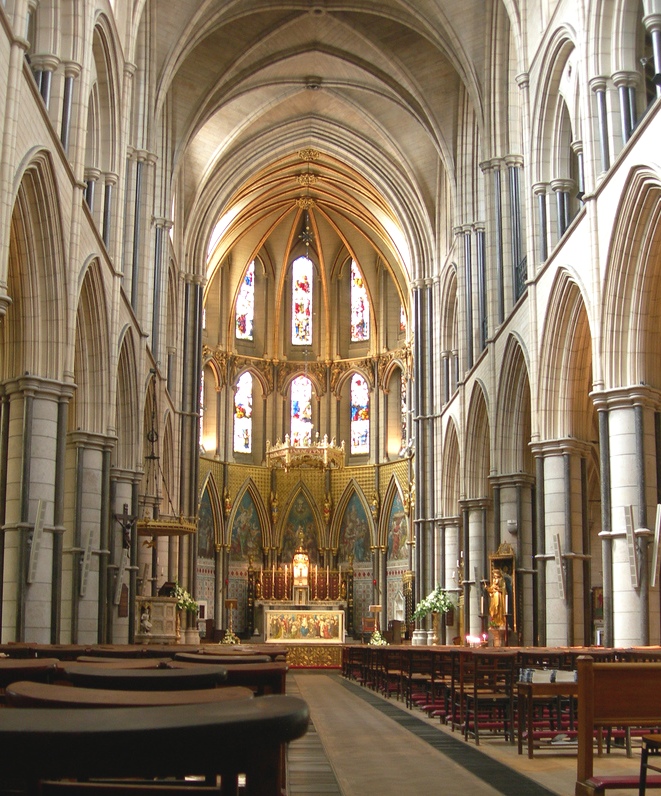
st_james_spanish_place
St James, Spanish Place

On Saturday, October 18, the marriage was celebrated at St. James’s, Spanish-place, between Mary Carmela Lescher, daughter of Mr. and Mrs. Frank Harwood Lescher, of 31, Devonshire-place, and George Lynch, the well-known war and special correspondent, eldest son of Mr. and Mrs. George Lynch, Mount Verdon, Cork. The marriage ceremony was performed by the Rev. Wilfrid Lescher, 0.P., uncle of the bride. The Very Rev. Canon Gildea, rector of St. James’s, assisted. The Rev. F. Pius Cavanagh, 0.P., was present. The nuptial Mass was said by the Rev. H. Laughton; Master Graham Lescher, brother of the bride, served at the altar. After the Mass, the Rev. Wilfrid Lescher announced that the Papal Blessing had been received from Rome, and, addressing the happy couple, he said that they had received the blessings of the Church’s rite, to which he was happy to add the special Benediction of Pope Leo XIII., who sent it to them most lovingly. He wished to express further the good wishes of all present. When the angel Raphael had conducted Tobias to a happy marriage, he enjoined him to declare the works of God. It was fitting the same should be done now. They had been led to choose each other. That choice was a great act in their lives. The sacramental grace which ratified it was a great gift from God. They ought to honour God and express gratitude for such a gift. Might the joy of this day grow and last and become a state of persevering fidelity till it was crowned by the reward prepared in heaven for promises fulfilled.

st-james-spanish-place interior
St James, Spanish Place

The Church of St. James’s is a fine one, and on this occasion its beauties were well brought out by the artistic decoration. The choir sang during the Mass with its usual devotional and touching effect, under the direction of the Rev. Father Sankey. The bride wore a dress of white satin duchesse, draped with beautiful Carrickmacross applique; a graceful court train was composed of panne, lined with billowy chiffon. The two grown-up bridesmaids, Miss Mercedes Lescher, sister to the bride, and Miss Rosie Lynch, sister to the bridegroom, were dressed in soft white satin with Puritan capes of fine lace delicately embroidered in blues and greens; they wore black picture hats and carried bouquets of pink roses.

Two dainty little girls, Miss Rosalind Lescher, cousin to the bride, and Miss Laura Ball, in white satin, Kate Greenaway frocks, and large Hack hats, attended. They were escorted by two pages, Master Bernard Nugent and Master Jack Ball, in black velvet with lace collars. Later, there was a reception at 31, Devonshire-place, and the bridal presents were displayed.

The guests numbered over 200. The bride went away in a vieux rose coloured cloth gown with which was worn a handsome set of sables, and the picturesque costume was completed by a black Gainsborough hat.

Among the presents were: From the bride to bridegroom, pearl pin and walking stick; from the bridegroom to bride, diamond ring, pearl bracelet, and Chinese embroideries ; the Hon. Mrs. Petre, writing case ; Mr. and Mrs. Lynch, silver tea and coffee set ; Mr. Lynch, cheque and watch chain ; Miss Mercedes Lescher, sable muff; Lady Austin, Carrickmacross applique ; Rev. Wilfrid Lescher, portrait of the Pope; Mrs. J. Leeming, silver clock ; Sir Evelyn Wood, George III. punch ladle ; Mrs. Casella,(probably Edward Lescher’s mother in law) silver fruit dishes ; Mrs. F. Harwood Lescher, cheque and diamond ring ; Sir Donald and Lady Macfarlane, silver frame ; the Rev. P.A. O’Bryen, cheque ; Miss Clara Bagshawe, table centre ; Mr. and Mrs. C. Casella, silver match-box case  ; Mr. Rex O’Bryen, electric clock; Mr. and Mrs. Witham, silver salver ; Sir Joseph and Lady Walton, artistic frame ; Mr. Dalglish, book ; Mr. and Mrs. E. O’Bryen, silver vases ; Mr. and Mrs. E. Harding, cakestand, cream jug, and sugar basin ; Mr. and Mrs. Snead Cox, blotter and paper case ; Mr. and Mrs. A. O’Bryen, silver fish slice and fork ; Miss M. Bellasis, silver pepper box ; Miss Marie Hussey Walsh, silver frame ; Mr. and Mrs. J. Leeming, photo frame ; Mr. and Mrs. Pugin, table centre ; the Very Rev. Canon Gildea, book ; the Marchese and Marchesa Mattie, cheese and butter dish ; Lady Vavasour, Minton china dish.

Victorian Mourning Etiquette

Following Queen Victoria’s example, it became customary for families to go through elaborate rituals to commemorate their dead. This included wearing mourning clothes, having a lavish (and expensive) funeral, curtailing social behaviour for a set period of time, and erecting an ornate monument on the grave.

Mourning clothes were a family’s outward display of their inner feelings. The rules for who wore what and for how long were complicated, and were outlined in popular journals or household manuals such as The Queen and Cassell’s – both very popular among Victorian housewives. They gave copious instructions about appropriate mourning etiquette. If your second cousin died and you wanted to know what sort of mourning clothes you should wear and for how long, you consulted The Queen or Cassell’s or other manuals.

For deepest mourning clothes were to be black, symbolic of spiritual darkness. Dresses for deepest mourning were usually made of non-reflective paramatta silk or the cheaper bombazine – many of the widows in Dickens’ novels wore bombazine. Dresses were trimmed with crape, a hard, scratchy silk with a peculiar crimped appearance produced by heat. Crape is particularly associated with mourning because it doesn’t combine well with any other clothing – you can’t wear velvet or satin or lace or embroidery with it. After a specified period the crape could be removed – this was called “slighting the mourning.” The colour of cloth lightened as mourning went on, to grey, mauve, and white – called half-mourning. Jewelery was limited to jet, a hard, black coal-like material sometimes combined with woven hair of the deceased.

Men had it easy – they simply wore their usual dark suits along with black gloves, hatbands and cravats. Children were not expected to wear mourning clothes, though girls sometimes wore white dresses.

The length of mourning depended on your relationship to the deceased. The different periods of mourning dictated by society were expected to reflect your natural period of grief. Widows were expected to wear full mourning for two years. Everyone else presumably suffered less – for children mourning parents or vice versa the period of time was one year, for grandparents and siblings six months, for aunts and uncles two months, for great uncles and aunts six weeks, for first cousins four weeks.

From: http://www.tchevalier.com/fallingangels/bckgrnd/mourning/

Introduction to Burke’s Landed Gentry 1912

EIGHT years having passed, obviously it had become necessary that a new edition of the ” Landed Gentry of Ireland ” should be issued, in order that the genealogical records of the various families appearing in the book might be revised to date, and the happenings of birth, marriage and death, in the interval, be added to the pedigrees.

But one is now confronted with the problem whether there still remains a Landed Gentry at all in that country, so great has been the compulsory alienation of land in Ireland during the last decade.

Whatever may be the decision as to future editions, in the present one there has been no violent disqualification of families because the broad acres of their estates have been contracted to the lands about the mansion house ; in fact, but very few pedigrees have been removed. Although the fascination of the ownership of land land hunger is still a dominant characteristic of the British race, it cannot be said to possess its ancient importance ; and the interest of the public, it seems to me, lies in the families themselves rather than in the extent of their ownership of land. The growth of the new landless plutocracy has shifted the importance of things, and is a factor that must weigh in the future, and be considered in conjunction with absenteeism. But the problem is for the next edition.

Although a number of new and interesting pedigrees are now included in ” Burke ” for the first time the changes in the present volume are chiefly caused by the revision of pedigrees and the occurrences of the interval. The latter have been exceedingly numerous, and I am chiefly indebted to the very many members of the families concerned with whom I have been in correspondence or to whom I have submitted proofs, for an enormous amount of assistance generously given to me. For that my grateful thanks.

In the revision of the pedigrees there will be found a number of important alterations. Some of my most vehement correspondents seem to fancy that “Burke”  is edited by Hans Andersen. That really is quite a mistake. Of course, one knows that every Irishman is the descendant of countless kings, princes and other minor celebrities. One admits it, the thing is unquestionable. One knows, of course, also, that every family is the oldest in Co. Galway, or Co. Sligo, or somewhere else, and that, for some reason or other, every Irishman is the ” head ” of his family, and I am growing weary of reading letters which assure me that the mushroom families included in the Landed Gentry pale into insignificance beside the glories of those which are omitted, and I am slowly learning so often am I so assured that all the pedigrees herein are hopelessly wrong. But although I may not have included quite so much as has been desired, I think I may claim that what is inserted may be relied upon. All genealogical works started upon a model of narrative, in which a place might properly be found for supposition and tradition. There has been a gradual transition to exactitude of fact, which is the aim in view, and which I claim has now been reached.

For the present edition every coat-of-arms has been carefully scrutinized and compared with the original records in Ulster’s Office. I believe I can now claim for the Irish volume that, apart from unintentional error, every single one which is quoted herein can be relied upon as borne by unquestionable right. Families to whom no armorial bearings are assigned have none recorded to them in Ulster’s Office.

The publishers have consented to incur the expense of bringing the Landed Gentry into line with the PEERAGE and BARONETAGE by illustrating every coat-of-arms in the book. This must add very greatly to its interest, and I trust their lavish expenditure on this point will receive the reward it merits in the increased appreciation of the public.

I am indebted to Mr. Farnham Burke, C.V.O., C.B., Norroy King of Arms, for much assistance in the preparation of this edition, and I have profited greatly from the kind help and from the labours of Mr. Ashworth Burke, who has resigned the editorship of the present edition, whilst many others have taken much trouble with the single-minded desire for the improvement or the accuracy of the volume. To all I tender my thanks, but above all I am under a deep debt of gratitude to Mr. G. D. Burtchaell, Athlone Pursuivant.

His able and willing assistance have been acknowledged in former editions, but on the present occasion I have had the advantage of his help to an extent little short of a scrutiny of every line in the book. He it is who has examined the arms, and has gone to endless trouble to solve doubts and difficulties as they have become apparent in the pedigrees. I really think his name should be on the title page as editor. Mere words of thanks seem a feeble acknowledgment of what this edition owes to his untiring assistance.

THE EDITOR.

SIR BERNARD BURKE, C.B., ULSTER KING OF ARMS.

New Edition, 1912

REVISED BY A. C. FOX-DAVIES, BARRISTER-AT-LAW.

LONDON :

HARRISON & SONS, 45, PALL MALL, S.W.,

LONDON : HARRISON AND SONS, PRINTERS IN ORDINARY TO HIS MAJESTY,

ST. MARTIN’S LANE.

ROCHE OF GRANAGH CASTLE AND RYE HILL. -BLG 1912

ROCHE OF GRANAGH CASTLE AND RYE HILL.

STEPHEN REDINGTON ROCHE, of Rye Hill, co. Galway, Granagh Castle, co. Kilkenny, and Moyvanine, co.’Limerick, J.P. co. Galway, b. 14 Nov. 1859 ; m. I Aug. 1903, Lily, youngest dau. of the late George Roche. Washington Brasier-Creagh, of Creagh Castle, Doneraile, and Woodville, Buttevant, co. Cork (see that family).

Lineage. JOHN ROCHE, of Castletown Roche, was a member of the Catholic Parliament or Council held at Kilkenny during the Civil War, and his name appears as such to the declaration of the Irish Roman Catholics, 1641. His eldest son, ROBERT ROCHE, m. Juliana O’Moore, dau. of Alexander O’Moore, and was s. by his eldest son, STEPHEN ROCHE, known by the designation of Dov or Black, from his complexion, whose estate, already injured by composition in the time of CROMWELL, was entirely forfeited under WILLIAM III.

Compelled in consequence to leave co. Cork, he retired to Kilrush, co. Clare, and afterwards took up his abode at Pallas, co. Limerick, in the vicinity of his brother-in-law, William Apjohn. He m, Anastasia, elder dau. and co-heir (with her sister Catherine, who m. William Apjohn) of Thomas Lysaght, and was s. by his son,

JOHN ROCHE, b. 1688 ; m. Anne, youngest dau. of Philip Stackpole, of Mount Cashel, Kilneen, and Kilcoman, co. Clare, and had, with other issue,

1. STEPHEN, his heir.

2. John, m. Miss Harold, cousin of Gen. Harold, of the Saxon service, and had a dau., Mary Anne, m. John Meade, of Limerick.

3. Philip, of Shannon View, co. Limerick, m. Margaret, dau. of John Kelly, of Limerick, and had issue,

I. John, m. Margaret, dau. of Charles’ Whyte, of Leixlip (see WHYTE of Louehbrickland) , and d.v.p., having had issue,

(1) Philip, of Donore, co. Kildare, m. the Hon. Anna Maria Plunkett, dau. of Randall, 1st Lord Dunsany, and by her (who m. zndly, 22 July, 1822, Admiral Ryder Burton, R.N., K.H., and d. 26 April, 1856) had issue,

1. John, Lieut.-Gen. late 2nd Life Guards, m. 3 April, 1869, Agnes Jane, dau. of James Mugford. He d.s.p.

1. Margaret Radaliana, m. 3 Nov. 1836, Thomas, 16th Lord Trimleston. She d. 4 Sept. 1872. He d. 4 Aug. 1879, and had issue (see BURKE’S Peerage). 

2. Anna Maria, m. 20 Nov. 1830, Thomas Oliver, 12th Lord Louth. She d. 18 Jan. 1878. He d. 26 June, 1849, leaving issue.

(2) Charles Whyte, of Ballygran, co. Limerick, m. his first cousin, Letitia, dau. of John Whyte, of Loughbrickland (see that family), and by her had issue,

i. Charles Philip, of Ballygran, Capt. Cavan Militia, b. 1819 ; m. 1861, his cousin, Louisa, dau. of Nicholas Charles Whyte, D.L., of Loughbrickland, Capt. R.N., and d. 10 Nov. 1871, having had issue,

a. Charles Hugh, b. 1863 ; d. unm. 1889.

b. Henry John, Lieut.-Col. Indian Army, b. 12 Aug. 1864.

c. Edward Richard, B.A., A.M.I.C.E., b. 1867.

d. Arthur, b. 1870 ; d. 1892.

a. Letitia Mary, m. 1886, J. Knox Wight, I.C.S.

b. Frances, m. 1899, R. Bodkin Mahon, F.R.C.S.E.

1. Letitia Maria, m. 18 Oct. 1842. Sir John Nugent, 3rd Bart., of Ballinlough, who d. 16 Feb. 1859, leaving issue (see BURKE’S Peerage).

2. Helena Maria, m. 1st, 1845, Richard Barnewall, of Bloomsbury, co. Meath, who d.s.p. 3 Feb. 1866. She m. 2ndly, Vicomte de Chasteigner.

(1) Margaret, m. John Therry, of Castle Therry, co. Cork, sometime Chairman of the Commissioners of Excise in Ireland.

(2) Anna, d. unm.

(3) Mary, m. 12 Oct. 1803, Major William Skerrett, of Finavara, co. Clare, and d. 1821, leaving issue (see that family).

(4) Helen, d. unm.

(5) Fanny, m. James Skerrett, of Carnacron, co. Galway.

(6) Letitia, m. 8 May, 1816, Thomas Kelly, of Shannon View, Limerick, and had issue (see KELLY of Rockstown Castle).

(7) Rose, d. young.

1 . Ellen, m. Peter Daly, of Cloncagh, co. Galway.

2. Mary, m. 15 July, 1783, George Ryan, of Inch, co. Tipperary, and had issue (see that family).

3. Margaret, m. July, 1787, Standish Barry, of Leamlara, and had issue (see that family).

1. Jane, m. John Sheehy, of Cork, and had a dau. m. Bryan Keating, by whom she was mother of General Keating.

2. Christiana, m. James Lombard, of co. Cork.

The eldest son,

STEPHEN ROCHE, b. 5 Dec. 1724 ; s. his father 1760. He m. 1st, Margaret, dau. of Richard Meade, and had issue,

1. JOHN, his successor, one of the most eminent merchants in Dublin, who m. Mary, dau. of Thady Grehan, of that city but d.s.p. Sept. 1825.

2. Richard (Rev.), who d. 1805.

3. George, of Granagh Castle, co. Kilkenny, d.s.p.

1. Anne, m. Peter Long, of Waterford.

2. Mary, m. Peter Grehan, of Dublin, and has issue (see GREHAN of Clonmeen).

Stephen Roche m. 2ndly, Sarah, dau. and co-heir of John O’Brien, of Moyvanine and Clounties, co. Limerick, and by her (who d. 8 Nov. 1786) had issue,

4. STEPHEN, of Moyvanine and Clounties, m. Maria, dau. of John Moylan, of Cork, and had issue,

1. STEPHEN, of Rye Hill.

2. John.

1. Mary, a nun.

2. Sarah, m. Sir John Howley, Serjeant-at-Law, and d. 1856.

3. Anne.

4. Helena.

5. Harriet, m. Daniel Cronin.

5. Thomas, of Limerick, m. Helen, dau. of John Ankettle, and has issue,

1. Stephen, m. Catherine, dau. and co-heir of Christopher Knight, of co. Limerick.

2. John.

3. William, of Dublin, m. Eliza ; dau. and co-heir of Christopher Knight, of co. Limerick.

1. Helen, m. Daniel Ryan Kane, M.A., Q.C., Chairman of Quarter Sessions, E. R. co. Cork, and had issue.

2. Sarah.

6. James, of Cork, author of The Memoirs o/ an Octogenarian, m. Anne, dau. of John Moylan, by whom he left at his decease, two daus.,

1. Marianne.

2. Sarah, m. Collins.

7. William, M.P. for Limerick, m. the dau. of Dillon, and d. in Limerick 1850, having by her had issue,

with a younger son, Henry, d. young, an elder son, James, of Limerick and Great Yarmouth, an Officer of the Customs, m. Ellen, dau. of John Hogan, of Limerick, and had issue,

(1) William, b. in Limerick ; d. at Bury St. Edmunds.

(2) Henry, b. in Limerick ; d. at Great Yarmouth.

(3) James, of Detroit, U.S.A., b. n Feb. 1843; m. and has issue, a son and a dau., Helena Mary, m. 9 Feb. 1897, John Francis O’Brien.

(4) John, b. at Great Yarmouth ; d. in London.

(1) Anne.

(2) Julia, a nun at Skipton, Yorks.

(3) Helena. (4) Mary.

3. Sarah, m. Francis French, of Portcarran, co. Galway, who d.s.p.

4. Helen, m. Denis O’Meagher, of Kilmoyler, co. Tipperary, who is dec.

5. Anastasia, m. Edward O’Meagher, of Marl Hill, co. Tipperary.

Stephen Roche m. 3rdly, Mary Anne, dau. and co-heir of Richard Ankettle, M.D., but by her (who d. Dec. 1821) he had no issue.

He d. 12 Feb. 1804, and was s. by his grandson,

STEPHEN ROCHE, of Granagh Castle, co. Kilkenny, and Rye Hill, co. Galway, m. 1832, Eleanor, eldest dau. and co-heir of Thomas Redington, of Rye Hill, co. Galway, and by her (who d. 1891) had issue,

1 THOMAS REDINGTON, late of Rye Hill.

2. Stephen, d. unm. 1853.

1. Eleanor, d unm. 1855.

Mr. Roche d. 4 Sept. 1864, and was s. by his eldest son,

THOMAS REDINGTON ROCHE, of Rye Hill, co. Galway, Granagh Castle, co. Kilkenny, and Moyvanine, of Limerick, J.P. and D.L. High Sheriff co. Galway 1869, b. 14 July, 1837 ; m. 8 Sept. 1858, Jane Elizabeth, 5th dau. of Anthony Cliffe, of Bellevue, co.Wexford, and d. 10 May, 1900, leaving issue,

1. STEPHEN REDINGTON, now of Rye Hill.

2. Anthony, b. 16 April, 1862.

3. Thomas James, b. 25 July, 1863.

4. Charles, b. 16 Sept. 1867 ; d. 25 May, 1898.

5. George Philip, b. 21 Nov. 1869.

1. Eleanor Mary, a nun, d. 18 Aug. 1903.

2. Isabella Theresa.

3. Cecilia Jane, d. in infancy.

Seat Rye Hill, Athenry, co. Galway.

Pedigree of the More O’Ferralls

Descended from two great Catholic Irish families, the More O’Ferrals combined with the marriage in 1751 of the Balyna heiress Letitia O’More and the Dublin banker Richard Ferrall. At the close of the 18th century, Richard and Letitia’s sons played a prominent role on the battlefields of Europe. During the 1840s, Sir Richard More O’Ferrall emerged as one of the great champions of religious toleration and independence. Latter members of the family include the police commissioner John, the film director George, the horse trainer Roderic, the de Beers marketing guru Rory and the unfortunate Richard, murdered by the IRA in 1935. Kildangan is now the property of Sheikh Maktoum whilst Balyna is an exclusive hotel.

The More O Ferralls descend from the House of Mordha (Moore or More) who populated the Irish midlands in the early Christian period. During the mid 16th century, English Adventurers seized the family lands in Co. Laois as part of the first plantation of Ireland. Rory Og O’More spearheaded a rebellion against the Dublin government of Queen Elizabeth in the 1560s and 1570s. The insurrection was unique for the age in that it involved a coalition of Irish clans, headed up by the O’More and O’Byrnes. On New Year’s Eve 1577, the government invited the O’Mores to a peace conference in the ancient rath of Mullaghmast near Ballitore, Co. Kildare. Shortly after the forty O’More delegates arrival, the English opened fire with their muskets and killed them all. The brutality of the Mullaghmast massacre stunned the native Irish. Rory Og, who had sagely avoided the conference, rapidly launched a major campaign against the colonists but was hunted down and executed three months later. In an attempt to quell the ongoing violence, Queen Elizabeth subsequently granted an estate at Balyna, Moyvalley, Co. Kildare, to Rory’s younger son, Calaogh (or Charles) O’More. Balyna was to be the home of the O More chieftains and their descendants for the next 400 years.

In October 1641 Rory O More, a cousin of Calaogh, joined forces with Conor Maguire, Baron of Enniskillen, in a plot to seize Dublin Castle. Betrayed by Owen O’Connelly, Rory just managed to escape but the others were executed. Rory was hiding in the thick woods of Balyna when a small force of English soldiers surprised him. He plunged his walking stick into the earth and made for the hills.[1] The stick took root and evolved into a conifer. Family legend had it that when the tree died, the O’More family would leave Balyna. In 1957 the tree, a Scots Pine, died and fell in a storm. Balyna passed from the More O Ferrall family shortly afterwards.

Amongst those who fought with Rory O’More in his subsequent war against Cromwell were his cousins Roger and Lewis, sons of Calaogh O’Moore by his wife Margaret Scurlock.[2]. Colonel Roger O’Moore married Jane Barnewall, daughter of the Catholic hero Sir Patrick Barnewall of Turvey.[3] His brother Colonel Lewis O’Moore married Mary, daughter of Philip MacHugh O’Reilly. Two sons became priests while the third, Anthony, succeeded to Balyna and married Anne Hope, daughter of Alexander Hope of Mullingar.

Anne O’More gave Anthony two sons Roger II (d. 1746) and Lewis II (1674 – 1737) and a daughter Mary who married Captain Conor O’Reilly. The family was much involved with Spain during the early 18th century, presumably through their continuing adherence to Roman Catholicism. Roger II’s eldest son Anthony became a General in the Spanish service. Lewis II’s daughter Mary was Maid of Honour to Queen Isabella Farnese of Spain. Their cousin, another Mary, married Tirogh O’Neill and died in Madrid.

Lewis II succeeded to Balyna and married Alicia, a daughter of Con O’Neill. He died on 15th February 1737 and was succeeded by his only son James, the last in the male line of the O’Moores of Balyna. In 1731, James married Mary, daughter of Ambrose Madden of Derryhoran, Co. Galway. Upon James’s death in the winter of 1779, Balyna passed to his only surviving child, Letitia O’Moore. In April 1751, the teenaged Letitia had married 22-year-old banker Richard Ferrall (1729 – 1790).[4]

The Ferralls claim descent from Ir, the second son of Milesius of Spain who came to Ireland in the 4th century BC. In the early 18th century, Richard O’Ferrall, a Dublin brewer, married Catherine Ambrose, daughter of William Ambrose, also a wealthy Dublin brewer. In 1728, Richard’s son Ambrose O’Ferrall married Anne Dillon, daughter of Theobald Dillon, founder of Dillon’s bank, the only Catholic bank in Ireland at this time. In 1748, the above-mentioned Richard Farrell [sic] joined his brother-in-law Thomas in Dillon’s Bank in 1748 to form “Thomas Dillon, Richard Farrell & Company”. Three years earlier, a failed rebellion in Scotland spear-headed by Bonnie Prince Charlie, was still causing havoc with the Irish economy, resulting in a serious increase and over-circulation of paper money. In 1754 three prominent Irish banks fell – Dillon & Farrell was the first to fall. The partners absconded to France where Thomas Dillon died in 1764. Richard returned to Ireland some years later and, in 1779, he moved to his wife’s childhood home at Balyna.

Richard and Letitia had three sons, Ambrose, James and Charles, and six daughters. The girls married into relatively affluent gentry families from Cavan and Longford such as Nugent, Palles, Bolger and Taylor. The three sons all sought military careers on the continent.

The eldest son Major Ambrose O’Ferrall (1752 – 1835) was educated at Dublin’s Fagan’s Academy before going to the Jesuit College in Bruges. In 1770 he entered the Military Academy in Turin, where he was taught to ride by the famous Chevalier Capitolo. The Academy was founded by King Carlo Emmanuelle II of Sardinia in 1739 and is regarded as the cradle of Italy’s military traditions. He subsequently served with the Royal Sardinian army prior to becoming a Cornet in the Duke of Savoy’s Dragoons in 1772. He remained in the service for 18 years, rising to the rank of Major, but returned to manage the family estate in Ireland on learning of his father’s death in March 1790. In 1815 he commissioned the construction of a new big house at Balyna, which remained the family headquarters until its destruction by fire in 1878.

The middle brother Major General James O’Ferrall (1753 – 1828) entered the Austrian Service in 1773 and served in the Revolutionary Wars in Turkey and Italy. From 1792 to 1814 the French Revolutionary armies completely overran the German states, occupying Munich and securing Bavaria as an absolute vassal of the French. James served for the Austrian army against the French but was wounded and taken prisoner at Landsberg in Bavaria on 11th October 1805. After his release he served as Chamberlain to the Emperor Franz I of Austria. He later returned to Ireland and settled at Balliane House, County Wexford. The house was left to him by a distant cousin, Miss Susanna Ambrose, a celebrated beauty known as “the dangerous papist”. In order to inherit, he was obliged to take the name and arms of Ambrose. He died unmarried in 1828.

The youngest brother Adjutant General Charles O’Ferrall (1768 – 1831) was educated at the Jesuit College in Liege. In 1791, the 23-year-old Kildare man became a soldier in the Piedmontese army of the King of Sardinia. When the Sardinian monarchy was overthrown by Napoleon in 1798, Charles relocated to northern Italy where he seems to have operated on a rather more mercenary basis. In August 1799 he commanded a cavalry unit during the Austro-Russians shock defeat of Napoleon’s army at the battle of Novi Liguri. He was subsequently made 1st Equerry, gentleman of the bedchamber, major-general of cavalry and adjutant-general. Charles was evidently very close to the Italian Royal family for when his wife, Margaret Whyte of Leixlip, gave him a son in 1812, the child was named for his godfather, King Victor Emmanuel I. He retired to Ireland where he died at his brother’s Wexford house, Balliane, in 1831. His son Victor returned to Ireland to manage the Balliane estate but ultimately his mismanagement was so chronic the property had to be sold. Victor Emmanuel More O’Ferrall emigrated to America and died alone and unmarried in Albany in September 1864.

Major Ambrose O’Ferrall married twice and had ten children. In 1796 he took as his first wife Mary Anne, only child of John Bagot, patriarch of another prominent Catholic family based at Castle Bagot, Co. Dublin. She gave him five sons and five daughters before her death in the winter of 1810. [5] The sons were educated at Downside and Stoneyhurst with the exception of the fourth, Robert , who was ordained a priest in 1832 but died of cholera two years later, and Charles, the youngest, who went to Clongowes Wood and founded the Kildangan branch. One daughter, Letitia, a nun in the Sisters of Charity, gave £3,000 for the purchase of a house in St Stephen’s Green, Dublin, which grew to be one of Dublin’s largest hospitals, St Vincent’s. She later transferred to the Order of Saint Francis de Sales and died in Brussels in 1859.[6]

Major O’Ferrall was succeeded at Balyna by his firstborn son, the Right Hon. Richard More O’Ferrall, MP, DL, JP. Born on 10th April 1797 and educated at Downside and Stonyhurst, Richard was elected MP for Co. Kildare in 1830, a seat he retained until 1847 when appointed Governor of Malta. When a Royal Commission was issued in 1833 to investigate the condition of the poor in Ireland, Richard and the Archbishop of Dublin were its two Catholic members. He was an adviser to the Catholic University, a friend of Cardinal Wiseman and a supporter of Daniel O Connell. In 1835, under the administration of Lord Melbourne, he became Lord of the Treasury, First Secretary of the Admiralty and, in 1841, Secretary to the Treasury. In 1847 he was the first civilian to hold the post of Governor of Malta. As such he helped develop the island into one of Britain’s most important strategic naval bases. He also secured the passing of a new Constitution for Malta in 1849, which effectively allowed for Maltese home rule. In 1851 he resigned in protest against the Prime Minister, Lord John Russell, who had spoken out against a papal bill seeking to restore a Catholic hierarchy in England. In 1856 he won the parliamentary seat of Co. Longford which he held until 1865. In September 1839 he married Matilda (d. 1882), daughter and co-heir of the 3rd Viscount Southwell. They had a son, Ambrose, and a daughter, Maria who married the Crimean War hero Sir Walter Nugent, 2nd Baronet, of Donore, Co. Westmeath.[7]

In 1878, the house at Balyna was badly burned in a fire. Richard died in Dun Laoghaire (Kingstown) in October 1880 and was succeeded by his 34-year-old son Ambrose More O’Ferrall, DL, JP, High Sheriff of Counties Kildare (1876) and Carlow (1887). In October 1872 Ambrose married Jessie Gordon-Canning, daughter of Patrick Robert Gordon-Canning of Hartpury Hall in Gloucestershire.[8] Shortly after his inheritance of Balyna, he recruited the ecclesiastical architect WH Byrne to design a new Italianate style house at Balyna. Ambrose died in April 1911 leaving two daughters – Mabel who married Major Edmund Dease, MP, of Rath House, Ballybrittas, Queen’s County and Alice who married Alexander Lattin Mansfield of the Morristown Lattin family (qv).

As such the Balyna estate passed to Ambrose’s cousin Edward More O’Ferrall. Born in 1846, Edward was the son of Major Ambrose O’Farrell’s second son, John Lewis More O Ferrall who had been appointed Commissioner of the Dublin Metropolitan Police on its establishment in 1871. Edward’s mother Clare was a daughter of Thomas Segrave of Cabra.[9] John and Clare lived between Granite Hall in Kingstown, Co. Dublin and Lisard in Co. Longford. Edward was a magistrate of some influence in Longford but his ownership of Balyna was short-lived as he died three years after the inheritance. Balyna duly passed to his eldest son John by his wife Juliana, daughter of Henry Lambert, MP, of Carnagh, Co. Wexford.

John More O’Ferrall was born in February 1872, the eldest of six sons and two daughters.[10] His brother Dr. Lewis More O’Ferrall had a distinguished career in World War One and was father to the film and theatre director George More O’Ferrall. George’s only son Rory is presently Director of Public and Corporate Affairs for the De Beers Group in London. Another brother Gerald More O’Ferrall inherited Lisard and married Geraldine Fitzgerald, granddaughter of the 4th Duke of Leinster (qv). Like so many of his forbears, John evidently had a flair for all things Mediterranean and, in October 1901, he married an Italian girl Cesira Maria, daughter of David Polenghi of Milan. By this marriage he had two sons, Gerald and Charles, and five daughters.[11]

Upon John’s death in October 1925, his 21-year-old son Gerald Rory More O’Ferrall (1904 – 1976) succeeded to Balyna. Gerald was educated at Clongowes Wood and, on 7th January 1930, married Maureen, daughter of Denis Kennedy, FRCSI, of Hollywood, Carrickmines, Co. Dublin.[12] They had five sons and two daughters who in turn had some 26 children.

Balyna was sold in 1960 and was owned by Bewley’s Oriental Cafes Ltd until 1983.

FOOTNOTES

[1] Rory went on to become one of the principal leaders of the Confederate Army in Ireland, rallying both Gaelic Irish and Old English under his banner, assuring them his ambition was to defend the King and preserve Catholicism. His initial campaigning resulted in victory over the English at Julianstown, Co. Meath. As the war ran on, the Confederation collapsed. Rory was last heard of in 1652 escaping from Boffin Island, Co. Galway, disguised as a fisherman.

[2] Their cousin Colonel Charles O’More commanded a troop of horse in Owen Roe O Neill’s army. In 1688 Colonel O’More raised a regiment of foot in which all barring two of its members were natives of the Queen’s County. All the officers, except these two, were killed at the battle of Aughrim on Sunday 12 July 1691.He died in 1601, leaving a daughter Margaret who married Thomas Plunkett of Clonebraney.

[3] Roger’s only son Charles was a Colonel in the Jacobite army but was killed at Aughrim on 12th July 1691. Of his four daughters, Eleanor married Daniel McMurrough Kavanagh, Mary married Tirogh O’Neill and died in Madrid, Elizabeth married Christopher Bealing and died in 1729 in her 100th year and Anne married Patrick Sarsfield of Lucan and was mother to the famous Patrick Sarsfield, Earl of Lucan.

[4] Richard’s younger sister Catherine married George Lattin of Morristown (qv).

[5] In 1811 the Major married secondly Margaret Dunne (d. 30 July 1830), youngest daughter of Francis Dunne of Brittas, Co. Laois.

[6] St. Vincent’s has since been relocated to Donnybrook. The More O’Ferralls are also credited with introducing the Sisters of Bon Secours to Ireland in 1861 with the establishment of a community on Dublin’s Grenville Street. Today, Bon Secours is the largest private healthcare provider in Ireland.

[7] Maria’s son Sir Walter Nugent, 4th Bart, was sometime Senator of the Irish Free State and President of the Dublin Chamber of Commerce.

[8] Jessie died in April 1934.

[9] Edward’s sister Ellen married, as his second wife, Charles Owen O’Conor, PC, MP, the O’Conor Don of Clonalis House, Co. Roscommon.

[10] John’s younger sister Ellen married Charles Hugh O’Connor, KM, President of the Irish Branch of the Knights of Rhodes and Malta, and was mother to the Rev. Charles Denis O’Conor, the O’Conor Don.

[11] The second son, Charles, married a Scottish girl, Ivy Officer and settled in the Cape Province of South Africa where, I believe, he still has descendents living.

[12] Maureen died on 11th December 1971

FROM ‘THE LANDED GENTRY & ARISTOCRACY OF CO. KILDARE’ BY TURTLE BUNBURY & ART KAVANAGH (IRISH FAMILY NAMES, 2004).

O’FERRALL OF BALYNA – BLG 1871

O’FERRALL OF BALYNA

More-O’Ferrall.  The Right Hon Richard of Balyna, co Kildare. PC. JP. and DL.           b 1797 m 28 Sept 1839 Hon Matilda Southwell 3rd dau of Anthony 3rd Viscount Southwell KP and has

1.Ambrose Richard

2.Maria Anne m. 1860 to Walter George Nugent Esq eldest son of Sir Percy Nugent, Bart. of Donore.

Mr More O’Ferrall, formerly MP successively for co Kildare and Longford was appointed a Lord of the Treasury 1835, Secretary to the Admiralty 1839, and Secretary to the Treasury 1841. From 1847 to 1851 he held the office of Governor of Malta

Lineage.

Gen1

Anthony O’More chief of his name, Lord of Leix, had a son and two daughters:

  1. Melaghlan O’More d. 1481, m. Catherine daughter. of Conn O’Neill of Tyrone
  2. the elder Dorothy, wife of Thomas Fitzgerald, 7th Earl of Kildare
  3. the younger, m. to Brian Fitzpatrick of Castlebar

gen 2

Melaghlan O’More d. 1481 leaving a son:

Gen3

  1. Connell O’More  m. a dau of Charles O’Dempsey, d. 1518 and left three sons, and one dau

Gen 4

  1. AN other
  2. Roger O’More, Caoch, Lord of Leix. The 2nd son Roger O’More, Caoch, Lord of Leix was slain by his brother Philip 1556. He m. Margaret, daughter and heir of Thomas Butler, 3rd son of Pierce, 8th Earl of Ormonde, and had issue.
  3. Philip
  4. Ellen m. Sir Oliver Grace, Baron of Courtstown.

The 2nd son Roger O’More, Caoch, Lord of Leix was slain by his brother Philip 1556. He m.Margaret, dau. and heir of Thomas Butler, 3rd son of Pierce, 8th Earl of Ormonde, and had issue.

Gen 5

  1. Rory, slain 1578, he had a dau. Honora, wife of John Morres, Esq, co. Tipperary.
  2. Charles of Balyna, (Kedagh,) page to Queen Elizabeth, who gave him Balyna as a new year’s gift. He m. the dau. of Sir Maurice Fitzgerald, Knt of Luagh, co. Kildare
  3. Lewis, whose son

Gen6

Walter, m. Alicia Elliott, and had a son,

Gen 7

  1. Patrick, m.  Joan, dau. of O’Hely, of co. Limerick, father of

Gen 8

  1. Edmund Moore esq, m. Elizabeth, daughter .of Maurice Graham esq , and had, with seven daughters, one son,

Gen 9

  1. James Moore, esq. of Dublin m. Mary, dau. of James Cullen esq, and widow of col. Keating, and d. 2 june 1741, leaving three sons

Gen 10

  1. Roger, who d.s.p.; (decessit sine prole)
  2. Edward, of whom presently;
  3. James, col of a regt in the French service, and afterwards Lieut-Col in the British army, who d. at Fontainbleau, 1813.

The 2nd son, Edward Moore esq of Mount Browne, co. Dublin, m. Jane Reynolds , of Dublin, and dying about the year 1787, left with three daus.,

Gen 11

  1. Jane, wife of Owen O’Conor, esq of Belanagare;
  2. Maria, wife of Valentine O’Connor, esq of Dublin; and
  3. Judith, wife of Patrick Grehan, esq of Dublin

an only son, James Moore esq of Mount Browne, who m. Anne, dau of Denis Byrne esq of co Wicklow, and dying about 1785, left issue

Gen 12

  1. Edward Moore esq of Seamore Place , Mayfair;
  2. Walter Moore esq of Liverpool d. unm.; and
  3. Anne widow of William Jermingham esq, brother of Lord Stafford.

The 2nd son

Charles O’More of Balyna d 1601, leaving (by Margaret Scurloch his wife) two sons and a dau., viz

  1. Roger, col confederated Catholics 1646, m Jane, dau. of  Sir Patrick Barnewall, Knt of Turvey, and had issue
  1. Charles, col in the army, killed at Aughrim 12 july 1691, s.p.
  2. Anne, wife of Patrick Sarsfield, of Lucan, and mother of Patrick, Earl of Lucan.
  3. Eleanor, wife of Daniel, son of Sir Hugh Morogh Kavanagh, Knt.
  4. Mary, wife of Tirlogh O’Neill.
  5. Elizabeth, wife of Christopher Beeling
  1. Lewis, of whose line we treat.
  2. Margaret, m. to Thomas Plunkett, esq of Clonebreney.

The 2nd son,

Col Lewis More, one of the confederated catholics in 1646, m. mary, dau of Philip-Mac Hugh O’Reilly, and was father of Anthony More esq of Balyna who m Anne, dau of Alexander Hope esq of Molingar, and had (with a dau Mary, wife of Capt Conor O’Reilly) two sons,

  1. Lewis his heir,
  2. Roger, whose will (dated 1 march 1746) was proved 9 jan 1748. He m. Ellinor, dau of William Wright esq, and has issue,
  1. Anthony O’More, gen in the Spanish service;
  2. May, wife of Robert Daly esq of Caulfield; and
  3. Mary, wife of Packington Edgeworth, esq of Longwood.

The elder son,

Lewis More, esq of Balyna, m Alicia, dau of Con O’Neill esq, and had with a dau,

  1. Mary, maid of honour to the Queen of Spain, m to –Ward esq of Madrid) a son and heir,
  2. James More esq of Balyna, whose will bears date 13 dec 1778; by Mary his wife, dau of Ambrose Madden esq of Derryhoran, he left an only dau, and heir,

Letitia More who m Richard O’Ferrall esq, only son of Ambrose O’Ferrall esq, by jane Dillion his wife, and dying 1778 (her husband survived till 1790) left several daus, viz,

  1. Mrs Boulger,
  2. Mrs Morris,
  3. Mrs Taylor,
  4. Mrs Pallas of Grouse Hall co Cavan, and
  5. Mrs Nugent of Killasons, co Longford)

And three sons, viz,

  1. Ambrose, his heir,
  2. James, maj-gen in the Austrian service, d 1828 aged 75,
  3. Charles, col in the Sardinian service, d 1831.

The eldest son

Ambrose O’Ferrall esq of Balyna, m 1796, Anne, only child of John Bagot esq of Castle Bagot, co Dublin, by Anne, his 1st wife, only dau, and heiress of W.Walsh esq of Kilmurry, co Meath, by Elizabeth Nangle, his wife, and by her (who d 1810) had issue,

  1. Richard More (Right Hon) now of Balyna House,
  2. John Lewis More, of Lissard, co Longford, J.P. and D.L., barrister-at-law, Commissioner of Metropolitan Police, Dublin, m 1836, Clare, dau of Thomas Segrave esq, a younger son of the Cabra family, and has a son, and three daus
  1. Edward Gerald
  2. Mary,
  3. Mia, and
  4. Ellen.
  1. James More
  2. Robert More, in holy orders, d 1834
  3. Edward More, of Kildangan, co Kildare, High Sheriff co Kildare 1856-7, m 1849, Susan, only child of Dominick O’Reilly esq of Kildangan Castle, co Kildare, and by her (who d 1855) has an only son Dominick, b 1855.
  4. Mary-Ann
  5. Letitie, a nun
  6. Louisa
  7. Catherine
  8. Rose-Anna, m Thomas Errington, esq of Clints, co York

Mr O’Ferrall m 2ndly, 1811, Margaret, youngest dau of the late F.Dunne esq of Brittas, Queen’s county, which lady d 1826. He d 1835, aged 83.

BLG 1871: http://tinyurl.com/oagryqp

Roche of Limerick

Extract from Burke’s History of Commoners of Great Britain and Ireland Vol 1

Published in London   MDCCCXXXIII (1833) {pp 669 – 671}

The family of Roche or Limerick has branched from that of Castletown-Roche, in the county of Cork. John Roche, of Castletown-Roche, descended from the Viscounts Fermoy, was a member of the Catholic Parliament or Council held at Kilkenny during the civil wars, and his name appears as such to the declaration of the Irish Roman Catholics in 1641.

His eldest son, Robert Roche, espoused Juliana 0’Moore, daughter of Alexander O’Moore, of Ballina, in the county of Kildare, and was succeeded by his eldest son, Stephen Roche, known by the designation of Dov, or Black, from his complexion,  whose estate, already injured by composition in the time of Cromwell, was entirely forfeited under William III.

Compelled in consequence to leave the county of Cork, he retired to Kilrush, in Clare, and afterwards took up his abode at Pallas, in the county of Limerick, in the vicinity of his brother-in-law, William Apjohn, esq.  He married Anastasia, elder daughter and co-heir of Thomas Lysaght, esq. (the other co-heir, Catherine, was the wife of Mr. Apjohn) and was succeeded by his son.

John Roche, esq. b. in 1688, who wedded Anne, youngest daughter of Philip Stacpole, esq. of Mountcashell (the fee of which estate is now in Thomas Roche, esq.) Kilneen, and Kilcoman, in the county of Clare, (by his wife, Christian, daughter of John Creagh, of Ballyvolane, in the same shire, colonel in the Irish army, anno 1642), and had, with other issue,

  1. Philip, m. Margaret, daughter of John Kelly, esq. of Limerick, and had issue
  2. John, who m. Miss Harold, cousin of General Harold, of the Saxon service, and had a daughter, Mary-Anne, who wedded John Meade, esq. of Limerick, and was mother of Captain Roche Meade, of the 21st regiment, deputy-adjutant-general.
  3. STEPHEN, b. 5th December, 1724 his heir.
    1. John, who m. Miss Whyte, dau. of Charles Whyte, esq. of Leix lip, and had a son,
        1. PHILIP, m. to the Hon. Anna Maria Plunket, daughter of Randall, thirteenth Lord Dunsany, and by her (who wedded, secondly, Captain Ryder Burton, R.N.) had one son, John, and two daughters; the younger of whom, Anna-Maria, m. in 1830, Thomas, present Lord Louth
        2. Charles, who m. his cousin, Miss Whyte, and has issue.
          • Ellen, m. to Peter Daly, esq. of Cloncagh, in the county of Galway.
          • Mary, m. to George Ryan, esq. of Inch, in the county of Tipperary.
          • Margaret, m. to Standish Barry, esq. of Lemlara, in the county of Cork, and is mother of Garret Standish Barry, esq. now M.P. for that shire
  4. Jane, m. to John Sheehy, esq. of Cork, and had a daughter, m. to Bryan Keating, esq. by whom she was mother of General Keating.
  5. Christiana, m. to James Lombard, esq. of the county of Cork, and had several daughters; of whom the youngest m. Daniel O’Connell, esq. of Ivragh, in the county of Kerry, and was mother of Charles O’Connell, esq. now M.P. for that shire. The eldest m. Daniel Cronin, esq. of the Park, in the county of Kerry.

The eldest son, STEPHEN ROCHE, esq. b. 5th December, 1724, succeeded his father in 1760. He m. first, Margaret, daughter of Richard Meade, esq. and had issue,

  1. JOHN, his successor.
  2. Richard, in holy orders, who cl. in 1805.
  3. George, successor to his brother, John.
  4. Anne, m. to Peter Long, esq. of Waterford, and had, with other children, a daughter, Margaret Long, who wedded first, James O’Brien, esq. of Limerick, and secondly Cornelius O’Brien, esq. M.P. for Clare; by the former of whom she had three sons,
  • John O’Brien, esq. of Elmville, in the county of Clare. who espoused Ellen, daughter of Jeremiah Murphy. esq. of Hyde Park, in Corkshire, and niece of the Right Rev. Doctor Murphy .
  • Peter O’Brien, esq. of Limerick, who m. Miss Shiel, sister of Richard L. Shiel, esq. M.P. for the county of Tipperary.
  • James O’Brien, esq. barrister-at-law.


5.Mary , m. to Peter Grehan,(b 1749) esq. of Dublin, and had issue,

  1. Thady Grehan, married and has issue.
  2. Stephen Grehan, who m. Miss Ryan, of Inch. and has issue.
  3. Margaret, (widow of John Joyce. esq.) a nun at Galway.
  4. Anne Grehan, m. to Thomas Segrave, esq. of the family of Cabra, and had, with other issue, two daughters,
  • Mary Segrave,m. to Nicholas Whyte, esq. late high sheriff of Downshire.
  • Anne-Frances Segrave, m. in 1826, to the Hon. William Browne, brother of the Earl of Kenmare.
  1. Mary Grehan, m. to Hubert Dolphin, esq. of the county of Galway, and has issue.
  2. Helen Grehan, m. to Alexander Sherlock, esq. of Killespie, in the county of Waterford, and has issue.
  3. Lucy Grehan, m. to Christopher Gallwey, esq. of Killarney, and has issue.

Stephen Roche espoused secondly, Sarah, daughter and co-heiress of John O’Bryen. esq. of Moyvanine and Clounties, both in the county of Limerick, chief of the O’Bryens, of Arran, lineal descendants of Brien Borroimhe, and had issue,

  1. STEPHEN, of Killarney, now in possession of the ancient estates of Moyvanine and Clounties, m. Maria, daughter of John Moylan, esq. of Cork, and has issue,
  1. STEPHEN, m. Eleanor, eldest daughter and co-heiress of the late Thomas Reddington  esq. of Rye Hill, in the county of Galway.
  2. John.
  3. Mary, a nun
  4. Sarah, m. to John Howley  esq. assistant barrister for the King’s County
  5. Anne – unmarried
  6. Helena – unmarried
  7. Harriet, m. to Daniel Cronin, esq, late high sheriff for Kerry.
  1. Thomas, of Limerick, m. Hellen, daughter of John Ankettle, esq. and has issue,
  1. 1 Stephen, who married Catherine, daughter, and co-heiress of— Knight, esq. by Miss Lacy, his wife, cousin of the celebrated Marshal Count Lacy, the favourite and friend of the Emperor JOSEPH II. who died in his arms (1792).
  2. 2 John, unmarried.
  3. 3 William, a solicitor in Dublin, married Eliza, another daughter and co heir of— Knight, esq.
  4. 4 Helen, m. to D. R. Kane, esq. barrister-at-law, commissioner of bankruptcy, in Ireland.
  5. 5 Sarah unmarried.
  1. James, of Cork, m. Anne, daughter of John Moylan, esq. (sister of his brother’s wife, both nearly allied to the late Right Rev. Doctor Moylan, of Cork) by whom (now deceased) he has two daughters, Marianne and Sarah.
  1. WILLIAM, M.P. for his native city of Limerick, and its first catholic representative, since the repeal of the penal laws. Mr. Roche was an eminent banker, and his free and entirely unsought for election is the strongest attestation of homage that his fellow citizens could have paid to public virtue, and private worth. He resides in Limerick, and his gardens there, unique in design and construction, have long attracted the attention of travellers. (See Fitzgerald’s History of Limerick.) } unmarried. 
  1. Sarah, m. to Francis French, esq . of Portcarran, in the county of Galway, who (I. a. p.
  1. Hellen, m. to the late Denis O’ Meagher, esq. of Kilmoyler, in the county of Tipperary, and left at her decease,
  1. Stephen O’Meagher, esq. the present chief of that ancient family.
  2. William O’Meagher, student-at law.
  3. Sarah O’Meagher.
  4. Maria O’Meagher.

VII. Anastasia, relict of Edward 0’ Meagher, esq. of Marl Hill, in the county of Tipperary.

Stephen Roche (his second wife having died on the 8th November, 1786,) married thirdly, Mary-Anne, daughter and co-heir of Richard Ankettle, M.D.by his wife, Mary Bourchier, of the family of the Bourchiers, Lords Berners; but by this lady, who died in December, 1821, he had no children. He died. 12th February, 1804, and was succeeded by his eldest son,

John Roche, esq. one of the most eminent merchants in Dublin, who married Mary, daughter of Thady Grehan, esq. of that city but dying without issue in September, 1825, was succeeded by his brother, the present George Roche, esq. of Granagh Castle, in the county of Kilkenny, now the Chief of his house.

Arms –Gules, three roaches naiant in pale.

Crest —A rock ppr. thereon a fish eagle with its wings displayed, arg. membered, or. in the claw a roach.

Motto —Mon Dieu est ma roche.

Estates~—In the counties of Kilkenny, Limerick, and Clare.

Seat—Granagh Castle, Kilkennyshire. 

‘ In the year 1724-, this Doctor Ankettle was a student of medicine at Paris, when John Fitzgibbon, father of the Lord Chancellor Fitzgibbon, Earl of Clare, visited that capital to pursue a course, not of divinity, as Sir Jonah Harrington states, but of medicine. Young Fitzgibbon immediately sought his townsman, who was allowed a day to show Paris to his friend, and both traversed the city accordingly in all directions. At length they stopped at a late hour to visit the cathedral of Notre Dame, in the immediate vicinity of their college; and exhausted with fatigue, fell so soundly asleep on the benches of the choir, as to escape the sexton’s closing the church at night, It was past midnight when the youths awoke, and finding themselves thus immured, touched in their groping about the bell-rope, and soon made the great chimes resound to the no small amazement of the worthy sexton; and alarm of the good citizens of Paris. They were, of course, quietly liberated . John Fitzgibbon subsequently relinquished his medical studies, and was called to the Irish bar in 1732, when he successfully laid the foundation of his prosperous house.

GENERAL VALLANCEY, in his Collectanea. vol. i. page 569, makes specific mention of this John O’Bryen, whom he describes as the representative of the princely branch of the O’Bryens. of Arran, and gives a transcript of a certificate from the mayor and bailiffs of the town of Galway, attesting the loyalty of Morrogh O’Bryen, (the sixth progenitor of the said John) chief of the Mc’Tiges, of Arran,temporal lords of the isles of Arran, time out of man’s memory, (the original of this document is in the possession of James Roche, esq. of Cork; special allusion is made to it in O’Brien’s Irish Dictionary , and likewise in Ferrar‘s History of Limerick, where the family of Roche is also referred to. The certificate bears date, 30th March, 1588, and is addressed to Queen Elizabeth. Lady Morgan founds her story of ” ‘The O’BRIENs and the O’FLAHERTYS,” on some circumstances recited in this document relative  to the dissensions of these powerful septa.

Of the same stock as the noble house of Clan willism. This Margaret was great-grand-niece of General Purcell, who was executed by order of Ireton, after the capitulation of Limerick in 1651.

Roche Of Aghado (sic) – BLG 1847

Roche Of Aghado

Roche, James Joseph Esq of Aghado House, co Cork b. 12 May, 1794 m in Nov 1821 Catharine youngest dau of the late Daniel Callaghan Esq of Lotabeg in the same county and has issue

  1. Maria Josepha
  2. Emily

Mr Roche, a magistrate for the co. Cork s. his uncle, the late John Roche Esq in March 1829. He and his brother Hugh, an officer in the navy, are sons of Hugh Roche, Esq by Anne, his wife dau. of Daniel McCarthy Esq, a Spanish merchant son of John  McCarthy Esq.  Seat. Aghado House co. Cork.

http://tinyurl.com/q6yfyrl

BLG 1847 p.1133

More-O’Ferral lineage BLG 1871

O’Ferral of Balyna

More-O’Ferrall The Right Hon. Richard, of Balyna, co. Kildare, ,P.C,J.P. and D.L b. 1797; m.28 sept 1839, Hon Matilda Southwell, 3rd dau. Of Anthony, 3rd Viscount Southwell, K.P, and has,

  1. Ambrose- Richard
  2. Maria-Anne m. 1860 to Walter-George Nugent esq, eldest son of Sir Percy Nugent Bart of Domore.

Mr More-O’Farrell formerly M.P successively for cos. Kildare and Longford was appointed a lord of the treasury 1835, secretary to the Admiralty 1839, and secretary to the treasury 1841. From 1847 to 1851 he held the office of Governor of Malta.

Lineage.

Anthony O’More chief of his name, Lord of Leix, had (with two daus, the elder Dorothy, wife of Thomas Fitzgerald, 7th Earl of Kildare, and the younger, m. to Brian Fitzpatrick of Castlebar) a son.

Melaghlan O’More who d. 1481 leaving (by Catherine his wife dau. of Conn O’Neill of Tyrone) a son

Connell O’More who m. a dau of Charles O’Dempsey, and left (at his decease) 1518, three sons, and one dau Ellen,( wife of Sir Oliver Grace, Baron of Courtstown.)

The 2nd son Roger O’More, Caoch, Lord of Leix was slain by his brother Philip 1556. He m.Margaret, dau. and heir of Thomas Butler, 3rd son of Pierce, 8th Earl of Ormonde, and had issue.

  1. Rory, slain 1578, he had a dau. Honora, wife of John Morres, Esq, co. Tipperary.
  2. Charles of Balyna,

Kedagh, page to Queen Elizabeth, who gave him Balyna as a new year’s gift. He m. the dau. of Sir Maurice Fitzgerald, Knt of Luagh, co. Kildare

  1. Lewis, whose son Walter, m. Alicia Elliott, and had a son,
  1. Patrick, father of (by Joan, his wife, dau. of O’Hely, of co. limerick)
  1. Edmund Moore esq., who (m. Elizabeth, dau.of Maurice Graham esq)., and had (with seven daus.) one son,
  1. James Moore, esq. of Dublin who d. 2 june 1741, leaving (by Mary his wife, dau. of James Cullen esq, and widow of col. Keating) three sons
  1. Roger, who d.s.p.; (decessit sine prole)
  2. Edward, of whom presently;
  3. James, col of a regt in the French service, and afterwards Lieut-Col in the British army, who d. at Fontainbleau, 1813.

The 2nd son, Edward Moore esq of Mount Browne, co. Dublin, m. Jane Reynolds , of Dublin, and dying about the year 1787, left with three daus.,

  1. Jane, wife of Owen O’Conor, esq of Belanagare;
  2. Maria, wife of Valentine O’Connor, esq of Dublin; and
  3. Judith, wife of Patrick Grehan, esq of Dublin

an only son, James Moore esq of Mount Browne, who m. Anne, dau of Denis Byrne esq of co Wicklow, and dying about 1785, left issue

  1. Edward Moore esq of Seamore Place , Mayfair;
  2. Walter Moore esq of Liverpool d. unm.; and
  3. Anne widow of William Jermingham esq, brother of Lord Stafford.

The 2nd son

Charles O’More of Balyna d 1601, leaving (by Margaret Scurloch his wife) two sons and a dau., viz

  1. Roger, col confederated Catholics 1646, m Jane, dau. of  Sir Patrick Barnewall, Knt of Turvey, and had issue
  1. Charles, col in the army, killed at Aughrim 12 july 1691, s.p.
  2. Anne, wife of Patrick Sarsfield, of Lucan, and mother of Patrick, Earl of Lucan.
  3. Eleanor, wife of Daniel, son of Sir Hugh Morogh Kavanagh, Knt.
  4. Mary, wife of Tirlogh O’Neill.
  5. Elizabeth, wife of Christopher Beeling
  1. Lewis, of whose line we treat.
  2. Margaret, m. to Thomas Plunkett, esq of Clonebreney.

The 2nd son,

Col Lewis More, one of the confederated catholics in 1646, m. mary, dau of Philip-Mac Hugh O’Reilly, and was father of Anthony More esq of Balyna who m Anne, dau of Alexander Hope esq of Molingar, and had (with a dau Mary, wife of Capt conor O’Reilly) two sons,

  1. Lewis his heir,
  2. Roger, whose will (dated 1 march 1746) was proved 9 jan 1748. He m. ellinor, dau of william wright esq, and has issue,
  1. Anthony o’more, gen in the Spanish service;
  2. May wife of Robert daly esq of Caulfield; and
  3. Mary, wife of Packington Edgeworth, esq of Longwood.

The elder son,

Lewis More, esq of Balyna, m Alicia, dau of Con O’Neill esq, and had with a dau,

  1. Mary, maid of honour to the queen of spain, m to –Ward esq of Madrid) a son and heir,
  2. James more esq of Balyna, whose will bears date 13 dec 1778; by Mary his wife, dau of Ambrose Madden esq of derryhoran, he left an only dau, and heir,

Letitia More who m Richard O’Ferrall esq, only son of Ambrose O’Ferrall esq, by jane Dillion his wife, and dying 1778 (her husband survived till 1790) left several daus, viz,

  1. Mrs Boulger,
  2. Mrs Morris,
  3. Mrs taylor,
  4. mrs Pallas of grouse Hall co cavan, and
  5. Mrs Nugent of Killasons, co Longford)

And three sons, viz,

  1. Ambrose, his heir,
  2. James, maj-gen in the Austrian service, d 1828 aged 75,
  3. Charles, col in the Sardinian service, d 1831.

The eldest son

Ambrose O’Ferrall esq of Balyna, m 1796, anne, only child of john Bagot esq of castle Bagot, co Dublin, by Anne, his 1st wife, only dau, and heiress of W.Walsh esq of Kilmurry, co meath, by Elizabeth Nangle, his wife, and by her (who d 1810) had issue,

  1. Richard More (Right Hon) now of Balyna House,
  2. John Lewis More, of Lissard, co Longford, J.P. and D.L., barrister-at-law, Commissioner of Metropolitan Police, Dublin, m 1836, Clare, dau of Thomas Segrave esq, a younger son of the Cabra family, and has a son, and three daus
  1. Edward Gerald
  2. Mary,
  3. Mia, and
  4. Ellen.
  1. James More
  2. Robert More, in holy orders, d 1834
  3. Edward More, of Kildangan, co Kildare high sheriff co Kildare 1856-7, m 1849, Susan, only child of Dominick O’Reilly esq of Kildangan Castle, co Kildare, and by her (who d 1855) has an only son Dominick, b 1855.
  4. Mary-Ann
  5. Letitie, a nun
  6. Louisa
  7. Catherine
  8. Rose-Anna, m Thomas Errington, esq of Clints, co York

Mr O’Ferrall m 2ndly, 1811, Margaret, youngest dau of the late f.Dunne esq of Brittas, Queen’s county, which lady d 1826. He d 1835, aged 83

BLG 1871: http://tinyurl.com/oagryqp

The Pauline Roche case 1855

THE DAILY NEWS, TUESDAY, JUNE 19, 1855 (London)

A singular minor case, involving charges of cruelty against a guardian, was adjudicated on by the Master of the Rolls, on Saturday. The question was, whether the guardian of the minor should pay the costs of the proceedings that had been resorted to to remove the minor from his care.

Paulina Roche, the minor in the case, is the daughter of the sister of Dr. John Roche O’Bryan (sic) and Mr Robert. H. O’Bryan (sic) of Queenstown, Cork. She (Mrs Roche) died in 1836, at which period the minor was only eleven months old. She was left by her mother  to the care of Dr O’Bryan (sic), of Clifton, Bristol, and a maintenance was allowed him for her support, which was increased from time to time, till it amounted to £ 139 per annum. She was  entitled to a fortune of   £10,000, the greater portion of which (£7,000 or £6,000) had been realised. Miss Roche was a young lady whose constitution was delicate, and therefore, it was contended she required great care and attention, instead of which she was provided with bad food, bad clothes, and was deprived of such necessaries as sugar and butter; she was likewise deprived of horse exercise, which was indispensable to her health. A pony, the bequest of a dying patient, was given to her; and when she was deprived of this a carriage horse was procured, which kicked her off his back, and she refused ever again to mount him. She also complained that upon two occasions he (guardian) beat her severely – that he made her a housekeeper and governess to the younger children, that he led her to believe she was dependent upon his benevolence; and further, that she was not permitted to dine with him and his wife, but sent down to the kitchen with the children and the servants. Having endured this treatment for a long period, she fled from his house in the manner hereafter described. To these charges, Dr O’Bryan (sic) replied that he had treated his niece with kindness – that her preservation from consumption was solely ascribable to his judicious and skilful treatment – that he caused her to be well educated – had given her many accomplishments, and a horse to ride, which was not a carriage horse, but an excellent lady’s horse – that she upon two occasions told him untruths which required correction, and that he would have punished his own children much more severely. He also relied upon the affidavits of friends (Mrs and Miss Morgan, Mrs Parsons, and the affidavit of his own wife) which represented that his conduct to the young lady was uniformly kind, and that from their knowledge of him and the course pursued towards her, they could vouch that no hardship or cruelty had been practised towards her. It was likewise contended that she would have better consulted her own respectability and displayed better taste if she had abstained from taking proceedings against her uncle and guardian, with whom she had been for so many years.

The Master commented severely on the conduct of the guardian, and said he was clearly of opinion at present that he should bear all his own costs; but whether he would make him pay the cost the minor’s estate had been put to in investigating these transactions, he would reserve for future consideration.

Dublin Evening Post June 1855

ROLLS COURT – SATURDAY JUNE 16 – EXTRAORDINARY CASE

In re Paulina Roche

This was a minor matter, the question at present before the court being whether the guardian of the minor should pay the costs of proceedings consequent upon an alleged system of cruelty practised towards her. The facts of the case will be found fully set forth in the judgement of the court, which, under the circumstance, is the best source from whence to take them. An outline at present will therefore suffice. The minor, Paulina Roche, is the daughter of the sister of Dr John Roche O’Bryen, and Mr Robert H. O’Bryen of Queenstown, Cork. She (Mrs Roche) died in the year 1836, at which period the minor was only eleven months old. She was left by the mother to the care of Dr O’Bryen, of Clifton, Bristol, and a maintenance was allowed him for her support, which was to increase from time to time, till it amounted to £ 139 per annum. She was entitled to a fortune of  £ 10,000, the greater proportion of which (£ 7,000 or £ 6,000) had been realised. Miss Roche was a young lady whose constitution was delicate, and therefore it was contended she required great care, and attention, instead of which she was provided with bad food, bad clothes, and was deprived of such necessaries as sugar and butter; she was likewise deprived of horse exercises which was indispensable to her health. A pony, the bequest of a dying friend, was given to her; and when she was deprived of this, a carriage horse was procured, which kicked her off his back, and she refused ever again to mount him. She complained that upon two occasions he (the guardian) beat her severely – that he made her a housekeeper and governess to the younger children – that he led her to believe she was a dependent upon his benevolence – and further, that she was not permitted to dine with him and his wife, but was sent down to the kitchen with the children and the servants. Having endured this treatment for a long period, she fled from his house in the manner hereafter described. To these charges Dr O’Bryen replied that he had treated his niece with kindness – that her preservation from consumption was solely ascribable to his judicious and skilful treatment – that he caused her to be well educated, had given her many accomplishments and a horse to ride, which was not a carriage horse but an excellent lady’s horse – that she upon two occasions told him untruths which required correction, and that he would have punished his own children much more severely. He also relied upon the affidavits of friends (Mrs and Miss Morgan, Mrs Parsons, and the affidavit of his own wife), which represented that his conduct to the young lady was uniformly kind, and that from their knowledge of him and the course pursued towards her, they could vouch that no hardship or cruelty had been practised towards her. It was likewise contended that she would have better consulted her own respectability and displayed better taste if she had abstained from taking such proceedings against her uncle and guardian with whom she had been for so many years.

Mr Hughes Q.C. and Mr E. Litten appeared as counsel for Mr. Thomas Keane, the next friend of the minor. Mr. Deasy, Q.C., and Mr Lawless, for the respondent, Dr O’Bryen.

The MASTER of the ROLLS said that a petition was presented by Mr Orpin, the solicitor for the minor, for the purpose of removing the late guardian for misconduct. His lordship made an order on that occasion to the effect that the minor should reside within the jurisdiction of the court, which was indirectly removing her from the protection of the late guardian. The matter then went into the Master’s Office, and the late guardian very prudently withdrew from his guardianship, but although he had done so, he placed on the files of the court an affidavit, which he (the Master of the Rolls) had no hesitation in saying was a most improper affidavit to have filed, and which rendered it impossible that inquiry should cease as long as it remained unanswered. The general nature of the charge against the late guardian appeared to be this – that although he was allowed from 1850 a maintenance of  £139 per annum, this young lady was not properly clothed – that she had not been properly fed – had been most cruelly treated and subjected to personal violence. Six or seven years ago she was actually driven to run away, which of course she had since been obliged to repent, and even if she did get education it was the education of a poor relation of the family. The governess who was employed to educate her cousins swore, as he (the Master of the Rolls) understood, that if the minor did get education it was at the expense of the guardian, and that she gave her instructions as a matter of charity. This young lady was obliged to run away, and conceal herself in a neighbouring village, and no person who looked at the subsequent transactions could entertain a doubt but that she had been treated with cruelty. It was sworn by Mr Sweeny, a solicitor of the court, that he was ashamed to walk with her she was so badly dressed. The Master, in his report, found that if the minor, who was in her nineteenth year, at the period he was making his enquiries, dined with the servants, or if she kept their company, it was not under compulsions, but he (the Master of the Rolls) would be glad to know was that the mode to deal with a minor of the court. He believed the truth of her statement that although the governess, the younger branches of the family, and she dined in a room off the kitchen in summer, in winter, a fire not been lighted in it, they dined in the kitchen. It was perfectly clear to his mind that this young lady had been kept ignorant, up to a late period, of the state of her circumstances. The Master found, and it was actually admitted by the respondent, that he told her on one occasion her father had left her nothing; that she would be in the poorhouse but for his generosity. He (the Master of the Rolls) adverted to this circumstance  for the purpose of asking this gentleman who struck this young lady, in delicate health, with a horsewhip for having told him, as he represented an untruth – what punishment he deserved for having told her the falsehood that her father had left her nothing? She had been absolutely kept in a state of servitude – admittedly not dining with her uncle and aunt, and admittedly dining in the room off the kitchen. She got half a pound of butter for a week, but no sugar or any of those matters which were considered by mere menials to be the necessaries of life. Having got dissatisfied with this state of things, she was anxious to know whether the statement was true that her father had left her nothing – whether she was entirely dependent upon her uncle, with whom she lived. On the morning of the 4th of May 1854, the transaction took place which led her to write the first letter to her uncle who was now her guardian. It appeared that one of her cousins brought her a piece of leather which the child had got in the study of the late guardian, but not telling her anything about it she asked her to cover a ball, and she did so. He interrogated her on the subject, and having denied she took the leather, he took his horsewhip and struck this delicate young lady a blow which left a severe mark on her back to the present day. His lordship then read the letter of the minor to her uncle in Cork inquiring about her father’s circumstances, and complaining bitterly of the treatment she had received, and stating that, though she was then nineteen years of age, she had no pocket money except a little which had been supplied by friends. His lordship continued to say that the facts contained in that letter were corroborated by the statements of the guardian himself. On another occasion, the minor being in the room with her uncle, his powder-flask was mislaid, and being naturally anxious about it, as there were younger children living in the house, he asked this young lady respecting it, but she laughed at his anxiety, and he struck her a blow, according to his own version, with his open hand, but after the blow of the horsewhip, he (the Master of the Rolls) was inclined to think it was with his fist as she represented. Another letter was written by the minor, in September, 1854, to her uncle John (sic) in Cork, which he enclosed to Mr Orpin, who adopted the course that he wished every solicitor would adopt who did not consider himself the solicitor for the guardian, but the solicitor for the minor, whose interest was committed to his charge. On the 9th of October a letter was written, by the dictation of this young lady, giving the most exaggerated account of her happiness, and this was alleged to be her voluntary act, though by the same post Mr Orpin received a letter from her stating that she was under the influence of her aunt when she wrote it. Ultimately, in the absence of her uncle, and late guardian, and apprehending his anger when he returned, she left the house and went to reside with her uncle John (sic) in Cork, her present guardian. A circumstance occurred when Mr Robert O’Bryen (sic) went to recover possession of his ward, which corroborated strongly the minor’s statement. When he was passing through Cork, she was looking out of the window and fainted upon seeing him – so much frightened was she at his very appearance. The conduct of this gentleman appeared to him (the Master of the Rolls) to be most unjustifiable – not to use a stronger expression – and Mr Orpin, the solicitor, was entitled to his costs, the payment of which he might have no apprehension, as this young lady, who was represented as having nothing, was the heiress to £ 10,000, left to her by her father. With reference to Mr Robert O’Brien (sic), he was clearly of opinion at present that he should bear all his own costs; but whether he would make him pay the costs the minor’s estate had been put to in investigating these transactions, he would reserve for future consideration.

THE LIVERPOOL MERCURY AND SUPPLEMENT. FRIDAY, JUNE 22, 1855

PERSECUTION OF A WARD IN CHANCERY – IN RE PAULINA ROCHE

This was a minor matter, the question at present before the Rolls Court, Dublin, being whether the guardian of the minor should pay the costs of proceedings consequent upon an alleged system of cruelty practised upon her. The minor, Paulina Roche, is the daughter of the sister of Dr. J. Roche O’Bryan (sic) and Mr Robt. H. O’Bryan (sic) of Queenstown, Cork. She (Mrs Roche) died in 1836, at which period the minor was only eleven months old. She was left by her mother to the care of Dr O’Bryan (sic), of Clifton, Bristol, and a maintenance was allowed him for her support, which was increased from time to time, till it amounted to £ 139 per annum. She was entitled to a fortune of   £10,000, the greater portion of which (£7,000 or £6,000) had been realised. Miss Roche was a young lady whose constitution was delicate, and therefore, it was contended she required great care and attention, instead of which she was provided with bad food, bad clothes, and was deprived of such necessaries as sugar and butter; she was likewise deprived of horse exercise, which was indispensable to her health. A pony, the bequest of a dying patient, was given to her; and when she was deprived of this a carriage horse was procured, which kicked her off his back, and she refused ever again to mount him. She also complained that upon two occasions he (the guardian) beat her severely – that he made her a housekeeper and governess to the younger children, that he led her to believe she was dependent upon his benevolence; and further, that she was not permitted to dine with him and his wife, but sent down to the kitchen with the children and the servants. Having endured this treatment for a long period, she fled from his house in the manner hereafter described. To these charges, Dr O’Bryan (sic) replied that he had treated his niece with kindness – that her preservation from consumption was solely ascribable to his judicious and skilful treatment – that her caused her to be well educated – had given her many accomplishments, and a horse to ride, which was not a carriage horse, but an excellent lady’s horse – that she upon two occasions told him untruths which required correction, and that he would have punished his own children much more severely. He also relied upon the affidavits of friends (Mrs and Miss Morgan, Mrs Parsons, and the affidavit of his own wife) which represented that his conduct to the young lady was uniformly kind, and that from their knowledge of him and the course pursued towards her, they could vouch that no hardship or cruelty had been practised towards her. It was likewise contended that she would have better consulted her own respectability and displayed better taste if she had abstained from taking proceedings against her uncle and guardian, with whom she had been for so many years.

The Master of the Rolls, after going over the facts carefully, said – It is a satisfaction to know, although this young lady has been described as a dependent, and as one who has been rescued from a workhouse, that she is entitled to £10,000; and the question of costs of Mr Orpin is not a matter of so much importance; he will, of course, be indemnified for his expenses. There is no difficulty about my obliging Dr O’Bryan (sic) to pay his own costs; therefore I may as well relieve him from any trouble upon this head, should he consider that there is any use in applying to me to be exempted from the payment of these costs. The only question for me to consider is, whether I shall not oblige him to pay all the costs of the proceedings consequent upon his conduct to his ward.

The Tralee Chronicle Friday, June 22 1855

ROLLS COURT – SATURDAY

In the matter of Pauline Roche, a minor

The petition in this case was presented to compel the late guardian of the minor, Dr Robert O’Brien, of Belfast (sic) to pay the costs of certain proceedings which had been instituted on the part of the minor in the Court of Chancery and the Master’s Office. The facts of the case will appear from his lordship’s judgement. The general nature of the charge against the late guardian appeared to be this – that although he was allowed from 1850 a maintenance of £ 130 per annum, this young lady was not properly fed – had been most cruelly treated and subjected to personal violence. This young lady was obliged to run away, and conceal herself in a neighbouring village, and no person who looked at the subsequent transactions could entertain a doubt that she had been treated with cruelty. It was perfectly clear that this young lady had been kept ignorant up to a late period of the state of her circumstances. The Master found, and it was admitted by the respondent, that he told her on one occasion her father left her nothing; that she would be in the poor house but for his generosity. His lordship then read the letter of the minor in cork, inquiring about her father’s circumstance, and complaining bitterly of the treatment she had received, and stating that, though she was then 19 years of age, she had no pocket money, except a little which had been supplied by friends. Another letter was written by the minor in September, 1854, to her uncle John in Cork, which he inclosed to Mr Orpin who adopted the course that he wished every solicitor would adopt, who did not consider himself solicitor for the guardian, but the solicitor for the minor, whose interest was committed to his charge. Ultimately, in the absence of her uncle, and late guardian, and apprehending his anger when he returned, she left the house, and went to reside with her uncle in Cork, her present guardian. Mr Robert O’Brien (sic) went to recover possession of his ward, which corroborated strongly the minor’s statement. When he was passing through Cork, she was looking out in the window, and fainted upon seeing him – so much frightened was she at his very appearance, the conduct of this gentleman appeared to him (the Master of the Rolls) to be most unjustifiable – not to use a stronger expression – and Mr Orpin, the solicitor, was entitled to his costs for the payment of which he might have no apprehension as this young lady, who was represented as having nothing, was the heiress to £ 10,000 left to her by her father. With reference to Mr Robert O’Brien (sic), he was clearly of opinion at present that he should bear all his own costs; but whether he would make him pay the costs the minor’s estate had been put to in investigating the transactions, he would reserve for future consideration.

THE BRISTOL MERCURY, AND WESTERN COUNTIES ADVERTISER, SATURDAY DECEMBER 29 1855

DR. O’BRYEN AND THE CORPORATION OF THE POOR

Audi alterum partem,

To the Editor of The Bristol Mercury

SIR – I need make no apology for asking your indulgence to enable me to defend myself by bringing before the public such explanation as I can offer of certain expressions that fell from the Irish Master of the Rolls when called on to settle a mere matter of costs. What purported to be his language appeared in your paper of the 22nd of June last. The course the Court of the Corporation of the Poor have thought proper to adopt, at their meeting of the 11th instant, obliges me, most reluctantly, to re-open a matter I had rather forgotten, not that I feel at all conscious of having done wrong, for, were it so, I would not now ask a hearing. The manifestly partial and one-sided import of the words used by the Master of the Rolls, it was considered, would be their own antidote, for all who knew me in private life were aware how unfounded such “surmises” and “inferences” as he thought it not beneath him to indulge in, were in fact. For this, amongst several other valid reasons, not adverse to myself, which I cannot publish, my friends advised me to let the matter rest, and I now regret that I permitted myself to be prevailed on to leave the matter to public opinion, which, it was alleged, would not fail to discern the ex parte nature of his language, and judge accordingly, instead of at once showing (at all risks) how entirely at variance it was with the judgement of the Master in Chancery, to which no exceptions were taken.

Before entering into the merits of this case, or making any justifications of my conduct, three points of special difficulty must be borne in mind: –

1st – By the manner of proceeding in the court of Chancery, charges to any amount, in number and gravity, may be made at pleasure, without regard to their truth or application, and I was called on to prove a negative, and that extending over a period of 18 years, not even illustrated by dates, to a long list of charges so got up.

2nd – I laboured under the great and irremediable disadvantage of the absence of the most important, I might almost say the only, witness capable of directly answering who had lived with me for eight years: she had left and gone on the Continent, to a situation, some time previously. The rules of the Court require all testimony to be sworn before a Master Extraordinary of that Court. None such being on the Continent, I was deprived of her evidence; my children at home were very young, the others were on the Continent at school, under age, and therefore inadmissible. Hence, to prove the negative, I was compelled to rely on my own and my wife’s evidence, that of any servant I could find who had lived with us during that period, and the very few visitors and friends who knew our private household life sufficiently well (and all know how few such can exist) to be able to speak to the untruth of one or more of these charges.

3rd – I have now, in addition, to contend with the “surmises” and “inferences” which the Irish Master of the Rolls thought proper to indulge in when called on to settle a mere matter of costs.

The Minor, Miss Roche, made certain complaints to the Lord Chancellor Brady, who directed that the Master in Chancery, J.J.Murphy, esq, should proceed to examine into and report upon them to him, which was done, and the report presented to his Lordship, when he directed the Master of the Rolls to settle the costs.

Every impartial reader of the reported language of the Master of the Rolls must be struck with one fact, that, to use a mild expression, he allowed the gravity of the judge to disappear in the one-sided earnestness of the advocate. It is manifest his language did not meet the justice of the case, and for this view I rely on the finding and judgement of the Master in Chancery, the officer to whom the complaints were referred, and before whom all the witnesses were brought, and the evidence was investigated, and within whose province it came to decide on the validity and effect of the allegations against me; and notwithstanding all the difficulties I had to encounter in rebutting these charges, and the almost impossibility of finding evidence, yet I refer the reader with confidence to his verdict.

“In the matter of J.P.Roche, a Minor, – Hy. Thos Keane, plaintiff, Hugh Roche and others, defendants; Hy. Thos Keane, plaintiff, Elizabeth Roche defendant; Hy. Thos Keane, plaintiff, Peter Cook and others, defendants.”

“ To the Right Honourable Maziere Brady, Lord High Chancellor of Ireland. May it please your Lordship, pursuant to your Lordship’s order mad into this matter, and in these tatises bearing date 2nd day of November 1854, whereby it was referred to me to inquire and report whether the treatment of the said Minor had been proper and according to the direction of this court; and for the purpose of ascertaining and determining upon the guardian’s treatment of the said Minor, I directed that a specification should be prepared, setting forth in writing the charges or causes of complaint alleged by her, or on her behalf, against the said John Roche O’Bryen: the same were accordingly specified and marked with my initials.”

The charges laid before the Master in Chancery for investigation, were as follows:-

FIRST GENERAL CHARGE

“ That said john Roche O’Bryen treated said Minor in a harsh and cruel manner, unsuited to he age and constitutional delicacy.” Viz:-

  1. “By striking her with a riding whip, and on other occasions making use of personal violence to her, and generally treating her with cruelty and harshness.”
  2. “ In having compelled her, or induced her by false statements as to her position in his family, to undertake and perform menial services, such as washing and dressing the younger children of said J.R.O’Bryen, acting as nursery governess, sweeping rooms, and like offices.”
  3. “In having compelled, or induced said Minor to dine in the kitchen or servants hall, in company with the female servants and younger children of said J.R.O’Bryen.

SECOND GENERAL CHARGE

“That said John Roche O’Bryen treated said Minor in a manner unsuited to her age and constitutional delicacy, and prospects in life, and not in accordance with the allowance made for her maintenance in that behalf by the reports on orders in said matter, viz:-“

  1. “In supplying her with clothes unsuited to her age and prospects in life.”
  2. “In supplying her with food unsuited to her station in life and natural delicacy of constitution.”
  3. “In not allowing said Minor pocket money suited in its amount to her age and prospects in life.”
  4. “In not providing said Minor with horse exercise, in accordance with the report bearing date 28th May, 1850.”
  5. “In having caused the acquaintances and teachers to believe that said Minor was a dependant on the charity of said John R. O’Bryen, and to act towards her accordingly.”
  6. “That said John Roche O’Bryen concealed from Minor her true position in his family, and made false statements to her respecting her prospects and the true position of her affairs.”

J.J.M.

The evidence on both sides having been entered into in respect to these charges, Master Murphy gave the following judgement to which no exceptions having been taken, it was formally embodied in his report to the Lord Chancellor, and to this I now refer, as my reply to the following charges.

“The 1st is sustained so far as to striking her with a riding-whip, and on another occasion (see evidence) striking her with his hand – no other proof of actual violence. It further appears the Minor at an earlier period (see evidence) felt such apprehension that she left her guardian’s house. &c. The striking I consider wholly unjustifiable, and I have no further evidence of cruelty. As to harshness, I think Dr O’Bryen’s manner may have laid a foundation to that charge. He appears to me to entertain very high notions of the prerogatives of a guardian as well as a parent, but I have no sufficient or satisfactory evidence of any general or deliberate harsh treatment on his part.”

“I have not evidence that satisfies me that Dr O’Bryen made use of false statements as to the Minor’s position in his family. The Minor may have undertaken and performed what are termed menial offices, which she now complains of, but in my opinion she never was induced or compelled to do so by Dr O’Bryen. I think she was, to an advanced period of her life, left too much in communication with servants, governesses, and younger children having regard to her prospects in life and her constitutional and moral tendencies and her due self-respect. This coarse, I think, latterly made her reckless and indifferent, and indisposed to avail herself of the opportunities which may then have been afforded her of associating with Dr and Mrs O’Bryen.”

“Upon the evidence before me I consider this a misrepresentation. I do not see any reason to believe that she ever dined in the kitchen – servants’ hall there was not in the house. If she ever dined in the kitchen, or in company with the servants, she did so, in my judgement, without any inducement or compulsion on the part of Dr O’Bryen.”

“The second I have already partially answered (see above).”

“I consider it due to Dr O’Bryen to state that whatever fault of judgement or manner he may be chargeable with in the moral treatment of the minor, he appears to have had her well educated according to her position and capacity, and to have bestowed on her medical treatment very commendable attention and skill, and that he also gave her full opportunities of taking horse exercise if she pleased; also latterly, opportunities, so far as she appears to have desired, of associating with his respectable acquaintances; and, with the exception of the article of clothing (about which I doubt), and the defects of moral treatment above referred to, I can discover no well-founded reason to complain of his conduct as a guardian.”

“The specific complaints under this band are:-

  1. “In the article of clothes, but for the evidence of Mr Stephen O’Bryen, having made a complaint to Mr Sweeny on this (unclear) as appears in the evidence of the latter, I should have found against the charge; after that evidence I am inclined to think there was some ground for the Minor’s complaint on this bead.”
  2. “As to the supply of food, it was not exactly what I could have wished in some respects; but it was always the same as that given to Dr O’Bryen’s own children; and it further appears that the Minor was allowed to keep the keys, and could have taken what she wished. I consider the cause of this complaint was much exaggerated.”
  3. “It does not appear that Minor ever asked or expressed a wish to get pocket-money. It also appears that she had actually given some money to Dr O’Bryen to keep for her.”
  4. “As to not providing Minor with horse exercise, I consider this charge colourable, and without any real foundation or just cause of complaint.”
  5. “The evidence on this point is conflicting: there is a good deal of it on the part of the Minor, but the charge has not been established to my satisfaction.”
  6. “This I have already answered as to the Minor’s position in his family. As to her prospects, and the true position of her affairs, Dr O’Bryen has himself stated that he did think it not prudent to disclose in this respect, with his reasons he may have withheld. I cannot satisfactorily arrive at the conclusion that he made any false statements in this regard. I must, however, state my belief that the minor was not, for a considerable time past by any means so ignorant of the state of her property and the condition of her affairs as has been represented on her part. And, upon the whole, I find that she has been maintained and educated in a manner which entitles him to be paid the allowance payable for said minor.”

J.J.MURPHY

The above official document fairly disposes, after a thorough investigation, of a long list of specified charges; but there remain a few new ones, brought forward for the first time by the master of the Rolls, and I will now proceed to deal with them.

It appears in evidence that the minor went daily to the house of a governess for a fixed time, and that this person thought proper, during this time to give her a few lessons on the harp, which she alleges she did without charge as she considered the Minor an orphan and dependant. This was done without the knowledge or consent of her guardian. The Master of the rolls found on this “an inference” and a grave charge. He says- “It appears to me that if she did receive a proper education, it was that of a poor relation, and my inference is, that the money was spent on the ducation of the cousins of Minor, and that the governess, from motives of benevolence, gave this young lady, whom she supposed a dependant, instructions with her pupils.” No charge of this nature was ever made by my opponents: but on the contrary, it was admitted that Minor had received as good an education as she was capable of; a view confirmed by the report of the Master as follows:- “ I deem it right to state, in justice to the said guardian, that he appears to me to have displayed very commendable attention and skill in the medical treatment of said Minor, and to have had her duly and properly educated, and upon the whole that she has been maintained and educated by him in a manner which entitles him to be paid the allowance payable for the said Minor.”

Again the Master of the Rolls indulges in inferences. He is represented to have said-“Now, if the Minor deserved punishment for a falsehood, what punishment would be sufficiently ample for the man who told his niece such a falsehood as that her father died in debt and left her nothing.”  The facts of the case show the Master of the Rolls to have been ill-informed, and to have made a grave charge which he ought to have known was untrue in fact. The facts are these:- The father of Minor made his will in 1832 and died in 1835, when Minor was three months old. He left all his real and personal property to his brothers absolutely, save an annuity to his widow, and made no provision for any child or children. Master Goald’s report of 1836, when minor was made a ward, makes it appear that only £1374 remained in Irish funds out of £ 10,000 to which Minor was entitled under the will of her maternal great-grandfather, to whom her father was executor. Her father admits in his will that he drew and spent the money, and accordingly bills were filed against his brothers to recover deficiency. All the property was sold, and did not realise anything like the debt. Hence it was perfectly true to tell Minor that her father had left her nothing and died in debt.

That the letter of May 4th,  1854, written by Minor, was a part of a conspiracy, must appear to everyone, when I state that it was proved by several witnesses that the Minor knew she had property of her own, and was not dependant. Sympson, the man-servant who accompanied her when she rode out states in his evidence, “ Minor frequently told him when out riding with her, and he particularly recollects one occasion in the summer of 1851, and he heard her tell the other servants of the house the same thing, that she had property of her own, and that Dr O’Bryen was allowed for her maintenance, and also the keep of a pony for her use;” and the master has found, “I must, however, state my belief that the Minor was not, for a considerable time past, by any means so ignorant of the state of her property and the condition of her affairs as has been represented on her part.” So much for her alleged ignorance up to August 1855 which I am deeply grieved to say she has sworn to. In regard to the letter which this Minor has declared she wrote to Mr Orpen, at the dictation of Mrs O’Bryen, I will only say that Mrs O’Bryen has twice sworn that she only, as was her custom, connected the Minor’s ideas, and faithfully expressed her wishes at the same time without suggestion of her own, and I will add, we both now believe that she thus acted to deceive and put Mrs O’Bryen off her guard. The Minor took care to send to her solicitor the pencil sketch, which at least, demonstrates deep cunning. Again, this unfortunate child has sworn that on October 3rd 1854, when Mr Orpen called to see her, she was engaged sweeping out the school-room, and doing other menial work, while two persons clearly prove on oath that she was dressing to go out to pay a visit and not engaged as stated by her, and one of these witnesses was the servant, who was actually at the moment employed in these duties, who swore, “ saith that Minor hath not been, and was not employed in sweeping out the school-room, or making up her own room at the time of said Mr Orpen’s visit; inasmuch as this deponent was in the act of making said minor’s bed, dusting her room &c.2 Whilst said Minor was dressing to go out, saith “that whilst in said house Minor  never swept out school-room, never made up her own room, or did any other menial service.” After this, what reliance can be placed on this Minor’s statement?

I will say one word as to dress. This minor so wilfully neglectful of her dress and personal appearance, that for several months Mrs O’Bryen declined to speak to her on the subject for when she did so she received an insolent reply. Hence I was myself obliged, if in the house, to inspect her daily before she went out and when she came down in the morning, and it rarely happened that I had not to send her to her room to change or arrange her dress, brush her hair, and  often even to wash her face and neck. For a reason then unknown and unsuspected by us, but which has since transpired (viz:- her intention to found a charge and give it the appearance of truth), she would persist in only wearing old and worn-out dresses that I had several times made her lay aside, and directed to be thrown into the old clothes bag. In fact I had to threaten to search her room and burn them before I could succeed. She put on one of the worst of them outside the day she left my house. I often met her in the street, and had to send her back to change her dress, &c., and notwithstanding all this trouble, my wishes were evaded or neglected the moment my back was turned. The amount of vexation and annoyance this child gave us by her habits and general conduct cannot easily be described. Not a single article of dress was bought for her after Mr Orpen’s visit, and yet an excellent wardrobe was found in her room the day she left. The list is too long to add.

There is only one point on which the Master finds against me, viz. striking: on this subject I am unwilling to give details. It is quite true that in a moment of hastiness on two occasions (in 18 years) caused by extremely bad general conduct on the part of Minor, remonstrance having failed, which at these times was brought to a point, and I did strike her once each time as she was leaving the room, and of this, which in reality is nothing, much has been made by those who wanted to make costs, certain to be paid by either party.

My counsel in Ireland recommended an appeal, but my law adviser in this country said “What are you to gain? All material charges have been disproved; the master’s report is in your favour; no costs have been thrown on you; the allowance has been paid; would it be worth your trouble to appeal only to get rid of the language used by the Master of the Rolls? For this is all you could expect, while the expense of an appeal would prove considerable, and the trouble not a little.”

I will only add, in conclusion, that I hols certain instructions in Minor’s handwriting that she received from a gipsy, proving on the face of it that she was employed to act on this child’s mind.

I now submit the case, which I have shadowed(?) out in this letter, not so much in the hope of appeasing the unthinking anger of incompetent and prejudiced persons, as in the certainty of finding justice at the hands of all those who may have taken a very natural and justifiable interest in the allegations made against me, and are yet open to conviction, and are willing to give its just weight to a true and honest statement of facts.

It is a most painful position to be placed in, after many years spent in gratuitous and honourable professional service, to be summoned before a tribunal which has no power to acquit or condemn, but can only cast a stigma. But no man of earnest(?) and conscious rectitude chooses to withhold a defence beyond a certain limit, however strong his private reasons may be for so doing. That limit has now been reached in the opinion of friends and in my own, and I take with the utmost confidence the on course which appears left open to me.

“Fiat Justitia, ruat caelum”

Yours, &c, Mr Editor,

JOHN O’BRYEN, M.D.