All Posts page

Sister Mary of St Wilfrid 1846 -1927

2930029178_25c5fc52d5_b
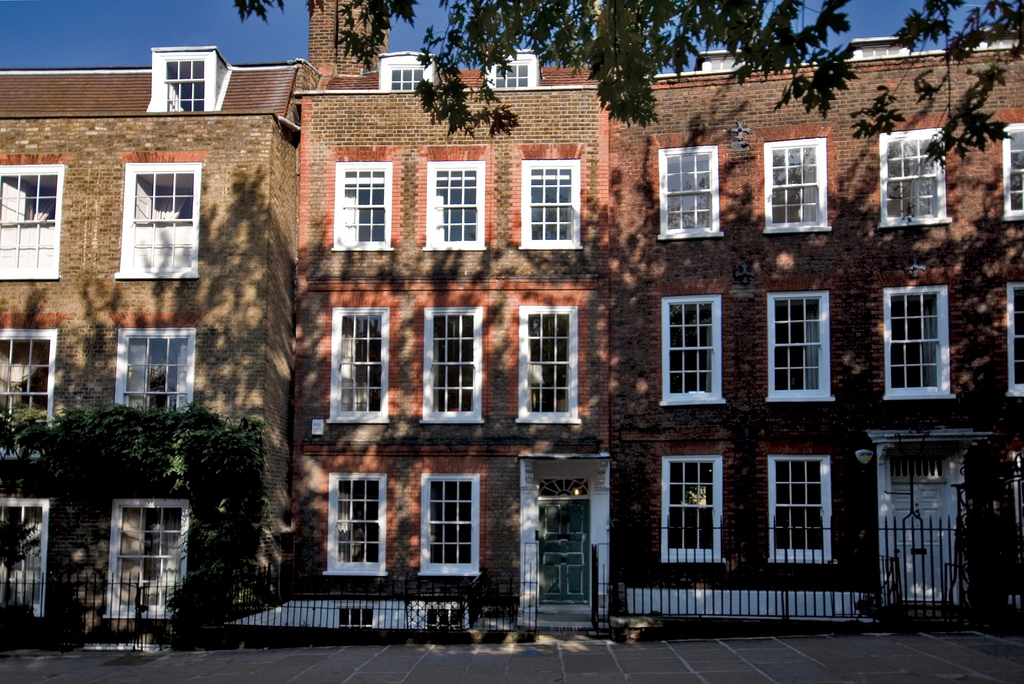
Church Row, Hampstead

 Mary Adela Lescher, [Sister Mary of St Wilfrid] (1846–1927),known as Adela in the family, was born at 17 Church Row, Hampstead. She was the second of  five children of Joseph Sidney Lescher (1803–1893), and Sarah Harwood(1812 – 1856).  Joseph Sidney was a partner of the wholesale chemists Evans, Lescher, and Evans. His father William Lescher (1768 – 1817), had emigrated from Alsace, France, in 1778, before the French Revolution. Family tradition holds that “Lescher of Kertzfeld” received his patent of nobility in the reign of Louis XIII, in the middle of the C17th. The Leschers were Roman Catholics. His wife, Sarah Harwood , Mary’s mother, was the daughter of a West India merchant in Bristol and a member of a staunch Baptist family, but she converted to Catholicism two years after her marriage. The eldest brother, Frank Harwood Lescher is Patrick Grehan III’s son-in-law; Adela was a year older than Wilfrid (1847–1916), who was ordained a Dominican priest in 1864. Mary’s only sister Abigail, died in 1844 at the age of five. The youngest brother was Herman (1849 – 1897) who died of flu in 1897, aged just forty-eight.

Adela was educated by governesses at home, and in France, where the family had gone for health reasons, until her mother’s death in 1856; after which she was sent to the Benedictine school at Winchester, Hampshire (later at East Bergholt in Suffolk), where she had an aunt, Caroline Lescher (1802 – 1868) known as Dame Mary Frances,O.S.B.; in a slightly curious twist another cousin of Adela’s, her first cousin Agnes, [daughter of William Joseph Lescher (1799 – 1865) and another of Caroline Lescher’s nieces was Lady Abbess at Bergholt from 1888 until 1904, and know as Dame Mary Gertrude. She attended the Dominican school at Stone for a short time. She left boarding-school in 1864 and continued her studies in languages, music, and literature at home under her brother’s former tutor.

Mary had two older cousins, Frances Lescher (Sister Mary of St Philip), who was the principal of Notre Dame Teacher Training College at Mount Pleasant, Liverpool, and Ann Lescher (Sister Mary of St Michael), who was also a sister in the Institute of Notre Dame, as well as their youngest sister Agnes (Dame Mary Gertrude).   In May 1869 she entered the mother house of the Notre Dame order, dedicated “to teach the poor in the most neglected places”, at Namur, Belgium, and took the name Sister Mary of St Wilfrid. She returned to England in September 1871 as a professed sister to teach in the Notre Dame boarding-school at Clapham, London. After a bout of rheumatic fever she convalesced at Mount Pleasant and was then appointed to the college staff there to lecture in botany, English, and music. In 1886 she became mistress of the boarders, instructed the senior girls, and taught psychology. In 1892 she was appointed superior of Everton Valley Convent, Liverpool, which ran a convent day school, several elementary schools, and a pupil-teacher centre where boarders were prepared for entry into the Mount Pleasant Training College.

In April 1893 Archbishop Eyre of Glasgow invited the Sisters of Notre Dame to establish a Roman Catholic teacher training college in Scotland which would relieve female students from the need of travelling to Liverpool or London for training. A site was chosen at Dowanhill, in the west end of Glasgow, near the university, which had just opened its classes to women. The college was officially established in December 1893 with Sister Mary of St Wilfrid as its first principal, assisted by four sisters. The first female Roman Catholic teachers to receive their training in Scotland began their course of study in January 1895. Sister Mary of St Wilfrid took an active part in the training of the students and through her singleness of purpose made the venture a success.

A major achievement of Notre Dame College was the development of practical science teaching and the revolutionizing of biology teaching. A ‘practising school’, which was to include both a secondary school and the first Montessori school in Glasgow, was opened next to the college in 1897 and new schools were opened in Dumbarton (together with a convent) in 1908 and Milngavie in 1912. A staunch member of the Educational Institute of Scotland, Sister Mary of St Wilfrid encouraged all her students to join. As sister superior she was manager of the Notre Dame schools until May 1919, when Notre Dame Training College was transferred to the national scheme and came under the control of the national committee for the training of teachers. She retired as sister superior in 1919. She had been instrumental in founding a Notre Dame association for former students and the Glasgow University Catholic Women’s Association. She also set up a branch of the Scottish Needlework Guild to make garments for the poor and vestments for missions, and, after a stay in a nursing home in 1904, had set up the Association of Catholic Nurses of the Sick. Sister Mary of St Wilfrid died at Notre Dame Convent, Dowanhill, Glasgow, on 7 May 1927, and was buried on 11 May at Dalbeth cemetery.

[http://www.oxforddnb.com/view/article/48666,] with additions.

Lescher – Wilson 1887

This is a rather modest wedding in comparison with some of the grand society weddings a decade later. It’s probably projecting far to much on it being an accountant choosing value for money….. The age difference seems to be about right for the times. He’s thirty eight, and she’s twenty eight, and rather sadly it’s a fairly short marriage because Herman dies of flu, ten years later in March 1897.


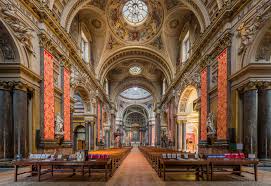
interior brompton oratory
Interior, Brompton Oratory

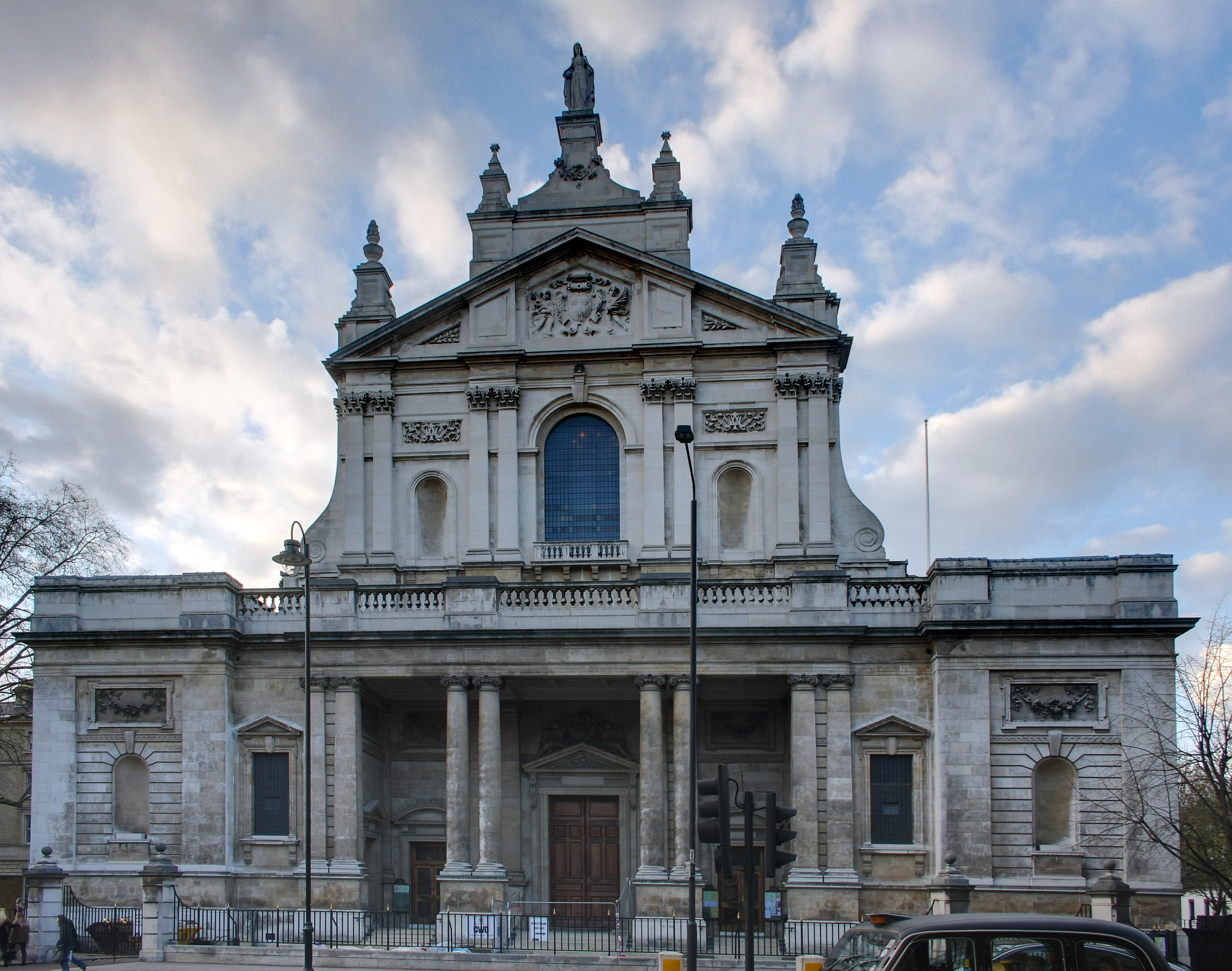
MR. HERMAN LESCHER was married on Saturday last at the Church of the Oratory to Miss MARY AGNES WILSON. The wedding was of a very quiet character, the party consisting only of the immediate relatives of the bride and bridegroom. The marriage service was performed by the Rev. Father Crook, of St. Mary’s Chelsea, assisted by Father Gordon, of the Oratory, and the Rev. Wilfrid Lescher, O.P. The bride was attended by her niece, Miss Madeleine Wheeler, and Miss Carmela Lescher, niece of the bridegroom, as her bridesmaids. Brompton_Oratory-2Father Gordon preached a short and touching exhortation to the newly married couple at the conclusion of the ceremony, and after breakfast at the house of Mrs. Robert Wilson,

Mr. and Mrs. Herman Lescher left town for Clifton, en route for North Devon.

The above text was found on p.25, 6th August 1887 in “The Tablet: The International Catholic News Weekly.” Reproduced with kind permission of the Publisher” The Tablet can be found at http://www.thetablet.co.uk .


Benevolent Society for the Aged and Infirm Poor 1887

JRP at it again…….

The Annual Dinner of this Society was held on Monday, Sir Charles Clifford in the chair. Among those present were the Bishops of Southwark and Emmaus, Lord Arundell of Wardour, Mgrs. Gilbert, Fenton, Harington Moore, the Very Revv. Canons Moore, O’Hallaran, McGrath, Murnane, V.G., the Very Rev. M. Kelly, 0.S.A., and a large number of priests and laymen. After dinner the chairman proposed the healths of ” The Pope” and “The Queen,” and in doing so referred to the mission of Mgr. Ruffo-Scilla and the Papal Jubilee. The health of “The Cardinal Archbishop of Westminster” was next proposed, to which the Bishop of Emmaus replied, in doing which he appealed on behalf of the charity. The other toasts were “The Bishop of Southwark,” “The Bishop of Emmaus,” “The Chairman,” proposed by Mr. George Blount, “The Clergy,” proposed by Mr. Dudley Leathley and responded to by the Right Rev. Mgr. Moore, and “The Stewards,” proposed by Mr. Wm. Towsey and responded to by Captain Parkington. During the evening excellently rendered vocal selections were contributed by Miss Margaret Hoare, Miss Eliza Thomas, Master Schrappel, Mr. Dudley Thomas and Mr. Tremere. Mr. Henry Leipold presiding at the piano.

The above text was found on p.24, 26th November 1887 in “The Tablet: The International Catholic News Weekly.” Reproduced with kind permission of the Publisher” The Tablet can be found at http://www.thetablet.co.uk .

Reception at the Mansion House 1910

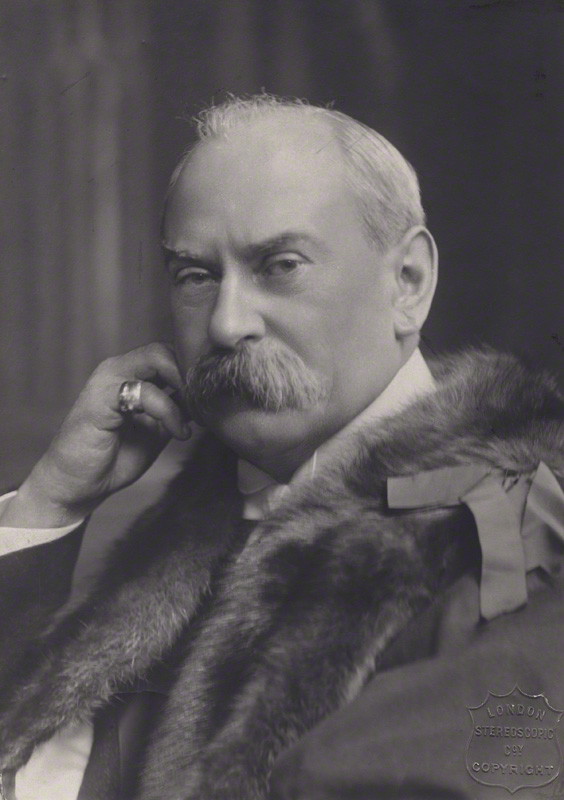
by London Stereoscopic & Photographic Company, bromide print, 1900s
Sir John Knill, Lord Mayor of London,about 1910. © National Portrait Gallery, London

Almost inevitably the Roper Parkingtons were there…….

The Lord Mayor and Lady Mayoress held a reception of Catholics at the Mansion House on Monday afternoon. Gracious, simple, and Catholic, it was a gathering of the family. The Archbishop was there and all the Bishops who had arrived for the Low Week Meeting : the Bishop of Newport, the Bishop of Birmingham, the Bishop of Nottingham, the Bishop of Salford, the Bishop of Portsmouth, the Bishop of Southwark, the Bishop of Hexham and Newcastle, the Bishop of Menevia, the Bishop of Galloway, and the Bishop of Amycla, whose purple with that of the Monsignori added colour to the scene. Amongst the clergy were Mgr. Canon Scott of Cambridge, Mgr. Tynan of Salford, Mgr. Canon Moyes, Mgr. Canon Howlett, Mgr. Grosch, Mgr. Brown, Vicar-General of Southwark, the Right Rev. Vicar-General of Glasgow, Provost Mackintosh, priests too numerous to name from all parts of London, North and South, Canons of the Cathedral Chapters of Westminster and Southwark, parish priests, Cathedral chaplains, priests from the provinces, members of religious orders, Jesuits, Dominicans, Augustinians, Benedictines, Franciscans, Servites, Canons of the Lateran, Vincentians, Salesians, Oblates of St. Charles, and many more. Catholic society in all its grades was represented :—the Princess Marie Louise de Bourbon, the Duchess of Seville and the Duc de Seville, Lady Mary Howard, Lady Edmund Talbot, Lady Vavasour, the Earl of Denbigh, Count Mensdorft, the Austrian Ambassador, the Count and Countess de Torre Diaz, Count O’Clery, Sir W. H. Dunn, M.P., and Miss Dunn, Sir J. and Lady Roper Parkington, Sir Francis and Lady Fleming, Lady and the Misses Dalrymple, Miss Weld Blundell, Colonel Sir Charles and Lady Euan-Smith, Sir Henry, Lady, and Miss Norbury, Sir Charles and Lady McDonogh Cuffe, Lieutenant General and Mrs. Mackesy, Mr. Justice Walton, Mr. J. G. Snead Cox, Major and Mrs. R. Meyer, Miss Anstice Baker, Mrs. Bernard Mole, Miss Streeter, Mlle. Janotha, Miss Minnie Stewart, Mrs. Leeming, Mrs. Plater, Colonel Vaughan, Mr. Roskell, Mr. Lescher, Surgeon-General Maunsell, Mr. and Mrs. John Kenyon, Chancellor and Mrs. Tristram, Dr. Counsell, Lieutenant-Colonel Wellesley, Miss Emily Hickey, and about 500 others, all representative of business, law, art, letters, and public life among the Catholics of London.

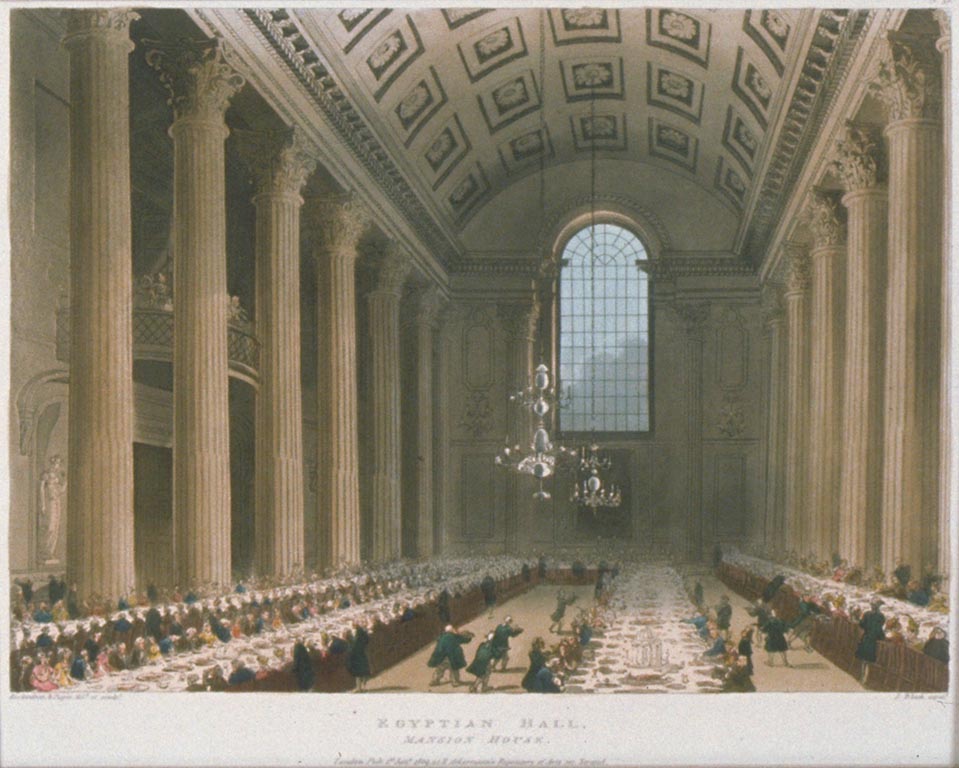
A programme of music of exceptional interest was provided in the Egyptian Hall under the direction of Mr. H. Plater. The central attractions were the singing of Madame Blanche Marchesi in Willeby’s “Crossing the Bar,” an “Ave Maria” by Mlle. Janotha, and ” Jerusalem ” from Gounod’s “Gallia.” Miss Newbery, Madame Henrietta Engelhard, and Miss Catherine Aulsebrooke, also sang with much acceptance ; Miss Nora Freeley in violin solos, Signor Manrico Bacci, Mr. Fraser Gange, and Mr. Denis O’Neil in songs also making their mark; as also did Mr. H. Plater as a whistler, and little Blanche Young, a mite of a child, in a finely executed “Good Luck Dance,” written by Mile. Janotha, and named after her mascot, ‘ Little White Heather,” which, by the way, Mlle. Janotha brought with her. The accompanist was Mr. Albert Lyne.

Egyptian Hall
Egyptian Hall, Mansion House

The reception was in every way a memorable one in the crowded year in which the Lord Mayor and Lady Mayoress are utilising every opportunity for doing good. An illustration was a beautiful but pathetic scene in the Egyptian Hall. While all was moving brightness in the rooms of state, at the end of the Egyptian Hall, to the accompaniment of the rare music, a number of cripple girls were giving an exhibition of exquisite work in artificial flowers, to which craft and art they had been trained by a beneficent institution, the Watercress and Flower Girls’ Mission in Cripplegate, founded in 1866, and beginning work among crippled girls in 1879. The work is educational, curative and industrial, and extends to all parts of the country, teaching crippled girls to earn their own living, and ministering weekly to 5,000 girls, women, and children. It was established by a Nonconformist minister, and is a non-Catholic institution, but charity knows no boundaries, and “God’s Poor,” of whatever creed or kind, find loving sympathy in the large Catholic heart of the City’s queen. The cripple girls and their exquisite work were made a special and fitting feature of the reception.

The above text was found on p.30, 9th April 1910 in “The Tablet: The International Catholic News Weekly.” Reproduced with kind permission of the Publisher” The Tablet can be found at http://www.thetablet.co.uk .

More detail on the flower girls mission can be found here

Cardinal Vaughan

Herbert Vaughan was born at Gloucester, the eldest son of Lieutenant-Colonel John Francis Vaughan, of an old recusant(Roman Catholic) family, the Vaughans of Courtfield, Herefordshire. His mother, Eliza Rolls from The Hendre,Monmouthshire, was a Catholic convert and intensely religious. All five of the Vaughan daughters became nuns, while six of the eight sons received Holy Orders and became priests. Three were later called as bishops in addition to Herbert: Roger became Archbishop of Sydney, Australia; Francis became Bishop of Menevia, Wales; John became titular bishop of Sebastopolis and auxiliary bishop in Salford, England.

In 1841 Herbert Vaughan, the eldest, went to study for six years at Stonyhurst College, then to the Jesuit school of Brugelette, Belgium, and then with the Benedictines at Downside Abbey, near Bath, England.

In 1851 Vaughan went to Rome, in the Papal States of Italy. He had two years of study at the Collegio Romano, where for a time he shared lodgings with the poet, Aubrey Thomas de Vere. He became a friend and disciple of Henry Edward Manning. Manning, a Catholic convert, became the second Cardinal Archbishop of Westminster following the restoration of the Catholic hierarchy in Great Britain in 1850.

Barry of Ballyadam

This is a continuation in part of the Pauline Roche story. I love Pauline Roche, she’s the sort of relation everyone should have in their family history. Her story is so bizarre that it reads like a novel. So just to recap, she is John Roche’s great-granddaughter, and in an unintended way, one of the major beneficiaries of his will, at her marriage, she was said to have about £7,000. She is Ernest O’Bryen‘s first cousin on her mother’s side. Her mother Jane is John Roche O’Bryen‘s eldest sister. She is also his second cousin on her father’s side, because William Roche, Pauline’s father is their ( Jane and John Roche O’Bryen) first cousin once removed.

The following is extracted from  BARRYMORE :RECORDS OF THE BARRYS OF COUNTY CORK FROM THE EARLIEST TO THE PRESENT TIME. WITH PEDIGREES. By the Rev. E. BARRY, M.R.I.A., V.P.R.S.A. Reprinted from the Journal of the Cork Historical and Archeological Society.CORK. PUBLISHED BY GUY AND CO. LTD, 70 PATRICK STREET. 1902.

William Barry, of Rockville, Carrigtwohill, gentleman, fifth son of Edmond fitzGarrett Barry, of Dundullerick and Rockville, gentleman, according to his son, John, was born 1757, and died the 24th of January, 1824, aged sixty-seven years.

He was married and had issue at the date of his father’s will, 30th March, 1783. His wife was Margaret, eldest daughter of James Barry, of Desert, in the barony of Barrymore, and county of Cork, gentleman, whose will is dated 21st November, 1793, but who died the 19th of November, 1793, aged sixty-five years, according to the inscription on his tomb at Ardnagehy.

Said James Barry and his brother, Robert Barry, of Glenville, are mentioned in the will of Thomas Barry, of Tignageragh, gentleman, dated 16th November, 1778, and were his first and second cousins, and were great-grandsons of Edmund Barry, of Tignegeragh, gentleman, whose will is dated 22nd April, 1675, and whose father was Richard Barry, of Kilshannig, gentleman, son of John fitzRedmond Barry, of Rathcormac, Esq., and whose wife was a daughter of Thomas Sarsfield, of Sarsfield’s Court, an alderman of Cork, and a prominent Confederate Catholic in 1641.

William Henry Barry is Pauline Roche’s husband, and  William Barry, of Rockville is William Henry Barry’s grandfather. So Pauline was marrying into the Catholic Irish landed gentry; being an heiress with £ 7,000 probably helped. What is slightly curious is why there was no apparent attempt to marry her off to an O’Bryen cousin, but then given her treatment by her uncle, perhaps she had washed her hands of them. Perhaps it was love, perhaps it was status, perhaps both.

Back to the Rev. Barry: By his marriage with Margaret, eldest daughter of James Barry, of Desert, William Barry, of Rockville, had issue— 14 children (11 sons and 3 daughters)

  1. Edmund, who died in infancy.
  2. James Barry, of Dundullerick, (1782,-1846) having married in 1818 Elizabeth, daughter of Edward Barry, of Kilbolane, gentleman, and had issue(1) William Barry, of Dundullerick, gentleman, who died unmarried 3rd  February, 1875 

    (2) Edward Barry, barrister-at-law, secretary to Sir Edward Sullivan, Master of the Rolls, died unmarried 9th June, 1873;
    (1) Anna Maria, married (1860) her cousin, Philip W. Creagh, solicitor, had issue— Captain James Wm. Joseph Creagh, born 18th Sept., 1863 : Philip William Creagh, veterinary surgeon, Fermoy, born 5th July, 1866; Eliza Mary Josephine, born 18th June, 1862, died 15 th August, 1866;
    (2) Margaret, died unmarried 5th October, 1893.

3. David Barry, of Barry’s Lodge, gentleman, married Julia, daughter of Counsellor Geran, of Mitchelstown, and had issue—Richard Barry, of Barry’s Lodge, gentleman, famous as a gentleman rider, died unmarried, 1895; Mary, married to John Burns, of Aghern, gentle­man ; Margaret, Julia.

4. Edmond Barry, M.D., died unmarried soon after having taken out his degree.

5. Richard Barry, of  Greenville,  gentleman, married  Catherine,  eldest daughter of John Galwey, of Rocklodge, Monkstown, county Cork, and Doon, county Clare, gentleman, third son of John Galwey, of Lota, county. Cork, and Westcourt, county Kilkenny, gentleman.

6. William Barry, lieut. R.N., son of William Barry, of Rockville, died unmarried.

7. Thomas  Barry, of Rockville, gentleman,  son of William Barry,  of Rockville, married, about the 15th of November, 1829, Julia, daughter of Stephen Murphy, of the city of Cork, draper, and had issue—

(1) William Barry, of Rockville and Greenville, M.D., assist-surgeon H.M. 36th Regiment of Foot. He married a daughter of Count Rivilioli, and died the 17th day of June, 1887. All his children by his marriage with Miss Rivilioli died in childhood except Thomas and Beatrice, and perhaps Stephen;

(2) Thomas, heir to his uncle William, died unmarried;
(3) Stephen Barry, of Broom-field, county Cork, gentleman, a successful breeder of racehorses, who died unmarried on the 17th May, 1899;
(4) Ada, unmarried;

(5) Mary, unmarried.

8. Garrett Barry, of Greenville, gentleman, J.P., owner of the famous racehorses Arthur and Waitawhile, died unmarried.

9. Patrick Barry, of Cork, gentleman, died 1861, having married Mary Anne, daughter of Stephen Murphy, of the city of Cork, draper, and had with an elder son, Stephen Barry, of H. M. Customs, Cork, and a daughter, Kate, who both died unmarried,and

a younger son, William Henry Barry, of Ballyadam, gentleman, J.P., who was heir to his uncle, Henry Barry, of Ballyadam, and was for many years post­master of Cork. He married in 1857 Pauline Roche, only child of William Roche, son of Lawrence Roche, whose brother, John Roche, amassed great wealth during the French wars, and built Aghada House. John Roche’s only daughter, married to [Henry Hewitt] O’Brien, of Whitepoint, Queenstown, J.P., left a daughter, who married her cousin, William Roche, and with her husband died shortly after the birth of their only daughter, Pauline, who was entrusted to the guardianship of her uncle, Dr. O’Brien, of Liverpool, and at marriage had a fortune of £7,000. The issue of the marriage of William Henry Barry and Pauline Roche are:
(1) Henry, born 1862;
(2) William Gerard;
(3) Pauline;
(4) Edith, married — Hayes, surgeon-major H. M. Army Medical Department, and has issue;
(5) Mary, married Cecil Smith Barry, second son of Captain Richard Smith Barry, of Ballyedmond, and first cousin of the Hon. Arthur Hugh Smith Barry, P.C. [now Lord Barrymore];
(6) Henrietta,
(7) Kate.

10. John Barry, Esq., M.D., medical officer of the Carrignavar dispensary district, and next of the Carrigtwohill dispensary district. He married Ellen, daughter of Mr. David Kearney, of Newcastle, county Tipperary, and died in December, 1879, leaving two sons and a daughter:

11. Henry Barry, of Ballyadam, gentleman, barony constable of Barrymore, coroner of the east riding of the county of Cork, Belgian Consul for the port of Cork, Knight of the Order of Leopold, etc., married a Miss Mary Lynch, and died on the 16th of December, 1868, without issue.

(1) Johanna, the eldest daughter of William Barry, of Rockville, was born on the 1st of July, 1784, and died unmarried 1873.

(2). Ellen, second daughter of William Barry, of Rockville, married James Fitzgerald, of Castlelyons, gentleman, and had issue an only son, William Edmond Fitzgerald, who died unmarried in Australia.

(3.) Mary, third daughter of William Barry, of Rockville, died unmarried.

So William Henry, and Pauline are part of a huge extended family. He has eleven uncles, and three aunts on his father’s side of the family alone, and she has five uncles, and an aunt on her mother’s side. I’m not even going to attempt to work out how many uncles and aunts they both have in total.

The next step is to look at Pauline and William’s children
Judge Bagshawe, K.C. November 1901

OBITUARY.

JUDGE BAGSHAWE, K.C.

Only last week it fell to us to have to record the death of Canon Bagshawe of Richmond, and now it is our sad duty to have to announce the death of his eldest brother, Judge Bagshawe, K.C., which occurred with painful suddenness, on Monday evening, at King’s Cross Station. He is thus the third brother whose death has occurred within a period of about four months, Mr. Clement Walter Bagshawe, of Dover, having died at Chiswick in the beginning of July. According to the evidence given at the inquest on Tuesday before Dr. Danford Thomas, coroner for Central London, at the St. Pancras coroner’s-court, it appears that Judge Bagshawe, who generally enjoyed good health, attended, on Monday, the funeral of his brother, Canon Bagshawe, at Richmond Cemetery. After leaving the cemetery he returned home to South Kensington, and partook of some refreshment. With his son and a son in-law he left his residence in a cab to proceed to King’s Cross, but owing to the dense fog they had to abandon the cab and go by train to King’s Cross Station, and thence they walked through the subway to the Great Northern terminus. Judge Bagshawe, While walking along the platform, was noticed to be greatly affected by the dense fog. He staggered and fell insensible on the platform. He Was carried into an adjoining waiting-room, and medical aid was sought, but life was found to be extinct. Dr. Gilchrist deposed that in his opinion death had resulted from syncope whilst suffering from heart disease. Dr. John Anderson, of Belsize Park, Hampstead, stated that he had known Judge Bagshawe for the last 35 years, and that for the last two years he had suffered from heart affection. The jury returned a verdict in accordance with the medical evidence. Mr. William Henry Gunning Bagshawe, K.C., Judge of County Courts, was the eldest son of Mr. Henry Ridgard Bagshawe, Q.C., who was also a County Court Judge and a convert, and was born on August 18, 1825. He graduated at the University of London in 1843 and was called to the Bar at the Middle Temple in 1848. Practising as a conveyancer and equity draftsman, Mr. Bagshawe acquired a reputation as an excellent pleader and a sound and accurate lawyer. He was a familiar figure in the Rolls Court in the great days when Jessel used to get through nearly as much work as all the three ViceChancellors. As a leader before that formidable Judge, who was not tolerant of either dulness or slowness, Mr. Bagshawe held his own and enjoyed a substantial practice, though far inferior to that of the late Lord justice Chitty or the present Lord Davey. They mere a distinguished body within the Bar and few of them survive. His qualities, indeed,’were those of a junior rather than of a leader, and he did not take silk until 1874, in the same year as Chitty. His manner was somewhat cold and unsympathetic, but he was always to the point and treated with respect by the Judge. One of the most famous cases in which he ;was engaged was that of “Agar-Ellis v. Lascelles,” which involved-the right of the father to bring up his children in his own faith against the wishes of the mother and in contravention of his own promise on the marriage. Mr. Agar-Ellis was a Protestant, and his wife, the Hon. Harriet Stonor, was a daughter of Lord Camoys. Mr. Bagshawe, Q.C., and his younger brother, Mr. F. G. Bagshawe, were led by the present Lord Chancellor, and appeared for Mrs. Agar-Ellis. It was a painful story and there was some conflict of evidence, but the judgment of the Court of Appeal in affirmance of that of Vice-Chancellor Malins, delivered by Lord Justice James, was based on the right of the father to direct his children’s education, though the general sympathy at the time was certainly with the mother.

The above text was found on p.29, 9th November 1901 in  “The Tablet: The International Catholic News Weekly.” Reproduced with kind permission of the Publisher” The Tablet can be found at http://www.thetablet.co.uk .

The Very Rev. Canon Bagshawe D.D. November 1901

OBITUARY.

THE VERY REV. CANON BAGSHAWE, D.D.

We deeply regret to have to record the death of the Very Rev. Canon Bagshawe, of St. Elizabeth’s, Richmond, Surrey, which occurred at Brighton on Wednesday morning, after an illness of two months. John Bernard Bagshawe was the second son of the late H. R. Bagshawe, Q.C., and Judge of County Courts in Wales, and was born in December, 1827. He was educated at University College School and at St. Mary’s College, Oscott, and was ordained priest soon after he attained the age of 23, on March 15, 1851, by Cardinal Wiseman. After his ordination he was appointed to work in a small Mission in Webb-street, Southwark. He was one of the four or five priests who were sent out, as the first Catholic Army Chaplains in modern times, to the Crimea, where he arrived soon after the battle of the Alma. In the battle of Inkarman he was, while attending wounded Royal Irish called on to lie down while cannon shots were fired over him, which he saw ploughing through Russian columns coming up on the side of the bill. His tent was blown down in a stormy night, and he, delirious, crawled out and wandered in the dark into the French lines, where he was cared for in his delirium for a week. He was afterwards in the fighting in the Redan, and in charge of the German auxiliary force. He remained some two years in the East, and returned to England in the summer of 1856. For a time after his return he was a locum tenens, but was ultimately appointed as rector of St. Elizabeth’s Church, Richmond, and there for forty-five years he has lived and laboured. The parochial district was at that time very much larger than it is now, and as it ranged from Kew to Kingston there was plenty of work for a priest to do. The school hardly deserved the name ; it was what is now the library at the back of the church. Canon Bagshawe, after Some difficulty and self-sacrifice, got the schools in Park-lane erected and opened, and these have been recently enlarged and brought up to date. Besides his unwearying labours in his parish Canon Bagshawe was the author of several works of doctrinal instruction, which are not only well known, but popular and useful. .Amongst these may be mentioned The Threshold of the Catholic Church and Credentials of the Church. In March of the present year Canon Bagshawe celebrated the golden jubilee of his priesthood, when he was presented with an address and a purse of gold by his congregation. . A Requiem Mass will be celebrated at St. Elizabeth’s, Richmond, on Monday, at half-past eleven, after which the burial will take place at Mortlake R.I.P.

The above text was found on p.19, 2nd November 1901  in  “The Tablet: The International Catholic News Weekly.” Reproduced with kind permission of the Publisher” The Tablet can be found at http://www.thetablet.co.uk .

Roche v. O’Brien 1849

THE IRISH JURIST: VOL. I. – MISCELLANEOUS: FOR THE YEAR 1849. (page 156)

COURT OF EXCHEQUER CHAMBER

ROCHE v. O’BRIEN—Feb. 1, 2.

This was error from the judgment of the Court of Queen’s Bench. The action was in covenant by the heir-at-law of John Roche the lessor, claiming the reversion in fee against the assignee of William Roche, the lessee, who claimed as devisee of the reversion in fee after the estate tail created by the will of the lessor. The remaining facts appear sufficiently in the judgment of the court.   The whole question turned upon the construction of the Will and codicil of John Roche, which were as follows: 
       “Whenever it happens that the Aghada estate, is absent of male heirs, to wit, of the said James Joseph Roche, or by any other contingency reverts wholly to me, I hereby leave it in as full a manner as I can convey it to my nephew, William Roche, to be enjoyed by him and his lawful begotten heirs male for ever ; and, as I have perfected leases to be held in trust, of the demesne and two adjoining farms of Aghada, subject to a yearly rent accord-ing to a valuation made, I leave him my interest, if any I had, in those leases; and in case of his not coming into possession of the estate by the means before-mentioned,  I leave him  £6,000 of my £4  per cent. stock, to be held by trustees, the interest of which is to pay the rent of the demesne and two farms above mentioned; to my eldest grandson, James J.  R.  O’Brien   I leave   £10,000   £4 per  cent. stock; to my grand-daughter, Jane O’Brien, I leave  £4,000 £4 per cent. stock; to my daughter, Mary O’Brien,  I leave the  £4,000  £4 per cent. stock I settled on her as a marriage portion on her marriage, for her use and that of her younger children; to my niece,  Ellen Verling,  I leave  £1,000 £4 per cent, stock, with £30 a-year profit rent I leave on her brother Bartholomew Verling’s stores; to my grandson, J. Roche O’Brien, I leave also my interest in White Point, after his mother’s death;   I leave  £100 to my sister, Ellen Verling; to my sister, Julia Enery, £100; to my nephew, Doctor Verling,  and his sister, Catherine Ellis, £100 each,  and I desire the stock on the farm to be sold to pay these legacies; to my nephew,   William Roche, and my grand-daughter,  Jane O’Brien, I give my household furniture, plate, &c., and it is my wish, if the rules of our church allow it, that they should be married and live in Aghada house; may it bless and prosper them and their offspring. To the parish of Aghada, I leave the school-house, and £20 a-year for its support, and also the chapel and priest’s house  I leave to the parish rent-free for ever, as long as they shall be used for such qualified purposes; the five slate houses I built in the village, I leave to five of the poorest families rent free; to David Coughlan I leave the house he now lives in during his life; to my servant, James Tracy  I leave the house his wife now lives in;  and to my wife’s servant, Mary Ahearne, otherwise Finne, her house rent-free during their lives; and to each of those three, viz.,David Coughlan, James Tracy, and Mary Ahearne, otherwise Finne, I leave £10 a-year during their lives: having had unfounded confidence in my unhappy nephew, James Roche,  I did not take legal means under  the settlement I made to secure those last bequests out of the Aghada estate; I trust, and hope, and desire that whosoever is in possession of the estate do confirm these my wishes and intents. I appoint my trusty friend, Henry Bennett, (my present law agent) William Roche, and my daughter, Mary O’Brien as executors of this my last will.”

The codicil to the will was as follows :—

     By my will dated the 5th day of January, 1826, I appointed my friend Henry Bennett, my nephew, William Roche, and my daughter, Mary O’Brien, executors to that will; now, by this codicil, I annul that appointment, and appoint John Gibson, barrister-at-law, Bartholomew Hackett, of Middleton, distiller, and my nephew, William Roche, as my executors to that will, and do hereby empower them to name and appoint two trustees for the purpose of managing the sums I left to my nephew, William Roche, my grand-daughter, Jane O’Brien, and my grandson, J. O’Brien, as it is my intent and will that they should only receive the interest, and the principal to remain untouched during their lives, to go to their children; out of William Roche’s interest the rent of Aghada which I have leased him is to be paid ; and I desire that he and my grand-daughter Jane, who are shortly to be married, will reside there. I leave William Roche all the stock, &c., on the farm, and to him and his wife all my household furniture, plate, and china, and make them my residuary legatees ; it is my will that my grandson, James R. O’Brien, shall live with them at Aghada until he is of age, which is to be at the age of twenty-five, and not before ; and the trustees are to pay him until that period £100 a-year to complete his education, and another £100 a-year during that period to his mother, and the remainder of the interest of his £10,000 to be paid William Roche to assist him in keeping up Aghada during that period, and I trust by that time he will have a profession by which he will add to his income ; I request and desire that nothing shall prevent his following his profession ; it is my intention that William Roche and his wife shall step into possession of Aghada house, demesne, and farms, which are leased to him in the same way that I leave it when it shall please God to take me ; in case of the death of William Roche before his wife, she is to be paid the interest of her £4,000, to be made up £200 a-year as her jointure ; and if she dies before him, he is to have the £10,000, provided she has no issue; but if she leaves issue, it is to go to them after William Roche’s death, as before directed.”

   Sir С. О Loghlen for the plaintiff in error, the defendant below.—The question is, whether William Roche took an estate tail alone, or an estate tail with an expectant or reversionary fee. First, it is clear that the testator did not mean to die intestate, and, that nothing might be undisposed of, made William Roche and his wife residuary legatees. Secondly, that the testator having a contingent reversion in fee in the property, he devised it from his heir at law, and gave it to another, charging it in such a manner as to shew that whoever should have the property should take under the will. These charges cannot be enforced against the heir at law, as he takes by title paramount. Thirdly, that, having his heir at law in contemplation, he took from him that he would otherwise be clearly entitled to. He had most fully provided for him, and designedly gave the property to William Roche, for the purpose of founding a family of the name of Roche, who were to dwell in Aghada house. If the construction contended for by the plaintiff below be the true one, the manifest intention of the testator is wholly defeated. The reversion would not be disposed of; his heir would take at law, and not under the will ; and the estate would go to the very person he intended to deprive of it. The first portion of the sentence, ” I hereby leave it (the Aghada estate) in as full a manner as I can convey it,” conveyed the fee simple, and the subsequent words, ” lawful begotten male heirs for ever,” reduce it to an estate tail, with a reversion in fee. Chyck’s case, (Dy. 357, Pasch. 19, El.) That case, as reported in Dyer, is still law, and the case reported in Benloe, 300, and Anderson, 51 by the name of Baker v. Raymond, is not the same. In Abraham v. Twig, (Moore 425, 11 Jac.); Roberts v. Roberts, (2 Bul. 127, 13 Jac.) ; Blanford v. Blanford, (1 Rol. 320, 21 Jac.) ; Sergeant’s case, (2 Rol. 425) ; Herbert v. Thomas, (Har. and Wol. 434—per Littledale, J.) ; Doe d. Herbert v. Thomas, (3 Ad. & El. 128, Sheph. Touch. 445). All these authorities rely on Chyck’s case, as cited in Dyer. Daniel v. Uply, (Latch. 43,) is a decision to the same effect, by Doderidge, J., who was either at the bar or on the bench at the time of the decision of Chyck’s case. The following cases and authorities were also relied upon, and commented on during the argument—Turnman v. Cooper, (Cro. Jac. 476, S. C. Rol. Rep. 19, 23, S. C. Poph. 138; 1 Thomas’s Co. Litt. 518, 21 a.); Altham’s case, (8 Coke 154, b.) denied to be law in Turnman v. Cooper, (Pop. 138; Year Book, 21 Hen. 6, 723, b). (Blackburne, C. J.—That was the case of a deed where the whole estate passed from the grantor.) (Anon. Brownl.45) ; Holland v. Fisher, (O’Bridg. 212; 1 Steph. Black. Com. 460); Mellish v. Mellish, (2 В & C. 520) ; Barker v. Giles, (2 P. W. 279, S. C., affirmed on appeal ; 3 Bro. P. C. 297) ; Littleton & Ux v. Green, (4 M. & W. 229) ; Nanfan v. Legh, (7 Taun. 85, S.C. 2 Marsh. 107) ; Doe d. Ellis v. Ellis, (9 East. 382) ; Davie v. Stevens, (1 Doug. 321); Doe d. Murch v. Marchant, (6 Man. & Gr. 813).

   Chatterton, with him R. W. Greene, Q. C., and F. Fitzgerald, Q. C., contended—That, according to the true construction of the will, William Roche took only an estate tail. That the construction contended for by the defendant below would tend further to defeat the testator’s intention to found a family, than that sought to be put upon the will by the plaintiff, as the fee would be more easily alienated. That the devise shewed no intention of the testator to dispose of his whole property ; the words were, not my estate, but ” the Aghada estate,” words of description only. The charges made by the testator upon the devised estate would take place on the reversion, whether the estate be taken by descent, or under the will. That the reversion was disposed of, and that there was no general intention expressed in the will inconsistent with an estate tail. The learned counsel distinguished Chyck’s case, and Turnam v. Cooper, and cited and referred to Altham’s case, (8 Coke, 154, b.); Ossulton’s case, (3 Salk. 336) ; Baker v. Wall, (1 Lord Ray. 185) ; Doe d. Lord Lindsay v. Colyear, (11 East. 548) ; Slater v. Slater, (5 T. R. 335) ; Nanfan v. Legh, (2 Marsh. 107, S. C.; 7 Taun. 85) ; Davie v. Stevens, (Doug. 32l ; Co. Litt. 27, a.); Church v. Wyatt, (F. Moore, 637) ; Wood v. Ingersole, (1 Bul. 63) ; Doe d. Eustace v Earley, (1 Cr. M.& Ros. 823); Winter v. Perrott  (9 Cl. & Fin. 613) ; Angell v. Angell, (9 Q. В. 353)  ; Oddie v. Woodford, (3 My. & Cr. 584); Doe d. Ellis v. Ellis, (9 East. 382) ; Trenke v. Frencham. (2Dy. 171) ; Chilton v. Cooper, (2 B. & Ald. 610),

   Napier, Q. C., in reply—The court will effectuate the intention expressed on the face of the will. It is clear from the whole testament, the testator thought he was devising the property out and out. There is first a general expression conveying the fee, and the subsequent words cannot narrow it. By the ” Aghada estate,” he intended his whole interest, and to convey it ” in as full a manner as he could,” when he should become possessed of the reversion in fee, and the charges evidence that intention to deal with the whole. He referred to Randall v. Tuchin, (6 Taun. 418—per Chambre. J.) ; Moffet v. Catherwood, (AI. & Nap. 472) ; Cotton v. Stenlake, (12 East. 515).

   Feb. 2.—ВLACKBURNE, C. J., now delivered the judgment of the court.—This is an action of covenant brought by the plaintiff below as heir at law of John Roche, the testator, claiming the rent reserved in a lease executed by John Roche to Wm. Roche, whose assigns the defendants are, and the plaintiff below insists he is entitled to the reversion, as heir at law of John Roche. The declaration states a settlement executed on the marriage of the testator’s nephew, James J. Roche, limiting the estate to John Roche for life, remainder to James Joseph Roche for life, remainder to him in tail male, with the reversion in fee to John Roche, the settlor. It then states the will of John Roche, devising his reversion to William Roche in tail male, and the death of William and James without issue male, and traces the descent of the reversion to the plaintiff. The plea of the defendant sets out the will and the codicil of the testator, John Roche, in haec verba, on the construction of which the question in this case wholly depends. The plaintiff below alleges that Wm. Roche took only an estate tail, which has now determined. (The learned Chief Justice then read the words of the will.) It is not denied that the words in the devise give an estate tail, Lord Ossulton’s case, (3 Salk. 336,) puts this question beyond doubt. The addition of the word “for ever,” makes no difference. Baker v. Wall, (1 Ld. Raymond 185). Davie v. Stevens, (1 Doug. 320,) was a devise to A. of the ” fee simple and  inheritance of Lower Shelstone, to him and his child, or children, for ever.” The language of Lord Маnsfield is, every word, applicable to this case. Nanfan v. Legh, (7 Taunt. 85,) is a leading authority, and has a strong resemblance to this case, and there the devise was held to confer an estate tail, and no more, and for this position there will be found a large body of authority. The defendant below contends that there is a devise to Wm. Roche of two distinct estates, first, an estate in tail male ; and secondly, of an estate in fee expectant on the reversion. To maintain this view the sentence is divided in two, and the order of it inverted, for the purpose of avoiding the absurdity that would follow. I know of no authority for so altering the plain language of a will. The contract requires no such construction, but rather the contrary. I shall only say, that in all the reasons given in the cases for this construction, it never occurred that in a devise a sentence could be stopped in the middle. The judgment of my brother Crampton in the court below contains so able a review of Chycke’s case, that I shall not further refer to it. The judgment of Lord Ellenborough in Doe d. Ellis v. Ellis, (9 East. 882) which is now impugned by the defendant below contains a clear exposition of the law. No one can
read that case without seeing that it militates against the whole argument of the defendant’s counsel. Considering the whole will, we think the inference to be drawn from it is, that the testator intended W. Roche to take an estate tail only.

Judgment affirmed.

__________________

Rev Hewitt O’Bryen’s school Rochdale 1839

This was five years before the Rochdale Pioneers started the Co-Operative Movement…………

THIRTIETH ANNUAL REPORT of THE NATIONAL SOCIETY FOR PROMOTING THE EDUCATION OF THE POOR THROUGHOUT ENGLAND AND WALES (established ad 1811 incorporated 1817) LONDON 1841 Sold By J G And F Rivington St Paul’s Churchyard And Waterloo Place Pall Mall Also By Roake And Varty 31 Strand

The remaining factory cases are in the chapelries of Lees near Oldham and St James’s Heywood near Rochdale. To the former containing a population of 7000 your Committee granted for two years a sufficient sum to pay the salary of a mistress for the daily instruction of girls. The incumbent of the latter district the Rev Hewitt O’Bryen has under his pastoral charge a district containing about 8000 souls. He was probably among the first to bring into effectual operation the provisions of the Factory Act. [The Factory Act of 1833 restricted working hours to eight hours a day for nine to thirteen year olds, and twelve hours a day for thirteen to eighteen year olds, it also required children under 13 to receive elementary schooling for two hours each day.]

In a building erected with the aid of £160 from the Society he opened his school in January 1839 having previously succeeded by personal application in prevailing upon all the mill owners with only one exception to contribute towards the institution, 220 children one half of whom worked in factories were soon in regular attendance.

The details says Mr O’Bryen of this joint school, boys and girls being taught together, are as follows, it is open from nine to twelve am from half past one to half past four pm. Half the factory children come in the morning, and half in the afternoon, by an arrangement with the employers, the half which attend one fortnight in the morning attend the next in the afternoon and vice versa. The school opens with prayer. It consists of four classes in which boys and girls are mixed, the instruction for the first two hours consists of reading writing and ciphering conducted on the principle of mutual instruction with assistance from visitors who regularly act as monitors. The third hour during which the factory children remain of their own accord is devoted to simultaneous instruction. The lessons then given are in geography, grammar, history, Scripture, and the Catechism. This part of the instruction, I frequently conduct myself, the younger children who are incapable of it are sent under a monitor to the Infant school from which they have generally been drafted.

To assist this zealous clergyman your Committee made a grant of £50 for providing additional accommodations besides £10 annually for two years towards a pupil teacher to take especial charge of the factory children.

Hewitt O’Bryen is the third child, and second son, of Henry Hewitt O’Bryen, and Mary Roche, and another of John Roche‘s grandsons. He was baptised at Tracton Abbey, in a Catholic ceremony, like his brother John Roche O’Bryen, and elder sister Jane. When he became a member of the Church of Ireland is still unclear, or why for that matter.

He appears to have lived, at least briefly, in Limerick which would make some sense as he married Louisa Grace Ann Hoare, the daughter of the Reverend John Hoare, the Chancellor of the diocese of Limerick. They then seem to have moved to England. As seen above, he is in Lancashire in 1839, before moving to Norfolk where he was rector of Edgefield, Norfolk in 1845, where he died aged thirty three. His widow, Louisa, then moved to Derbyshire where she lived for some time at the home of her aunt, Alicia, wife of the Rev. Walter Shirley, rector of Brailsford, before moving to Bath where she died, aged 61, on 2 October 1861.