Rome – June 1886, Uncle Henry is about to go to Canada…

Uncle Henry is about to go to Canada…..

19th May 1886 –  CONSISTORY.

consistory2The Osservatore Romano of Thursday last  announced the Secret Consistory [restricted only to Cardinals] as to take place Monday, June 7th, for the creation of six new members of the Sacred College, whose names have been already given. Several Cardinals will, it is whispered, be reserved “in etto”. On Wednesday, 19th inst., the Holy Father named the Noble Guards who are to be Messengers Extraordinary to convey to the five foreign Archbishops the formal announcement of their promotion to the sacred purple. Count Naselli goes to Rheims, Count Salimei to Rennes, Count Folicaldi to Sens, Count Muccioli to Baltimore, and Count Gazzoli to Quebec. Yesterday the five Guards above named were admitted to private audience by the Pope to return thanks for the honour accorded them.

Cardinal Biretta sikThe choice of the Ablegates to bear the Berretta to the new Cardinals has fallen on Mgr. Straniero for Baltimore, Mgr. Henry O’Bryen for Quebec, and Monsignori Vico, Misciatelli and Grassi for the three French Cardinals. The name of Father Mazzella, S.J., Prefect of Studies in the Gregorian University is now added to the list of future Princes of the Church. The Ablegates and the Noble Guards start on their respective missions immediately on the close of the Secret Consistory. Thursday, June 10th, is the day fixed for the Public Consistory, wherein the cardinalitial hat will be conferred on Mgr. Theodoli, and on the Cardinals Patriarch of Lisbon, and the Archbishops of Vienna and of Valencia, created in 1884. The Archbishop of Seville, likewise of the same promotion, is prevented from private reasons from coming to Rome for this Consistory. Count Carlo Gazzoli, who is to be the bearer of the hat to Mgr. Taschereau, belongs to a very ancient noble family. On the mother’s side he is descended from the Princes’ Simoneth, an old baronial family of the Marche ; and from the Princes Spada of Rome on the father’s side. He is a brother of Mgr. Gazzoli, Canon of St. Peter.

The above text was found on p.29, 22nd May 1886  in “The Tablet: The International Catholic News Weekly.” Reproduced with kind permission of the Publisher. The Tablet can be found at http://www.thetablet.co.uk .

Monday, June 7th.

This morning, as announced, his Holiness held a Secret Consistory in the Vatican Palace, in which, after the Cardinal Secretary of State, as Procurator for Cardinal Agostini, Patriarch of Venice, resigning the title of S. Eusebius, had opted for the vacant title of S. Maria della Pace, the Holy Father pronounced a brief allocution [a formal speech giving advice or a warning.] laudatory of the three countries of France, United States, and Canada in relation to the Catholic faith, and personally eulogistic of the two Italian candidates, he created and proclaimed Cardinal Priests of Holy Roman Church the Archbishops of Sens, Rennes, Rheims, Quebec, and Baltimore, U.S.A. ; and Cardinal Deacons Mgr. Augustus Teodoli, and the Rev. Camillus Mazzella, S.J.

He then preconised [approved the appointment of] titulars to the Metropolitan See of Toledo, in Spain, for Cardinal Paya y Rico, translated from that of Compostella ; to the Archiepiscopal See of Sorrento, to fourteen Cathedral Sees, and to two titular Episcopal Churches for the Auxiliaries respectively of the Cardinal Archbishop of Naples, and of the Cardinal Archbishop of Saragozza. After the Consistory the Pope imposed, with the usual formalities, the rochet [a white vestment worn by a  bishop, similar to a surplice] upon the newly preconised Bishops, present in curia, who then paid the customary visits of formality to the Cardinal Secretary of State and to the Vatican Basilica ; the five Noble Guards started on their foreign mission as Extraordinary Couriers ; and the official notice of promotion to the Cardinalate was duly conveyed to the two new members of the Sacred College present in Rome. The Papal Ablegate, Mgr. Straniero, leaves Rome this evening, en route for Baltimore, to convey the berretto to Cardinal Gibbons. Mgr. Henry O’Bryen and the other three Ablegates will depart in a few days for their destinations, to Quebec and to France.

PUBLIC  CONSISTORY.

pope in sala regia
The Pope in the Sala Regia

On Thursday the Pope held a Public Consistory in the Sala Regia of the Vatican Palace, in which he conferred the Cardinalitial Hat upon Cardinal Neto, Patriarch of Lisbon, created and published in the Consistory of March 24th, 1884; upon Cardinals Ganglbauer and Monescillo y Viso, created and published in the Consistory of November loth, 1884, and upon Cardinals Theodoli and Mazzella, created and published in the Consistory of Monday, 7th inst. During the ceremony one of the Consistorial Advocates argued, for the third time, the cause of beatification of the Venerable Servant of God, Sister Gertrude Maria Salandri, of Rome. The promoter of the faith thereupon made the customary protest, to which his Holiness replied : “Ad nostram Sacram Rituum Congregationem quae videat et referat.”  The Holy Father then closed the Public Consistory, and, proceeding to the Hall of the Consistory, held a Secret Consistory, wherein, after closing the mouths of the new Cardinals, he preconised titulars to four metropolitan and sixteen cathedral sees, including that of Mayence for Canon Haffner, and that of Madrid for Mgr. Sandra Hervaz, translated from Avila ; the remaining fourteen sees being in France, Spain, Africa, and Mexico. His Holiness next notified the provision by brief of the metropolitan see of Posen ; of the cathedral sees of Ermeland ; of Down and Connor, of Limerick and of Kilmore ; of Savannah and of Green Bay, U.S.A. ; and of Panama ; and finally of ten titular episcopal sees for the Vicars Apostolic of Southern Tonquin, of the Congo, and of the Free State of Orange ; for the Coadjutors of Waterford, of the Western district of the Cape of Good Hope, of Ghent, and of  Angra ; and for the Auxiliaries of Lemberg, of the Latin Rite, and of Trigonia . Postulation of the sacred pallium was then made for the metropolitan sees of Toledo, Port au Prince, Compostello, Burgos, Sorrento, Aix, and Posen ; for the two churches of Montreal and of Ottawa recently raised to metropolitan rank, under their present titulars, Mgr. Edward Fabre and Mgr. Thomas Duhamel, and likewise for the cathedral see of  Ermeland, endowed with that privilege by Benedict XIV. The Pope then placed the cardinalitial ring upon the new Princes of the Church, assigning to Cardinal Neto the priestly title of the Holy Twelve Apostles ; to Cardinal Monescillo that of St. Augustine ; to Cardinal Ganglbauer, that of S. Eusebius ; to Cardinal Theodoli, the diaconal title of Sta. Maria della Scala ; and to Cardinal Mazzella the diaconate title of S. Adriano al Foro Romano. Finally, returning to his private apartments, his Holiness received the new Cardinals in collective audience.

SACRED CONGREGATIONS.

The Pope has assigned to Cardinal Neto, Patriarch of Lisbon, the Sacred Congregations of Propaganda, the Rites, Indulgences, and Holy Relics, and the Lauretana ; to Cardinal Monescillo, Archbishop of Valencia, those of the Council, Index, Studies, and Regular Discipline ; to Cardinal Ganglbauer, Archbishop of Vienna, those of Bishops and Regulars, Rites, Studies, and Ceremonial ; to Cardinal Theodoli those of the Council, Rites, Ceremonial, and Fabrica of St. Peter ; and to Cardinal Mazzella those of Propaganda, Index, Studies, and Indulgences, and Holy Relics.

THE NEW CARDINALS.

gregorian-university-atrium
Gregorian University Rome

On Monday, Tuesday, and Wednesday, the five Cardinals in Curia, of those created in the Consistory of the 7th inst., received the visits of felicitation, in di calore, as it is termed. Cardinal Ganglbauer, at the Palace of Venice, the seat of the Austrian Embassy to the Holy See ; the Cardinal Archbishop of Valencia, at the Spanish Embassy to the Vatican ; the Cardinal Patriarch of Lisbon, at the National Portuguese Establishment attached to the Church of S. Antonio dei Portoghesi ; Cardinal Theodoli, in the apartments of the Majordomo of the Papal Palace ; and Cardinal Mazzella, in the Grand Aula of the Gregorian University.

It is stated that the last-named Prince of the Church, in company with Cardinals Melchers, Hergenroether, and Ledochowski, will later be furnished with suitable apartments in the new German Hungarian College, formerly the Hotel Costanzi. On Friday the two Ablegates, Mgr. Misciatelli and Mgr. Grassi-Landi, destined respectively to convey the Cardinalitial berretta to the Archbishops ot Sens and of Rennes, were received by the Holy Father in audience of conga, and with their secretaries left Rome last evening for Paris. The Ablegate for the Archbishop of Rheims is Mgr. Vico, Secretary of the Nunciature of Paris. It is said that the imposition of the berretta upon the three new Cardinals will take place at the Palace of the Elysee early in the coming week.

BALTIMORE AND QUEBEC.Mgr. Strainer and Count Muccioli, the  Ablegate and the Noble Guard appointed to convey the Cardinalitial berretta and zucchetta  to the Archbishop of Baltimore, quitted Rome on Monday evening in company with the Rev.Thomas S. Lee, Rector of Baltimore Cathedral, and were to sail yesterday from England in the Servia. The Holy Father has delegated the Venerable Archbishop of St. Louis, the doyen of the American episcopate, to impose the berretta upon Cardinal Gibbons, which ceremony will take place at Baltimore Cathedral on the 30th inst. His Holiness has delegated the Archbishop of Toronto to impose the red berretta on Cardinal Taschereau, the Ablegate, Mgr. Henry O’Bryen, leaves Rome en route for Quebec this evening. He will probably be likewise bearer of the pallium to the newly promoted Archbishops of Montreal and of Ottawa, which, with the pallium for the other metropolitan and episcopal sees enjoying that honour, duly postulated in the Consistory of June 10th, were imposed with customary formalities, on Friday,by Cardinal Mertel, Vice Chancellor of Holy Roman Church and First Cardinal Deacon, the Very Rev. Don Jules Captier, Procurator General of the Father of St. Sulpice, acting as Procurator for the Archbishops of Montreal and of Ottawa ; the Archbishops of Compostella and of Sorrento being the only prelates of the ten recently promised to receive the pallium, in person, as being present in curia. The Osservatore Romano of Friday published a telegram from Quebec, bearing the signatures of the President of the Council and of the President of the Assembly, addressed to the Cardinal Secretary of State, which informed his Eminence that on reception of the news of the elevation to the Cardinalate of the Archbishop of Quebec, both the Legislative Council and the Legislative Assembly of that city adjourned, in token of joy, and forthwith repaired in a body to present an address of felicitation to the new Prince of the Church ; which fact these officials begged might be made known to his Holiness.

umberto-1-in-1878
Umberto I – 1844 – 1900

OPENING OF PARLIAMENT. On Thursday, l0th inst., King Humbert of  Savoy [It’s quite an interesting description from the Tablet, – Umberto 1st had become King of Italy on January 9th 1878 on the death of Victor Emmanuale II, a month before Leo XIII became Pope. Describing him as King of Savoy was still not recognizing him as King of Italy sixteen years after the fall of Rome, and the unification of Italy. It does explain the tone of the report]  inaugurated with customary solemnities the sixteenth legislature of the Italian Parliament. The Royal speech was received, for the major part, in icy silence ; the largest modicum of applause greeting the paragraph referring to “the providential mission confided to the House of Savoy, to give life, liberty, and unity to Italy.”  Viewing the abject misery, the grinding taxation, the conscription, the ‘confusionismo’ to quote Signor Bonghi, which have fallen to the lot of Italy since it was raised to the rank of a kingdom, one is tempted to question the happy results arising from the said “mission,” and to wonder if the spoliation of the Vicar of Christ, the occupation of Rome, the progressive destruction of the Eternal City, the continued series of sacrilegious attack upon the church, upon religion, and upon the papacy, the peril to the faith and morals of the rising generation, thanks to the irreligious system of enforced public education and the unbridled license of an infidel and obscene press, fall likewise within the sphere of this ” providential mission.” Another feature of the royal address was the utter absence of the slightest allusion to the Divinity, which, for a nation claiming to be Catholic, was, to say the least, noticeable. However, as the Voce della Verita remarks, there being among the Commandments of the Decalogue—that the Name of the Lord shall not be taken in vain—the omission is rather deserving of commendation than otherwise.
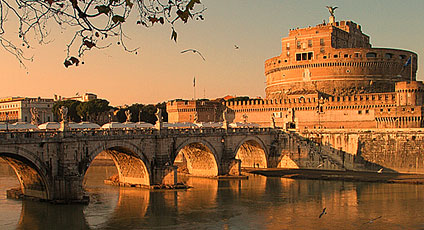
Castel Sant' Angelo
Castel Sant’ Angelo

During the interval between the exit from, and the return of the Royal party to the Quirinal Palace, the cannon from Castle S. Angelo thundered forth the salute of one hundred guns, whilst in the Vatican Palace the Pope was holding the Public Consistory. A somewhat unpleasant incident marred the harmony of the proceedings : the German Ambassador to Italy being refused right of way by the troops, forced the cordon, and dashed up the Corso at full speed, regardless of consequences.—Commander Seoul, former Director-General of the Treasury and Councillor of the Exchequer, fell dead from apoplexy at his desk in that Bureau, on Tuesday evening, the 8th inst., three hours after the Gazzetta Officiate had published his name among the list of the forty new senators recently promoted to that dignity. The Government had annulled the election in two districts, by a large majority in each, of Amilcare Cipriani, one of the most active of the Communists of Paris in 1871, and who is now serving his term of twenty years in the galleys for a double homicide, perpetrated at Alexandria, Egypt, in 1867. During the term of the elections Fanfulla accused the Deputy Mussi of hearing Mass on days of obligation, and of being a member of a religious confraternity. The candidate to political honours, fearful of losing caste, hastened to deny the charge, by formally declaring that he never dreamed of attending Mass, &c.—The Senate of the kingdom are about to assemble in High Court of Justice, to judge the case of Senator Zini, author of a novel entitled La Famiglia Moscardini, a ” libello famoso ” against the late Deputy Bonchetti. Such are some of the individuals who make laws for the Kingdom of United Italy.

The above text was found on p.17, 12th June 1886  in “The Tablet: The International Catholic News Weekly.” Reproduced with kind permission of the Publisher. The Tablet can be found at http://www.thetablet.co.uk .

Dr O’Bryen’s Sermons 1880

Rome, February 22nd, 1880.

S. Andrea della Fratte , Rome

A person who signs himself an ” Anglo-Catholic” has written and circulated a letter  to the Rev. Dr. O’Bryen on the subject of the sermons preached by him in the Church of S. Andrea della Fratte on the two Sundays previous to Quinquagesima. “Anglo-Catholic” complains that Dr. O’Bryen “assumed that Henry VIII. of England was a Reformer, and that he constituted himself Head of the Church of that kingdom.”

“Anglo-Catholic” maintains that Henry VIII. “lived and died a member of Dr. O’Bryen’s communion,” and in proof of this assertion alleges the Act of Six Articles and the last will of the King in which money was left for masses for the repose of his soul. “Anglo-Catholic,” on parity of reasoning, may be also a Catholic, for he may attend mass and may bequeath, if he likes, any amount of money for the repose of his soul. The Catholic Church, however, will not admit the plea of “Anglo-Catholic,” and without submission to the See of Peter he can never become a Catholic, nor be acknowledged as such by Catholic priests or laymen.

The rest of “Anglo-Catholic’s “ letter is as silly as the beginning. He seems never to have read or understood the simplest Catechism, which would have taught him the Catholic doctrine of devotion to the B. Virgin and the Saints. And he is equally ignorant of ecclesiastical history. In fact “Anglo-Catholic” writes in the style of the vulgar controversialists, Messrs. Murphy and Maguire, and the other learned divines of Exeter Hall notoriety.

The above text was found on p.17, 28th February 1880 in “The Tablet: The International Catholic News Weekly.” Reproduced with kind permission of the Publisher. The Tablet can be found at http://www.thetablet.co.uk .

Marriage settlement of Henry Hewitt O’Bryen and Mary Roche 1807

Transcription Of The Marriage Settlement Of Henry Hewitt O’Brien And Mary Roche, Dated 27th October 1807, No.404481

To the Register appointed by Act of Parliament for Registering Deeds Wills & so forth

Memorial of an Indented Deed of Settlement bearing date the twenty seventh day October, One Thousand Eight Hundred and Seven, and made between Henry Hewitt O’Brien of Broomly in the County of Cork, Esquire, of the first part, John Roche of Aghada in the County of Cork, Esquire, and Mary Roche, Spinster, only daughter of the said John Roche of the second part, and John Roche the younger, of Aghada aforesaid, Esquire, and Stephen Laurence O’Brien of the City of Cork, Esquire, Doctor of Physic of the third part, and what was made previous to the Marriage of the said Henry Hewitt O’Brien with the said Mary Roche, whereby the said John Roche did agree to give as a portion with his said Daughter, Four Thousand Pounds Stock in the Irish Five per cent funds, By which said Deed whereof this is a Memorial the said John Roche for the consideration therein mentioned did grant assign transfer and set over unto the said John Roche the younger, and Stephen Laurence O’Brien, all that the said Four Thousand Pounds Stock in the Irish Five per Cent Funds.  

To hold the same unto the said John Roche the younger, and Stephen Laurence O’Brien, and to the Survivor of them his Executors Admst & Assigns up [sic] Trust, to permit the said Henry Hewitt O’Brien and his Assigns during his life to take the interest money, dividends and produce thereof for his own uses and after his death, to permit the said Mary Roche (in case she shall happen to survive the said Henry Hewitt O’Brien) and her Assigns during her life to take the interest money, dividends or produce thereof for her own use, by way of Jointure from and after the death of the survivor of them the said Henry Hewitt O’Brien, and Mary Roche, as to the said Sum of Four Thousand Pounds upon Trust for the Issue of such Marriage if any shall be, but in case there shall be no Issue or in case there should, and that all such shall dye before any of them shall be entitled to their respective shares of the said Sum, then as to the entire said Sum of Four Thousand Pounds Stock in the Irish Five per Cent Funds and all benefit to be had thereby, upon Trust, for the survivor of them the said Henry Hewitt O’Brien and Mary Roche his intended Wife, his, or her Heirs Exrs Admrs and Assigns and it is by said Deed expressed that the said John Roche the younger and Stephen Laurence O’Brien shall when thereto required by the said Henry Hewitt O’Brien invest the entire of the said Trusts Money, or any part thereof, in the purchase of Lands in Ireland which Lands when so purchased are to remain to the same uses and Trusts as are mentioned and expressed in every aspect as to the Trust Sum of Four Thousand Pounds in the Irish Five per Cent Funds to which Deed the said John Roche Henry Hewitt O’Brien & Mary Roche put their hands and Seals,

Witness thereto and this Memorial are John Cotter of the City of Cork Merchant, and John Colburn of said City Gent.

The Will and codicil of John Roche, January 1826:

Lower Aghada, co Cork

The Will and codicil of John Roche, January 1826: 


Whenever it happens that the Aghada estate, is absent of male heirs, to wit, of the said James Joseph Roche, or by any other contingency reverts wholly to me, I hereby leave it in as full a manner as I can convey it to my nephew, William Roche, to be enjoyed by him and his lawful begotten heirs male for ever ; and, as I have perfected leases to be held in trust, of the demesne and two adjoining farms of Aghada, subject to a yearly rent accord-ing to a valuation made, I leave him my interest, if any I had, in those leases ; and in case of his not coming into possession of the estate by the means before-mentioned,  I leave him  £6,000 of my £4   per cent. stock, to be held by trustees, the interest of which is to pay the rent of the demesne and two farms above mentioned ;

  • to my eldest grandson, James (sic)  J. R.  O’Brien   I leave   £10,000   £4 per  cent. stock ;
  • to my grand-daughter, Jane O’Brien, I leave  £4,000 £4 per cent. stock ;
  • to my daughter, Mary O’Brien,  I leave the  £4,000  £4 per cent. stock I settled on her as a marriage portion on her marriage, for her use and that of her younger children ;
  • to my niece,  Ellen Verling,  I leave  £1,000 £4 per cent, stock, with £30 a-year profit rent I leave on her brother Bartholomew Verling’s stores ;
  • to my grandson, J. Roche O’Brien, I leave also my interest in White Point, after his mother’s death ;  
  • I leave  £100 to my sister, Ellen Verling ;
  • to my sister, Julia Enery, £100 ;
  • to my nephew, Doctor Verling,  and his sister, Catherine Ellis, £100 each,  and I desire the stock on the farm to be sold to pay these legacies ;
  • to my nephew,   William Roche, and my grand-daughter,  Jane O’Brien, I give my household furniture, plate, &c., and it is my wish, if the rules of our church allow it, that they should be married and live in Aghada house ; may it bless and prosper them and their offspring.

To the parish of Aghada, I leave the school-house, and £20 a-year for its support, and also the chapel and priest’s house  I leave to the parish rent-free for ever, as long as they shall be used for such qualified purposes ; the five slate houses I built in the village, I leave to five of the poorest families rent free ; to David Coughlan I leave the house he now lives in during his life ; to my servant, James Tracy   I leave the house his wife now lives in ;    and to my wife’s servant, Mary Ahearne, otherwise Finne, her house rent-free during their lives ; and to each of those three, viz.,David Coughlan, James Tracy, and Mary Ahearne,  otherwise Finne, I leave £10 a-year during their lives : 

having had unfounded confidence in my unhappy nephew, James Roche,  I did not take legal means under  the settlement I made to secure those last bequests out of the Aghada estate ; I trust, and hope, and desire that whosoever is in possession of the estate do confirm these my wishes and intents. I appoint my trusty friend, Henry Bennett, (my present law agent) William Roche, and my daughter, Mary O’Brien as executors of this my last will.”

 The codicil to the will was as follows :—

 By my will dated the 5th day of January, 1826, I appointed my friend Henry Bennett, my nephew, William Roche, and my daughter, Mary O’Brien, executors to that will ; now, by this codicil, I annul that appointment, and appoint John Gibson, barrister-at-law, Bartholomew Hackett, of Middleton, distiller, and my nephew, William Roche, as my executors to that will, and do hereby empower them to name and appoint two trustees for the purpose of managing the sums I left to my nephew, William Roche, my grand-daughter, Jane O’Brien, and my grandson, J. O’Brien, as it is my intent and will that they should only receive the interest, and the principal to remain untouched during their lives, to go to their children ; out of William Roche’s interest the rent of Aghada which I have leased him is to be paid ; and I desire that he and my grand-daughter Jane, who are shortly to be married, will reside there. I leave William Roche all the stock, &c., on the farm, and to him and his wife all my household furniture, plate, and china, and make them my residuary legatees ; it is my will that my grandson, James R. O’Brien, shall live with them at Aghada until he is of age, which is to be at the age of twenty-five, and not before ; and the trustees are to pay him until that period £100 a-year to complete his education, and another £100 a-year during that period to his mother, and the remainder of the interest of his £10,000 to be paid William Roche to assist him in keeping up Aghada during that period, and I trust by that time he will have a profession by which he will add to his income ; I request and desire that nothing shall prevent his following his profession;  it is my intention that William Roche and his wife shall step into possession of Aghada house, demesne, and farms, which are leased to him in the same way that I leave it when it shall please God to take me ; in case of the death of William Roche before his wife, she is to be paid the interest of her £4,000, to be made up £200 a-year as her jointure ; and if she dies before him, he is to have the £10,000, provided she has no issue; but if she leaves issue, it is to go to them after William Roche’s death, as before directed.”

The Verlings of Cove [Cobh]

Cobh, co. Cork. with St. Colman’s Cathedral in the foreground.

For almost two years it has been clear that there was more than one Bartholomew Verling who were part of the story. John Roche’s will of 1826 left some very significant bequests to various members of the Verling family. One is a sister, and there are nephews and nieces. The key to who they all are was apparently an article in The Journal of the Cork Historical & Archaeological Society. It has taken a long while to track it down, but a lot of this post is based on that article. [ Dr. James Roche Verling by Dr. Gabriel O’Connell Redmond, in The Journal of the Cork Historical & Archaeological Society,  1916,  Vol. 22, No. 110, page(s) 64­ – 71]  Gabriel Redmond is a third cousin, three times removed, and is also a great grandson of both John and Eleanor (Ellen) Verling, and Daniel O’Connell. Ellen Verling is John Roche’s sister, and John Verling is John Roche’s wife’s (Mary Verling) brother.

Anyway to quote from Dr Redmond…

“The Verlings had long been settled at Cove and were one of the principal families in that place, of whom I am able to supply the sub-joined genealogical notice.

The surname Verling is of rare occurrence in Ireland, and is almost peculiar to the County Cork, where for centuries branches of the Verling family have been located, and became wealthy and influential, The exact period when the Verlings settled in Ireland cannot now be ascertained with any precision. But that they were of Danish extraction there appears to be no reasonable doubt. The form of the name suggests a Scandinavian origin. It has been found spelled in various ways, viz., Verling, Verlang, O’Verlang, Verlin and Verlon; and it is not improbable that the Verlings may have settled in the south of Ireland contemporary with the first of the Coppingers, Goulds, Skiddys, and other Co. Cork families who claim to be of Danish descent, whilst others assert that they came from the Low Countries. The first of the name of whom the writer has any record is Richard Verling of Aghada, Co. Cork, who was living in 1594, was mar­ried, had several daughters and two sons, from one of whom were derived the Verlings of Cove, whose pedigree is annexed.

Henry Goold, son of Adam Goold, Alderman of Cork, who died in May, 1634, had by his first wife Ellen Rochford, a son John, who married Eleanor, dau. of Henry Verlon of Cork, gent. Henry Goold’s second wife was Elan (sic.) dau. of John Verlon of Cork, gent. O’Hart identifies the surname Verlon with Verling, into which he states it has been modernized. But it appears more probable that Verling is the more ancient form of the name. A William Verling was Recorder of Cork in the 18th century. He married Martha, dau. of Hodder Roberts of Bridgetown and other estates in Co. Cork, who died in 1747. (See “ Burke’s Landed Gentry,” 1863, under Roberts of Cork). “

And to paraphrase from the pedigree referred to above:

Bartholomew Verling of Cove, co. Cork married Anne O’Cullinane, or Cullinane who was the daughter of Edmond O’Cullinane, whose mother Helen was a Kearney of Garretstown. [It’s slightly guesswork but he, BV, must have been born around 1715.] They had three sons, and two daughters

  1. John Verling m. Eleanor Roche of Cove
  2. Garrett Verling “died at sea”
  3. Edward Verling “Staff Captain R.N” m. Anne Ronayne of Ballinacrusha, Cuskinny
  4. Catherine m. 1st Rogers, 2nd Captain Sellars R.N
  5. Mary m. 1st Captain Hall 2nd. John Roche of Aghada

Cousin Gabriel isn’t particularly helpful here, because he is very much more concerned with the male line(s). But John and Edward Verling both have families, and I think Catherine Verling didn’t but Mary Roche (neé Verling) did. Again, it is speculation, which I try to avoid; but John Roche [Mary Verling’s second husband] had a son called John, and a daughter called Mary. We know this from Mary Roche’s marriage settlement of  1807, given the names involved, John and Mary. It doesn’t take much of a leap of the imagination to assume that John Roche and Mary Verling had a son and daughter each named after themselves, in addition to Mary’s son Robert Hall, who was named after his father, and gave the same name to his bastard son.


John Verling and Eleanor (or Ellen) Roche had five sons and two daughters.

  1. Bartholomew Verling (1786 – 1855) of Cove. Harbourmaster, and Spanish Consul
  2. James Roche Verling (1787 – 1858)
  3. Edward Verling d. unmarried.
  4. Hugh Verling d. unmarried.
  5. John Verling d. unmarried.
  6. Ellen m. James Fitzgerald of Lackendarra, co. Waterford
  7. Catherine m. Henry Ellis “Surgeon R.N.”

Edward Verling and Anne Ronayne had two sons and a daughter

  1. Bartholomew Verling (1797 – 1893) of Oxclose, Newmarket, co. Cork
  2. Patrick Verling Parish Priest of Charleville
  3. Mary m. Capt. Leary R.N.

So Bartholomew Verling of Cove has two grandsons also called Bartholomew Verling who are first cousins. The elder Bartholomew Verling (1786 – 1855) of Cove is John Roche of Aghada’s nephew twice over. His mother is John Roche’s sister, and his father is Mary Roche’s (nee Verling) brother

The younger Bartholomew Verling (1797 – 1893) of Oxclose, is also a nephew but only as the son of Edward Verling and Anne Ronayne, – a brother-in-law, and sister-in-law.

The notes on Bartholomew Verling of Cove from the Pedigree of the Verlings of Cove published in 1916 are as follows:

Bartholomew Verling of Ringmeen, Cove (Queenstown) owned considerable property there including Ringlee, Cuskinny &c. He was a man of influence there, greatly respected and beloved. A story is told of him which shows his kindly disposition and consideration for those around him. In 1849, when the effects of the Famine which broke out in 1847, were still being felt, a brig called the “Westmoreland” lay at anchor at Cove laden with potatoes for England. This so aroused the anger and indignation of the townsfolk that a number of the young men of Cove boarded the vessel, landed the potatoes, and distributed them amongst their needy fellow townsmen. They were of course arrested and sent for trial, the penalty, if found guilty, being transportation to Botany Bay. Mr Verling, however, came to their rescue. He and some friends drove off to Dublin in one of Bianconi’s cars – at that time a long and tedious journey – obtained an interview with the Lord Lieutenant, and so successfully pleaded extenuating circumstances that the Lord Lieutenant pardoned those youths who raided the “Westmoreland”. A song was composed to commemorate the capture of this vessel which is now almost entirely forgotten.

Mr Bartholomew Verling was one of the deputation which waited on the late Queen Victoria to obtain H.M.’s permission to change the name of Cove of Cork to Queenstown when she landed therein August 1849. Letters of his to the Cork Press still extant show that he was an able advocate of Queenstown’s claims to be made a Naval Station and Mail Packet Port.

And the notes on Mary Verling are as follows:

The only child of Captain Hall and Mary Verling was Robert Hall who was knighted for distinguished and conspicuous bravery while serving in the Royal Navy in the Mediterranean. he died unmarried while in command of a naval station in Canada where a fine monument was erected to his memory. In recognition of his courage and daring he was presented with the Freedom of the City of Cork in a valuable silver box inscribed:- “With this box the Freedom of the City of Cork in Ireland was unanimously given to Captain Robert Hall for his Gallant Conduct in His Majesty’s Navy the 22nd of August 1809.” An obelisk was erected to his memory in Aghada Wood by his stepfather John Roche of that place.

James Roche Verling, (1787–1858)

View from Spy Hill, Cobh, co. Cork

James Roche Verling, (1787–1858), was born at Cove,[Cobh] co. Cork, on 27 February 1787, the second son in the family of five sons and two daughters of John Verling and his wife, Ellen [Eleanor] (née Roche), of Cove. He is John Roche’s nephew, and a first cousin, five times removed.

John and Ellen’s children were

  • Bartholomew Verling (1786 – 1855) of Cove
  • James Roche Verling (1787 – 1858)
  • Edward Verling d. unmarried.
  • Hugh Verling d. unmarried.
  • John Verling d. unmarried.
  • Ellen m. James Fitzgerald of Lackendarra, co. Waterford
  • Catherine m. Henry Ellis “Surgeon R.N.”

The Verlings were a wealthy and influential Catholic family long established at Cove. James Roche Verling’s eldest brother, Bartholomew Verling (1786–1855), was harbour master and Spanish consul there, as well as a landowner and magistrate. As was fairly common at the time, there were a number of different generations all taking the same forenames. Their grandfather was also Bartholomew Verling of Cove, and a younger first cousin, Bartholomew Verling (1797 – 1893) of Oxclose. He, in turn, named his son Bartholomew.

James was apprenticed to Sir Arthur Clarke, a well-known Dublin physician, and afterwards studied under Gregory at Edinburgh, where he graduated MD at the age of 23, with a thesis “De Ictero”. He was then commissioned as Second Assistant Surgeon to the Ordnance Medical Department on Jan 25th, 1810. The Ordnance Medical Department was quite distinct from the Army Medical Department, and a rather higher standard of medical education was required. He was first stationed at Ballincollig, Cork, and then proceeded to Portugal shortly after Albuera, in medical charge of a battery of Royal Artillery, and was at once placed in charge of wounded, including wounded of the Artillery of the King’s German Legion. He was present with the Artillery throughout the subsequent campaign, at the sieges of Ciudad Rodrigo, Vittoria, Pampeluna, the storming of San Sebastian, the passage of the Bidassoa, Nivelle, Nive, and Bayonne. He marched with the Royal Horse Artillery to Paris, and received the Peninsula Medal with five clasps.

He was not present at Waterloo, but in July, 1815, was ordered with a battery of the Royal Artillery to St Helena. On Aug 8th he sailed from Torbay on “HMS Northumberland,”  which also carried  Napoleon and his entourage. Verling spoke both French and Italian, and, it is likely, he became personally acquainted with Napoleon on the voyage. The emperor seemed to be ready to talk with any of the officers who could understand him.

Longwood House, St Helena

After a two month voyage they landed at St Helena on 17 October, with the other passengers, he disembarked on the Atlantic island. The governor, Sir Hudson Lowe (1769–1844), another Irishman, appointed Verling his medical officer. After Napoleon’s favourite physician, Barry Edward O’Meara, quarrelled with the governor and was dismissed, it was Verling who replaced O’Meara at Napoleon’s residence, Longwood (25 July 1818). Napoleon refused to be treated by Verling, regarding him as ‘l’homme du gouverneur’. When Napoleon’s aide, Count Montholon, with whom Verling regularly conversed, suggested that he could become ‘l’homme de l’empéreur’ by agreeing to give Napoleon copies of his medical reports and not to pass on private conversations to Lowe (April 1819), Verling was uncooperative, though he always detested having to inform Lowe of what he learned at Longwood.

James Verling left St Helena, on the 25th April 1820, just over a year before Napoleon died (5 May 1821) Later he served in Malta, the Ionian Islands, and Nova Scotia. He was promoted to full Surgeon (1827), senior Surgeon (1843), and finally Deputy Inspector-General (1850), and appears to have served most of the last thirteen years or so of his career at the Royal Ordnance Hospital at Woolwich After his retirement in 1854, he returned to Cobh, by then, renamed Queenstown, where he died on 1st January 1858 at his home, Bellavista. It’s a rather pleasing irony that “Mr Bartholomew Verling [his eldest brother] was one of the deputation which waited on the late Queen VIctoria to obtain H.M.’s permission to change the name of Cove of Cork to Queenstown when she landed therein August 1849. “  according to Gabriel O’Connell Redmond’s memoir  of James Roche Verling in 1916.

View from Bellavista House, Cobh, co.Cork

It’s also rather pleasing that Bellavista still exists, but is now a hotel, and Chinese restaurant.

Verling wrote a diary of the daily round of events on St Helena  which passed into the hands of his nephew, Surgeon John J. Ellis, R.N.[ the sixth, and youngest, son of his sister, Catherine] , who took it to sea with him and lent it to a friend, who left it after him on board a ship in the China Sea. It fortunately was found by someone who recognising its value handed it over to Mr. Morgan, the British Consul, at Tientsien, in China. Consul Morgan thought it would be a good thing to present the Diary to the late Emperor, Napoleon the Third, and sent it to him by a French Naval Officer. The Emperor accepted the gift and had it deposited in the “ Archives Nationales” in Paris, where it now remains.

He never married, and the main beneficiary of his will was his first cousin Bartholomew Verling (1797 – 1893) of Oxclose. His estate was very large, just under £ 5,000 in England, and a further £6,000 in Ireland, or just over £ 10m. in modern terms.

A lot of Bartholomew Verlings

It became clear very early on that there was more than one Bartholomew Verling who were part of the story. John Roche’s will of 1826 left some very significant bequests to various members of the Verling family.

“to my niece,  Ellen Verling,  I leave  £1,000 £4 per cent, stock, with £30 a-year profit rent I leave on her brother Bartholomew Verling’s stores ;……..  I leave  £100 to my sister, Ellen Verling ; to my sister, Julia Enery, £100 ; to my nephew, Doctor Verling,  and his sister, Catherine Ellis, £100 each,”

From the will, it was clear that at least one Bartholomew Verling was John Roche’s nephew, and another nephew was a doctor. What wasn’t clear was whether this was one person or two. After some research, it became apparent that the “Dr Verling” referred to was Dr James Roche Verling, who was a naval surgeon of some distinction, and had been, for a time, Napoleon’s doctor on St Helena.

But there were also some early other pointers, The entry for the Verlings in the NUI Landed estates database [http://landedestates.nuigalway.ie] is as following:

Verling – In the 1870s Bartholomew Verling, Springfield Lodge (Oxclose), Newmarket, county Cork, medical doctor owned 883 acres in county Limerick and 110 acres in county Cork. He appears to have acquired his county Limerick estate post Griffith’s Valuation. Bartholomew Verling (1797-1893) was a naval surgeon of Oxclose, Newmarket, county Cork. He was the son of Edward Verling and his wife Anne Ronayne. The Verlings were established at Newmarket by the late 18th century.

The key to the whole question seemed to be an article written in 1916, and published in the Journal of the Cork Historical and Archaeological Society, 1916, Vol. 22, No. 110, page(s) 64­ – 71. It is titled ” Dr James Roche Verling”, and written by Gabriel O’Connell Redmond. Dr Redmond was the local G.P in in Cappoquin co. Waterford between 1880 and 1914.  He was a great grandson of Daniel O’Connell’s and also John Verling and Ellen Roche’s great grandson. In a pleasing way with numbers this makes him a third cousin, three times removed. He was a noted historian and antiquarian, and also the town’s columnist with the Waterford News.

So to start sorting them out.

Bartholomew Verling of Cove (b. abt.1715 – ) has two grandsons also called Bartholomew Verling who are first cousins. The elder Bartholomew Verling (1786 – 1855) of Cove is John Roche of Aghada’s nephew twice over. His mother is John Roche’s sister, Ellen, and his father is Mary Roche’s (nee Verling) brother, John Verling

The younger Bartholomew Verling (1797 – 1893) of Oxclose, is also a nephew of John Roche, but only as the son of Edward Verling and Anne Ronayne, – a brother-in-law, and sister-in-law. Edward Verling is John Verling, and Mary Roche (neé Verling)’s brother.

It all becomes clearer in the pedigree of the Verlings of Cove.

HMS Beresford in 1780, and 1797.

Henry Hewitt was described as the “Captain of the Beresford Revenue Cutter.” at the time of his daughter Jane’s marriage to Laurence O’Brien in Castletownsend in 1778. The following is from The Town and Country Magazine, and The Lady’s Magazine.

Domestic Intelligence.

21[August 1780] Captain Kearney, regulating captain at Corke, in a letter to Mr Stephens, of the Admiralty, incloses one from the master of the Beresford cutter to the collector of that port, of which the following is a copy.

Castle Townsend, Aug 13, 1780, Two O’Clock P.M.

Sir,

By express this morning, we acquainted you with an engagement off the harbour, on which we sent out a hooker, which has since returned, and find the fleet seen off to be that which sailed from Corke for America yesterday, all safe. The engagement was between his Majesty’s ship the Biensaisant, and one of the frigates with her, and a French 74, which we have the pleasure to acquaint you is taken. They are now lying too off this harbour, shifting the prisoners on board the different ships. The French ship had 600 men, on hundred of which were killed or wounded, and eleven killed and wounded in ours:-  This is the account the officer that went out in the hooker brings us, but thinks it is the Compte d’Artois, but is certain she is a 74; and he towed a boat with some of the prisoners. Another ship, a privateer, was in fight with the Frenchman, but she is not now in fight

Signed

T. Hungerford, Surveyor

H. Hewitt, Master of the Beresford Revenue Cutter.

Castletownshend , co. Cork

To the Collector of Corke.

The Ambuscade was the frigate which is mentioned in the above dispatches.

From The Town and Country Magazine, Or, Universal Repository of Knowledge, Instruction, and Knowledge.  Volume XII, for the Year 1780, London. Printed for A. Hamilton Jnr near St John’s Gate.

The same report was in The Lady’s Magazine; Or, Entertaining Companion for the Fair Sex Volume XI, 1780

and from the LONDON GAZETTE August 5 1797, the Beresford was still in action along the coast of Southern Ireland.

It’s unclear, but unlikely, as to whether Henry Hewitt was still in command. But, given his likely age, he almost certainly was not.  Assuming he was about 50 years old at the marriage of his daughter Jane in 1778 [ using a 25y/o+ 25y/o formula], he would have been born about 1728. So in 1797, he would have been 69 years old. If he had been the same age as his son in law’s father who was born in 1717, he would have been 80 years old. So, one hopes, the Irish Customs Service had managed to find a slightly more youthful Captain than Great Grandpa Henry…

Admiralty Office August 1 1797

Copy of a Letter from Vice Admiral Kingsmill,  Commander in Chief of his Majesty’s Ships and Vessels at Cork to Evan Nepean Esq. [ He was Secretary to the Board of Admiralty 1795-1804, and later Chief Secretary in Ireland, and later one of the Lord Commissioners of the Admiralty]  dated  [HMS] L’Engageante, Cork Harbour July 5 1797

Sir,

Please to inform my Lords Commissioners of the Admiralty, that having Intelligence of a small Privateer being off Bally Cotton, I sent out Lieutenant Pulling, in the Mary Revenue Cutter, in Quest of her, and in a few Hours he fell in with the Beresford, coming from Waterford, just as she had captured the said Privateer, a chasse marée, named L’Acheron, of 28 Tons, out of Morlaix, carrying 1 Carronade Eight-Pounder and six Swivels, and 40 Men. She is just arrived here, and had taken Three Vessels, all of which I understand are recaptured.

I have, &c. R. Kingsmill.

The ship was decommissioned in 1819, and sold for scrappage in Plymouth, although the name lived on in more ships in the Royal Navy.

Hewitt – O’Brien March 20th 1778

Castletownshend, co. Cork

1778,  March 20th, at Castle-Townsend co. Cork, Laurence O’Brien, to Miss Hewitt, daughter of Henry Hewitt, Esq, Captain of the Beresford Revenue Cutter.

The Gentleman’s and London Magazine: Or Monthly Chronologer published in Dublin,  printed by John Exshaw in Dame Street.

Laurence O’Brien and Jane Hewitt are Henry Hewitt O’Bryen [1780-1836]’s parents, and John Roche O’Bryen‘s paternal grandparents, so in our case, great, great, great, great, grandparents. Jane Hewitt is also the reason for the Hewitt name occurring as a forename in the next four, or five generations

A Revenue Cutter was a Customs vessel and each cutter master was answerable to and received his sailing orders directly from the Collector of Customs of the port to which his ship was assigned. All crew pay, requests for supplies, arrangements for repairs to the cutter, and mission-specific tasking came directly from the port’s Customs House.

So great grandpa x 5 Henry Hewitt was a Customs Officer.

John Hewson of Ennismore

The following extract is from “Memoirs Of The House Of Hewetson Or Hewson Of Ireland.” by John Hewson published in 1901. It’s largely here because it makes me smile, but it’s also here because John and Margaret Hewson are the great great great grandparents of Mary I.E. O’Bryen, who is in turn a first cousin three times  removed.


John Hewson, Esq., of Ennismore, co. Kerry, named in his father’s will ; spoken of in the county of Kerry as the “Rich Foreigner.” Married 23 Oct. 1737 Margaret, then in her 19th year, of Royal descent (born 1718, died at Ennismore House 28 July 1809, aged 91 years), seventh dau. of Maurice Fitzgerald, Knight of Kerry, by his wife Elizabeth (whom he married 30 June 1703), second dau. of David Crosbie, Esq., and sister of Maurice, first Lord Brandon.

Ennismore, containing 1170 acres of land, was one of the residences of the “ Old Knights” of Kerry from about 1600 to the closing year of the seventeenth century, the “Grove,” near Dingle, being their principal one. In 1737 Mr. Hewson, upon his marrying the seventh of the nine daus. of Maurice Fitzgerald, Knight of Kerry, leased the whole estate from his father-in-law, and his descendants still continue to live there.

The appellation of “ Rich Foreigner,” by which Mr. Hewson was known in Kerry, is thus explained.  Down to the closing year of the eighteenth century, and even later, so strong was the clan feeling in this county, and so remote was it from the rest of the most “advanced ” parts of the island, that the people there always spoke of the inhabitants of any other county in Munster and the other three provinces as “ Foreigners.” An old Kerry gentle- man, not long since deceased, used to say that the Hewsons of Ennismore in 1750 — 1770 were the wealthiest “ foreigners ” of that day in Kerry, their foreign origin being simply their arrival in Kerry from the next county, Limerick, in or about 1730.

The roads in many parts of Munster at that time were very bad, and both gentlemen and ladies were obliged to save time and trouble by traversing them on horseback instead of using carriages.

There is an old Kerry tradition that it was on a journey of this kind from Ennismore or its neighbourhood that Miss Fitzgerald first made her future husband’s acquaintance. The horse that she was riding from that place into Limerick falling lame or casting a shoe, she and her attendant groom were at a loss how to proceed, when a young gentleman (Mr. John Hewson) happened to pass by on a good steed, the loan of which he asked her to accept, and walked by her side to the house of her friend in the county Limerick. The acquaintance led to an attachment and the marriage of 1737, of which the issue was numerous, and there arrived at maturity three sons and six daughters.